
Mammal
Columbian Black-tailed Deer
Odocoileus hemionus columbianusAlso known as Columbian Blacktail Deer, Black-tailed Deer, Pacific Blacktail
Columbian black-tailed deer browse through the misty coastal rainforests and brushy woodland edges of the Pacific Northwest. Recognized by their broad black-topped tails and large ears, these adaptable herbivores move silently through dense cover to forage on shrubs, lichens, and fallen acorns. Mothers hide cryptically patterned fawns in deep vegetation during early summer while stags develop velvet-covered antlers for autumn display battles.
MammalCrepuscularHerbivore
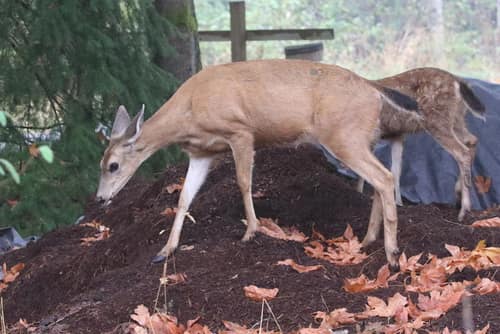
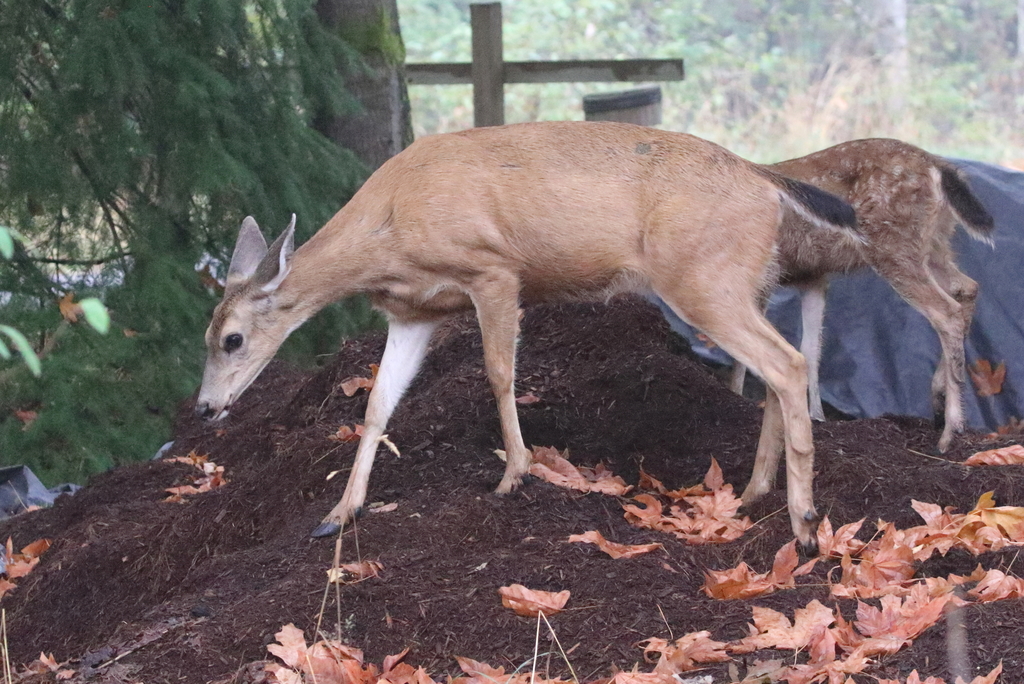
—observations
—countries
—peak records
Least ConcernConservation statusIUCN Red List categoriesLCNTVUENCREWEXLeast ConcernRed List categories, explained →
Diet & preyCedar Foliage, Douglas Fir Shoots, Acorns
Predators
- Cougar
- Wolf
- Black Bear
ThreatsHabitat fragmentation, vehicle collisions, severe winter weather, and poaching
HabitatsTemperate coastal rainforests, mixed coniferous forests, chaparral, and forest edges
Life span9–10 years in the wild
Classification
- FamilyCervidae
- SpeciesOdocoileus hemionus columbianus
Range data is not available yet.
Interaction riskHigh
- Low
- Moderate
- High
- Very high
- Why interaction risk is high
- Can host disease-transmitting ticks and may kick if cornered; observe from a respectful distance.
Responsible observation
- Give Space: Keep a safe distance, especially during the autumn rut or when fawns are present.
- Drive Cautiously: Slow down along forested roads at dusk and dawn to prevent collisions.
- Avoid Feeding: Refrain from offering food to wild deer to prevent habituation and disease transmission.
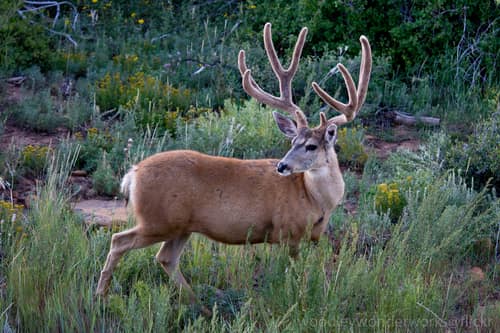
Parent Species "ten point mule deer buck" by woodleywonderworks is licensed under CC BY 2.0. To view a copy of this license, visit https://creativecommons.org/licenses/by/2.0/. · cc-by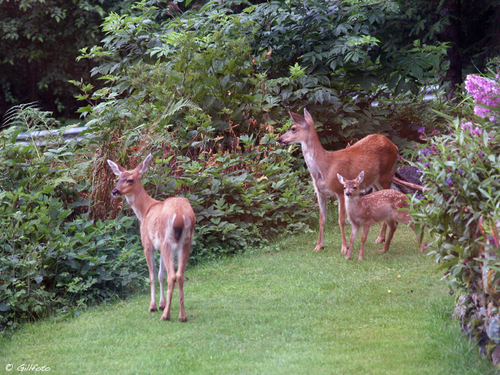
Sister Subspecies (c) Gillfoto, some rights reserved (CC BY-SA) · cc-by-sa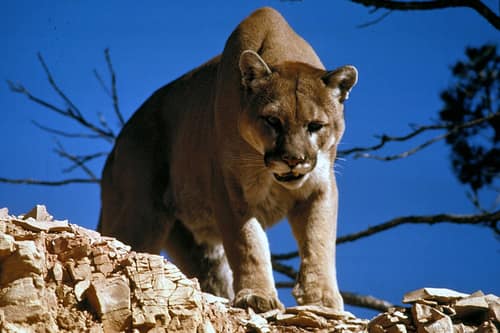
Predator National Park Service / Public domain · cc0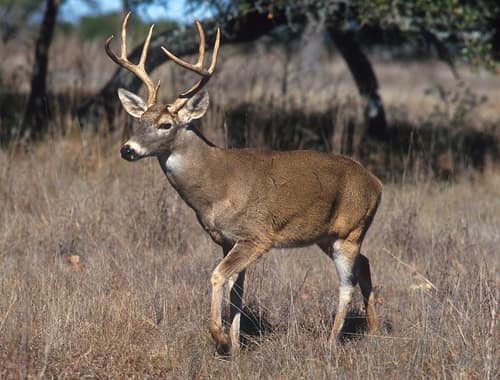
Close Relative USDA photo by Scott Bauer / Public domain · cc0
Help improve the field guideSomething wrong?
Checking your Fauna account…Report a name, category, or profile issue for review.