
Plant
Rough Horsetail
Equisetum hyemaleAlso known as Scouring Rush, Dutch Rush, Winter Horsetail, Rough Horsetail Fern
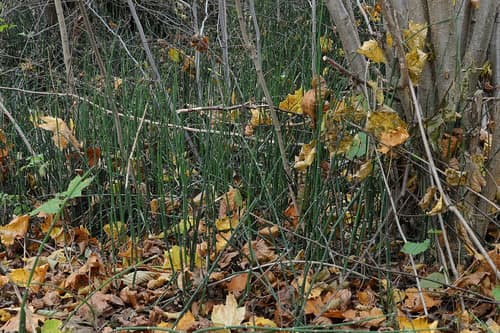
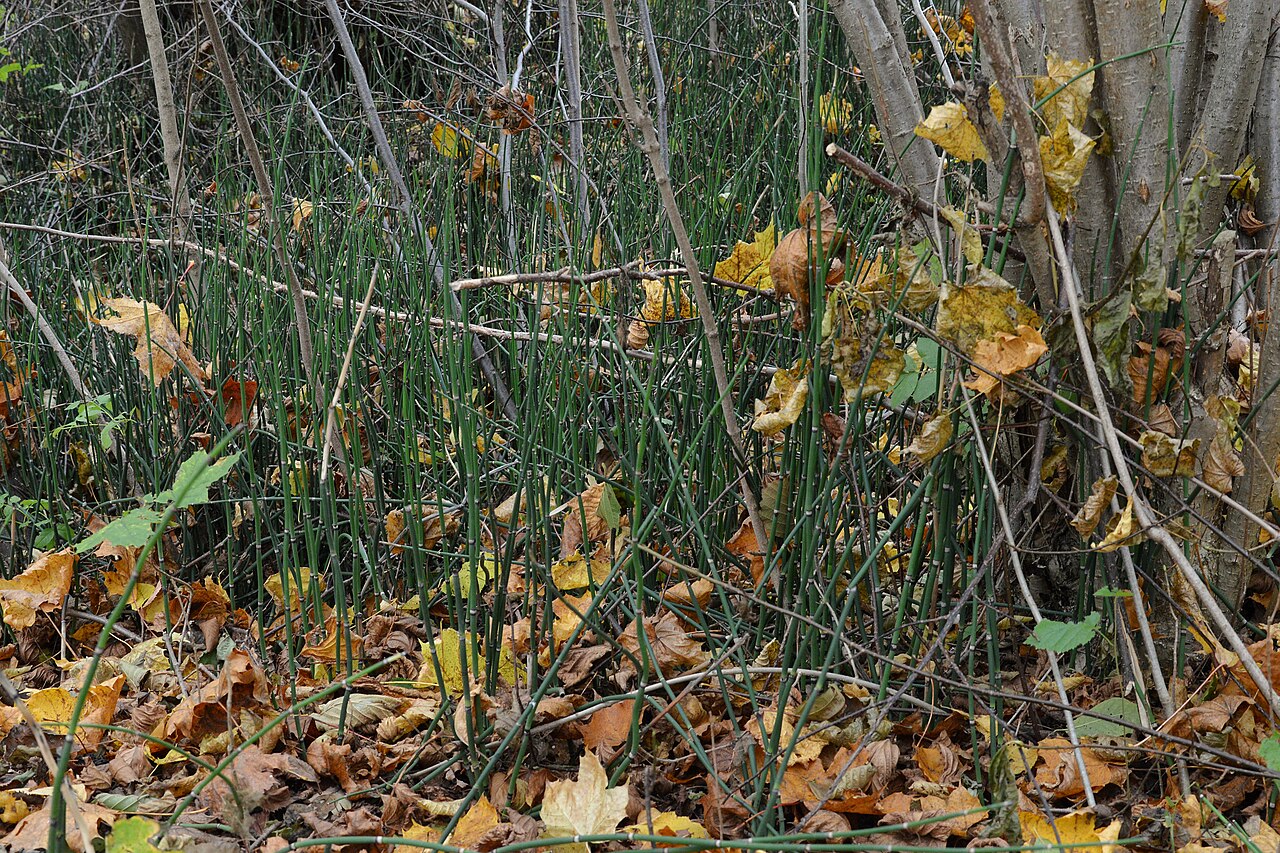
Rough horsetail forms dense colonies of erect, unbranched green stems that resemble miniature bamboo groves along wetland margins. High silica deposits embedded in the stem ridges give the plant a coarse, sandpaper-like texture that humans historically used to polish metal and wood. Terminally produced cone-like strobili release green spores equipped with coiled elaters that expand and contract with humidity to aid wind dispersal.
EvergreenWetlandPrimitive
—observations
—countries
—peak records
Least ConcernConservation statusIUCN Red List categoriesLCNTVUENCREWEXLeast ConcernRed List categories, explained →
Diet & preyAutotrophic (Photosynthetic)
Predators
- Herbivorous insects
- Waterfowl
- Mammalian grazers
ThreatsWetland drainage, habitat destruction
HabitatsWetlands, riverbanks, marsh edges, moist ditches
Life spanPerennial (rhizomes live indefinitely)
Classification
- OrderEquisetales
- FamilyEquisetaceae
- GenusEquisetum
- SpeciesEquisetum hyemale
Range data is not available yet.
Interaction riskHigh
- Low
- Moderate
- High
- Very high
- Why interaction risk is high
- Contains thiaminase and silica compounds; do not ingest as it can cause thiamine deficiency.
- Why it is dangerous
- Contains thiaminase, an enzyme that breaks down B vitamins, and high concentrations of abrasive silica.
- How to recognize a risky encounter
- Identified by dark green, hollow, jointed stems with thin black-and-white sheath rings and no side branches.
- What to do
- Safe to touch and inspect up close, but keep away from livestock and never consume.
Responsible observation
- Stem texture: Gently touch the stem ridges to feel the rough silica crystals.
- Cone searching: Look for pointed strobili at the stem tips during summer.
- Habitat spotting: Scan damp ditch lines, stream edges, and bog margins.
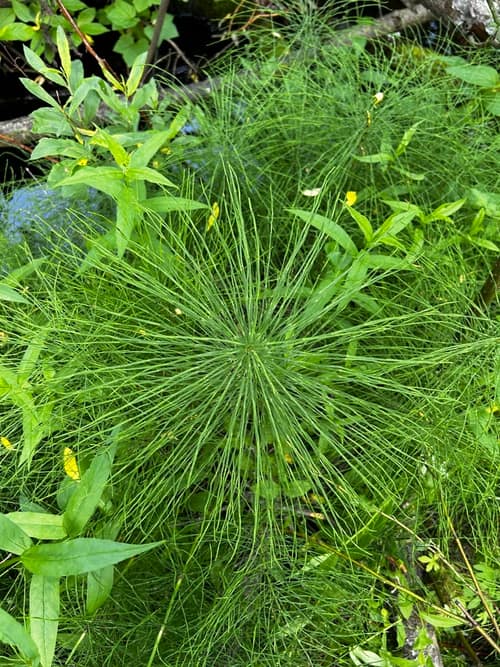
Close Relative (c) Sean Vanderluit, some rights reserved (CC BY), uploaded by Sean Vanderluit · cc-by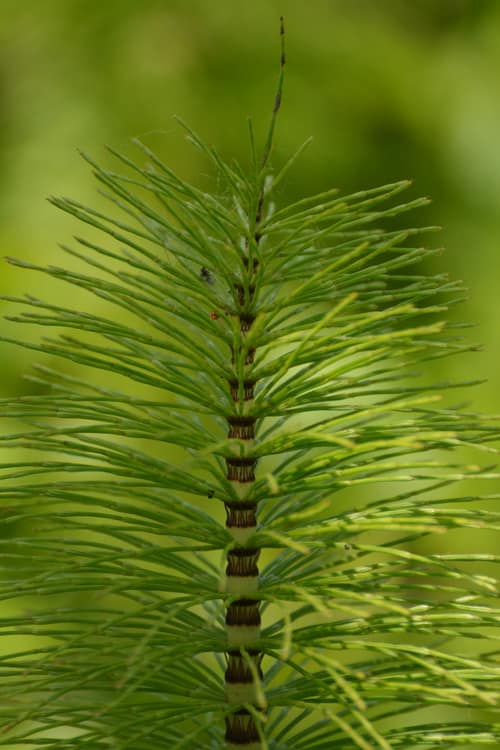
Close Relative (c) Eric Verna, some rights reserved (CC BY-SA), uploaded by Eric Verna · cc-by-sa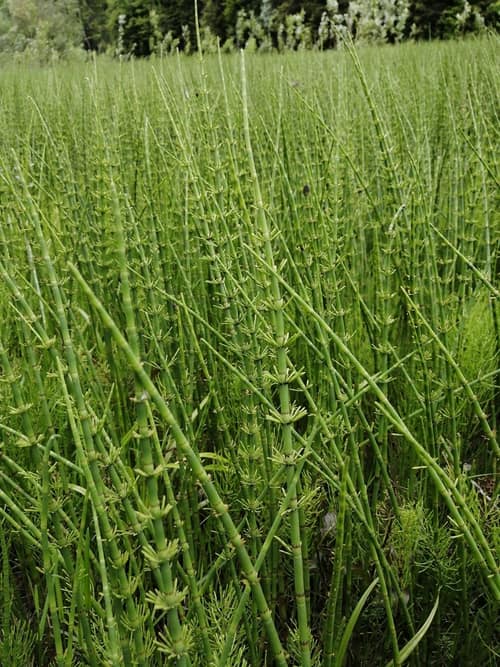
Close Relative (c) Tatiana Strus, some rights reserved (CC BY), uploaded by Tatiana Strus · cc-by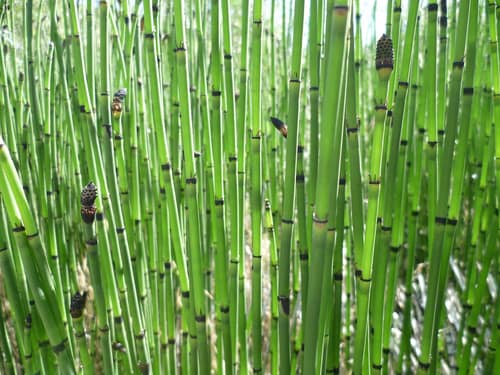
Close Relative Thayne Tuason / CC BY-SA 4.0 · cc-by-sa
Keep collecting in Fauna
Found in Collections
Ecosystem chain Pro
Secret Garden
Rough Horsetail is found in this collection. Identify it in Fauna to fill this slot and continue your progress.
Unlock to track progress
Help improve the field guideSomething wrong?
Checking your Fauna account…Report a name, category, or profile issue for review.