
Fungus
Lace Lichen
Ramalina menziesiiAlso known as Fishnet Lichen, Menzies Lace Lichen
Lace lichen hangs in delicate reticulated veils from tree branches along the North American Pacific coast. Its unique netted structure captures fog droplets, shifting from pale yellow-green when dry to bright green when wet. It serves as crucial winter food for deer and essential nest material for local birds.
EpiphyticNet-LikeCoastal
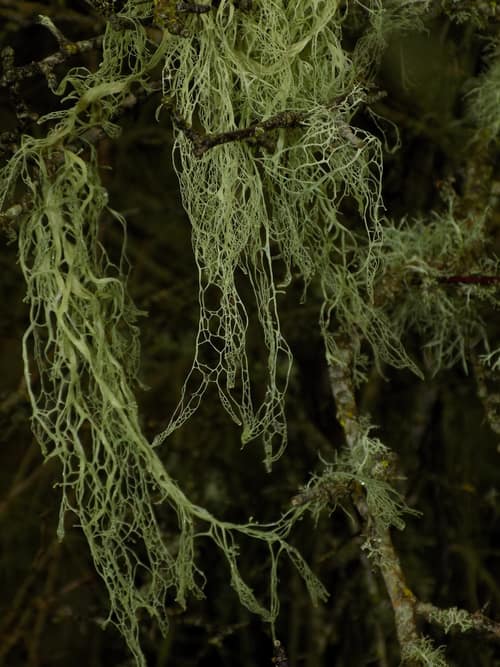
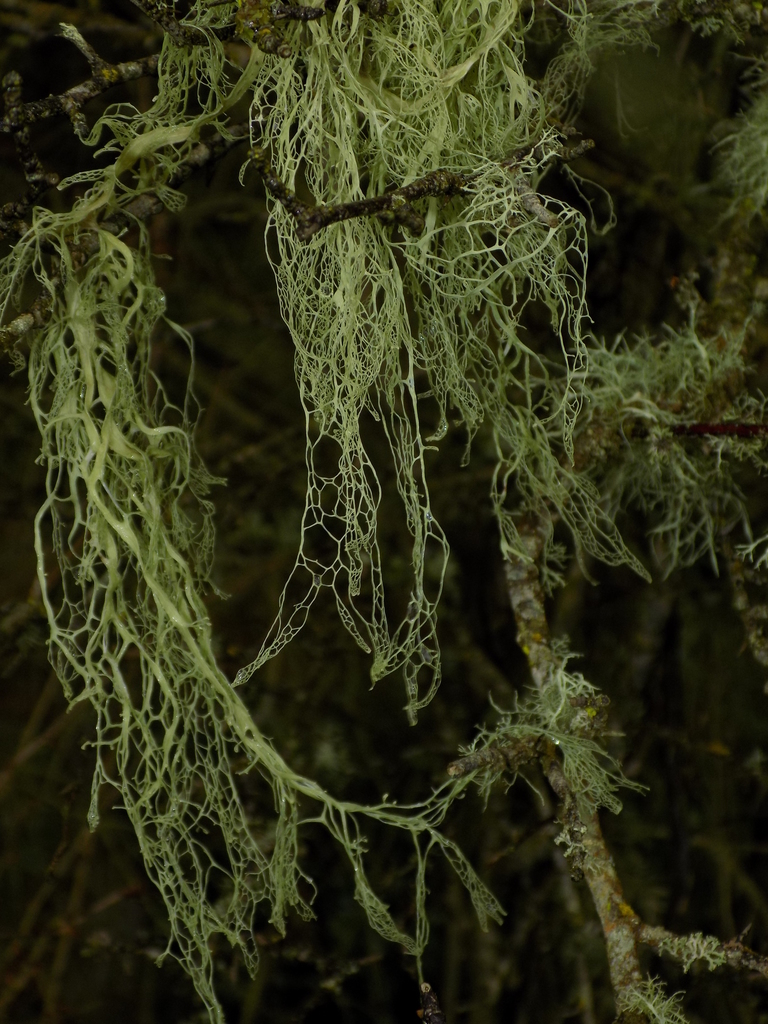
—observations
—countries
—peak records
Least ConcernConservation statusIUCN Red List categoriesLCNTVUENCREWEXLeast ConcernRed List categories, explained →
Diet & preyPhotosynthesis via algal symbiont and atmospheric absorption
Predators
- Black-Tailed Deer
- Mule Deer
- Slugs
ThreatsAir pollution, extreme wildfires, and habitat loss
HabitatsCoastal oak woodlands, fog belts, and chaparral
Life spanDecades to over 100 years
Classification
- FamilyRamalinaceae
- SpeciesRamalina menziesii
Range data is not available yet.
Interaction riskLow
- Low
- Moderate
- High
- Very high
- Why interaction risk is low
- Many wild fungi have toxic look-alikes; never eat wild fungi based on app identification alone.
Responsible observation
- Observe Structure: Look closely at hanging curtains to see the distinctive mesh pattern.
- Notice Moisture Effect: Watch dry grey strands turn vibrant green following rain or fog.
- Spot Wildlife Uses: Search nearby hummingbird nests to see woven lichen strands.
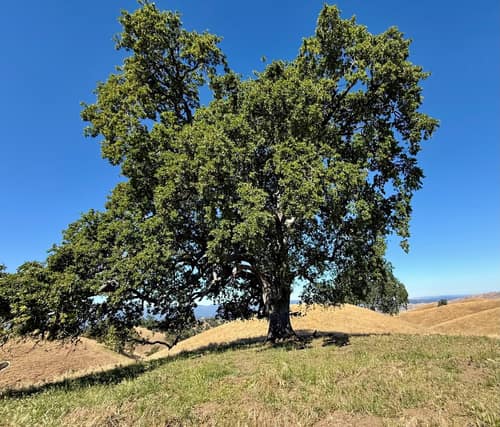
Host Tree no rights reserved, uploaded by Irene · cc0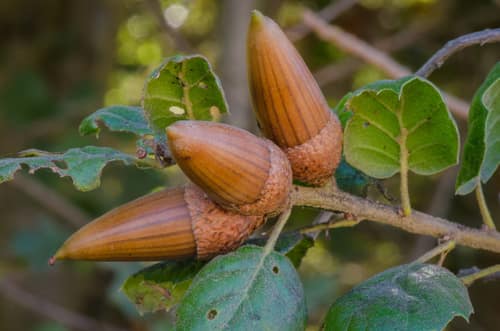
Host Tree (c) Franco Folini, some rights reserved (CC BY-SA) · cc-by-sa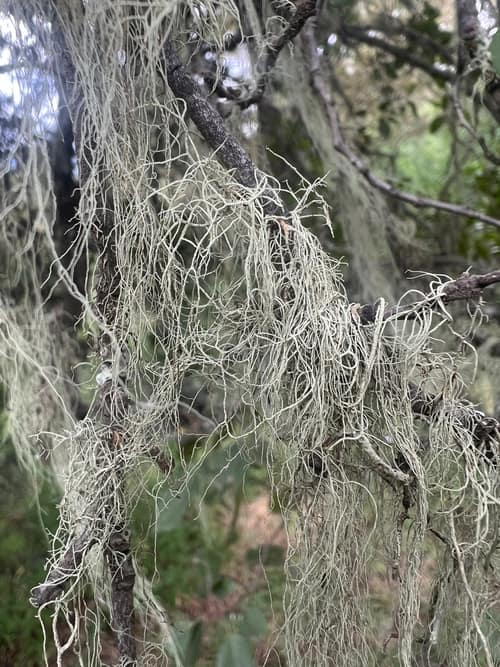
Co-Occurring Lichen (c) Bastian Greshake Tzovaras, some rights reserved (CC BY), uploaded by Bastian Greshake Tzovaras · cc-by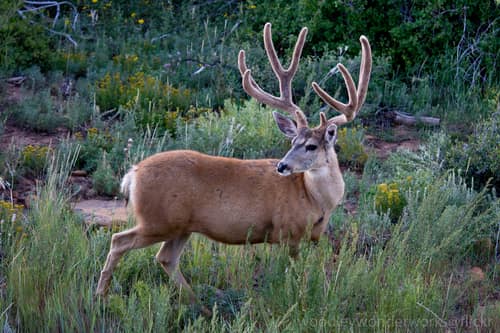
Herbivore "ten point mule deer buck" by woodleywonderworks is licensed under CC BY 2.0. To view a copy of this license, visit https://creativecommons.org/licenses/by/2.0/. · cc-by
Help improve the field guideSomething wrong?
Checking your Fauna account…Report a name, category, or profile issue for review.