
Fungus
Turkey-tail
Trametes versicolorAlso known as Turkey Tail Fungus, Yun Zhi, Many-Zoned Polypore
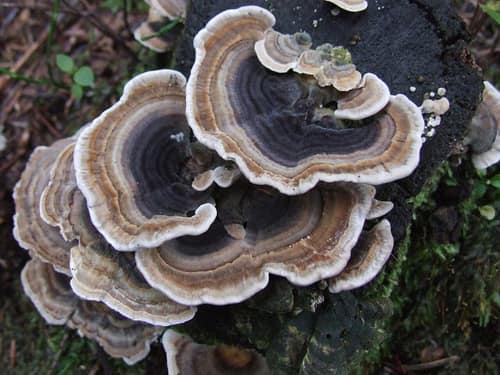
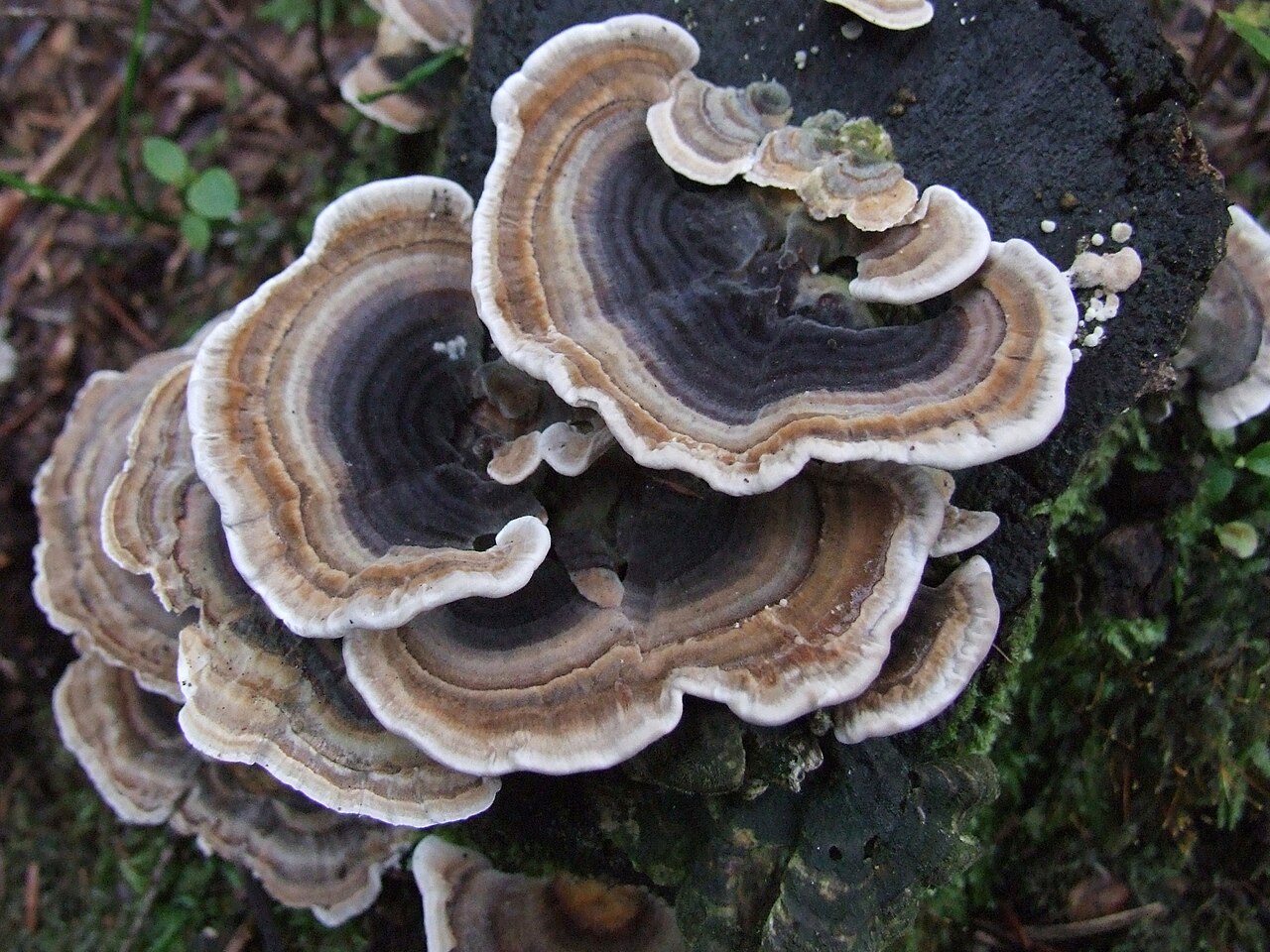
Turkey-tail mushrooms grow in overlapping bracketed clusters on decaying hardwood logs and stumps across forests worldwide. Their caps display striking concentric bands of brown, tan, grey, blue, and orange with a fine velvety texture and a whitish porous underside. As essential white-rot saprobes, they break down lignin and recycle vital nutrients back into forest ecosystems.
Bracket FungusPolyporeSaprobic
—observations
—countries
—peak records
Not EvaluatedConservation statusIUCN Red List categoriesLCNTVUENCREWEXNot Evaluated — not placed on the risk ladderRed List categories, explained →
Diet & preyLignin, Cellulose, Dead Hardwood
Predators
- Fungus Beetles
- Slug Species
- Mites
ThreatsGenerally secure; localized habitat loss from deforestation
HabitatsHardwood and coniferous forests, woodlands, dead logs and stumps
Life spanPerennial or persistent annual brackets
Classification
- OrderPolyporales
- FamilyPolyporaceae
- GenusTrametes
- SpeciesTrametes versicolor
Range data is not available yet.
Interaction riskLow
- Low
- Moderate
- High
- Very high
- Why interaction risk is low
- Many wild fungi have toxic look-alikes; never ingest wild mushrooms based on app identification alone.
Responsible observation
- Examine the Underside: Flip the bracket to check for tiny white to cream pores rather than gills or a smooth surface.
- Feel the Texture: Look for a velvety cap surface paired with a thin, pliable, leathery feel.
- Leave in Place: Allow these brackets to continue decomposing dead wood and building rich forest soil.
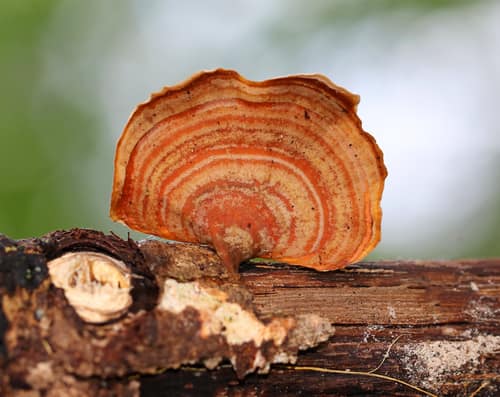
Look-Alike (c) Christine Young, some rights reserved (CC BY), uploaded by Christine Young · cc-by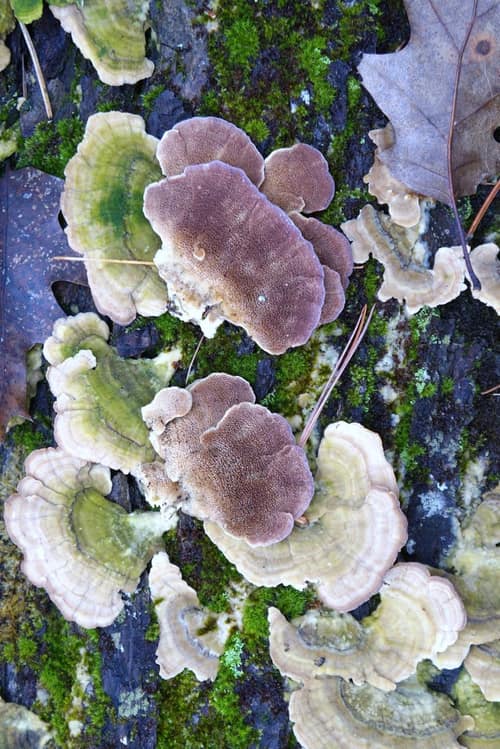
Look-Alike (c) Erlon Bailey, some rights reserved (CC BY-SA), uploaded by Erlon Bailey · cc-by-sa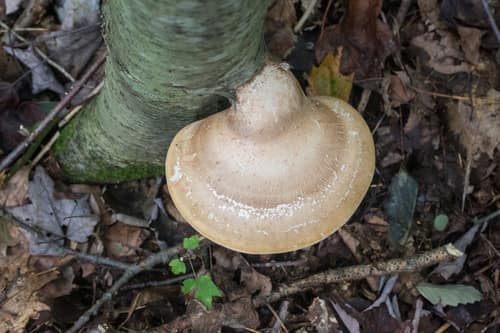
Close Relative (c) Richard Jacob, some rights reserved (CC BY), uploaded by Richard Jacob · cc-by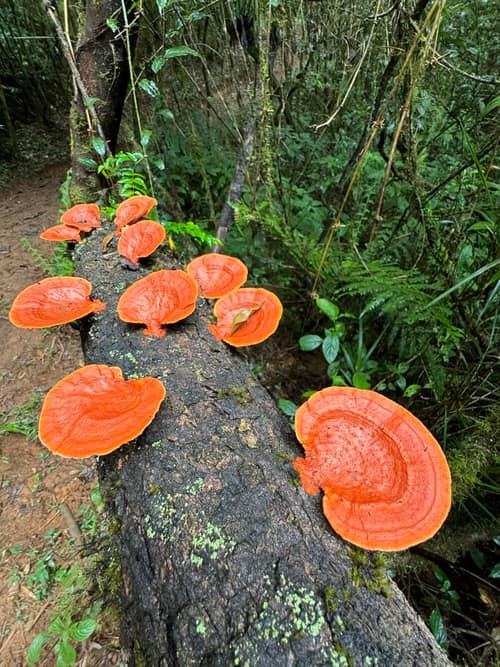
Close Relative (c) chrisdt, some rights reserved (CC BY) · cc-by
Keep collecting in Fauna
Found in Collections
Ecosystem chain Pro
Secret Garden
Turkey-tail is found in this collection. Identify it in Fauna to fill this slot and continue your progress.
Unlock to track progress
Help improve the field guideSomething wrong?
Checking your Fauna account…Report a name, category, or profile issue for review.