
Fungus
Pale Oyster
Pleurotus pulmonariusAlso known as Indian Oyster, Italian Oyster, Phoenix Mushroom, Lung Oyster
Pale oysters sprout in tiered shelf-like clusters on decaying hardwood trunks and fallen logs across temperate and tropical forests. These saprotrophic fungi play a crucial role in forest ecosystems by breaking down lignin and cellulose, returning vital nutrients back into the soil. Unlike their darker relative the pearl oyster, pale oysters thrive in warmer weather and produce fan-shaped white to cream-colored caps.
Wood-DecayingShelf FungusPale Caps
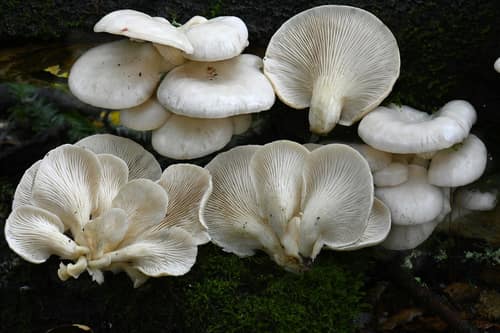
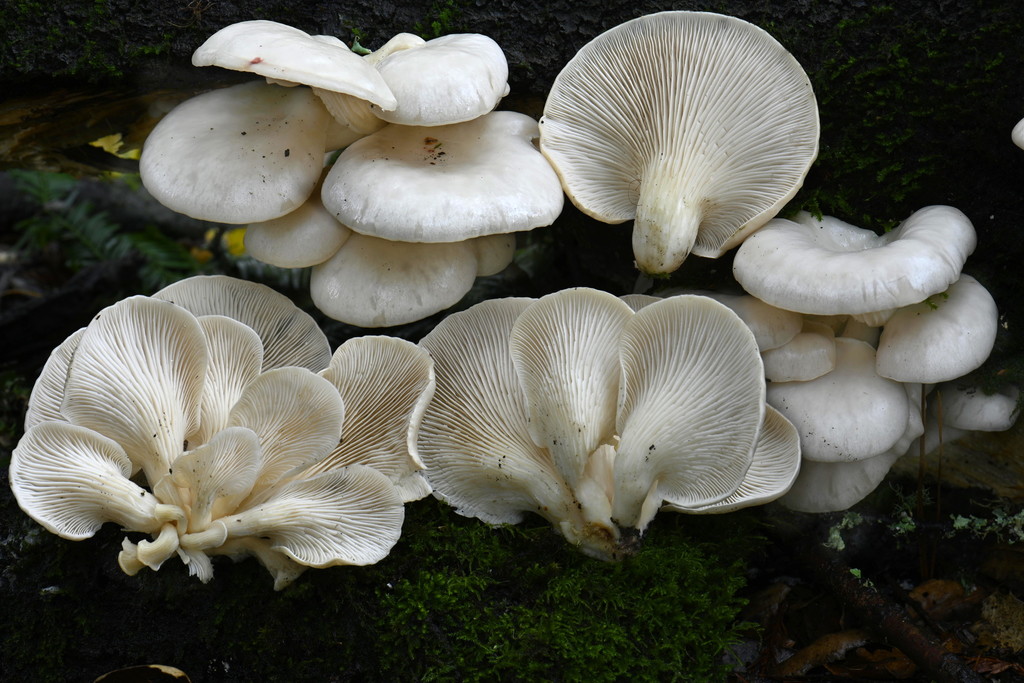
—observations
—countries
—peak records
Not EvaluatedConservation statusIUCN Red List categoriesLCNTVUENCREWEXNot Evaluated — not placed on the risk ladderRed List categories, explained →
Diet & preyDead Wood, Nematodes, Decaying Organic Matter
Predators
- Fungus Beetles
- Fungus Gnat Larvae
- Slugs
ThreatsDeforestation and excessive clear-cutting of dead standing trees
HabitatsTemperate and tropical hardwood and softwood forests
Life spanPerennial underground mycelium; individual mushrooms last 5–12 days
Classification
- OrderAgaricales
- FamilyPleurotaceae
- GenusPleurotus
- SpeciesPleurotus pulmonarius
Range data is not available yet.
Interaction riskLow
- Low
- Moderate
- High
- Very high
- Why interaction risk is low
- Many edible mushrooms have toxic look-alikes; never eat wild fungi based on app identification alone.
Responsible observation
- Substrate Inspection: Look for tiered fan-shaped clusters attached directly to decaying hardwood logs or stumps.
- Spore Printing: Place a mature cap gills-down on dark paper to observe a white to pale lavender spore print.
- Seasonal Timing: Search woodland trails from late spring through early autumn after warm rains.
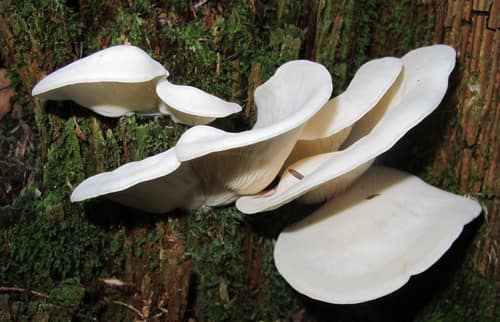
Look-alike (c) mycowalt, some rights reserved (CC BY-SA), uploaded by mycowalt · cc-by-sa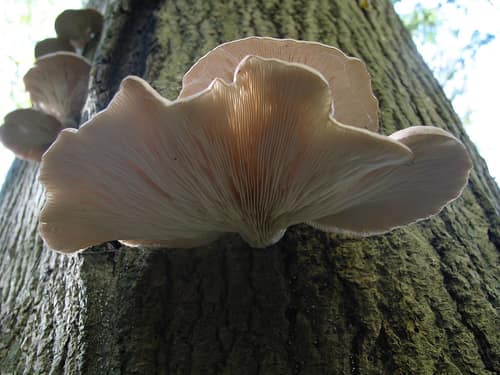
Close Relative voir ci-dessous / see below / CC BY 3.0 · cc-by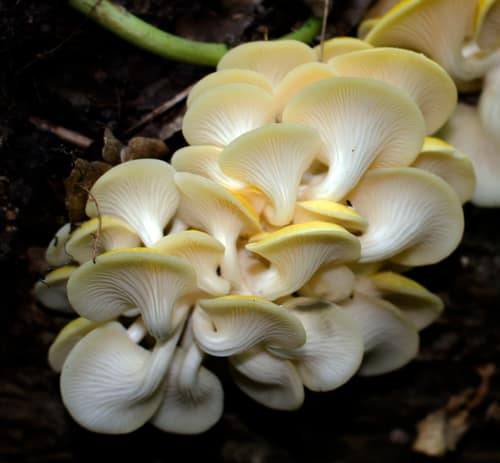
Close Relative (c) aarongunnar, some rights reserved (CC BY), uploaded by aarongunnar · cc-by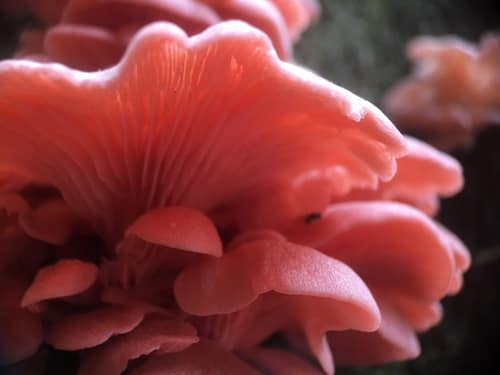
Close Relative (c) B. Phalan, some rights reserved (CC BY) · cc-by
Help improve the field guideSomething wrong?
Checking your Fauna account…Report a name, category, or profile issue for review.