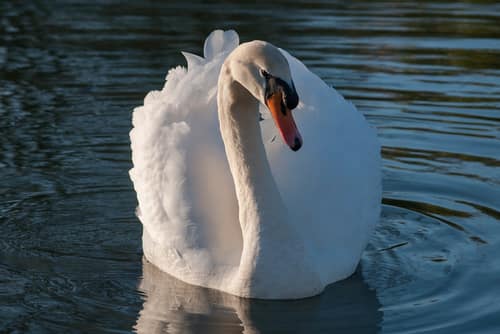
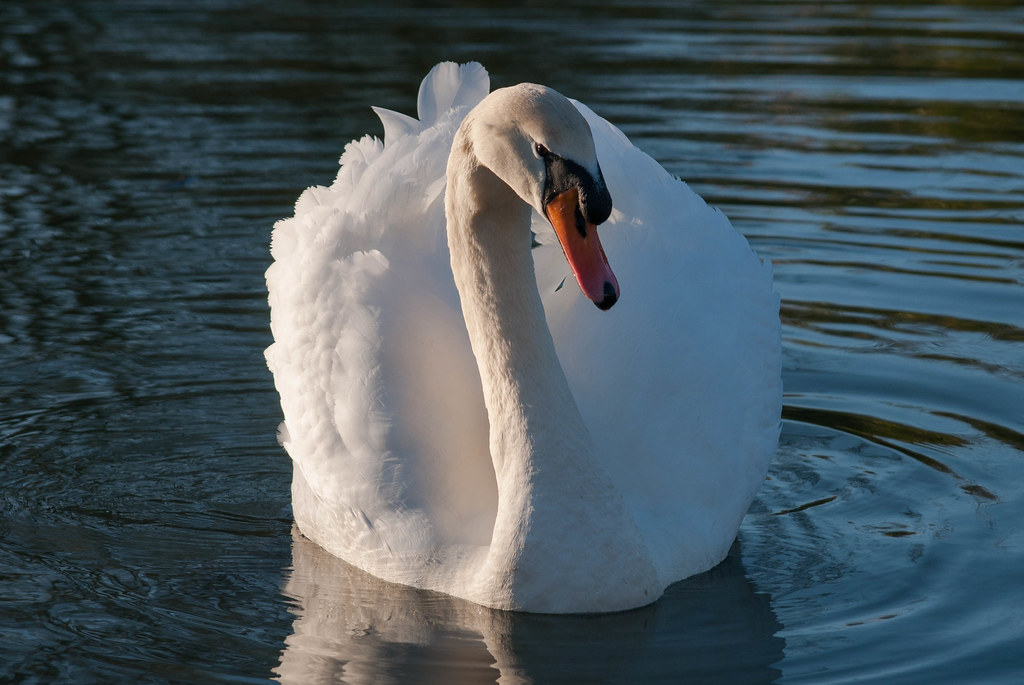
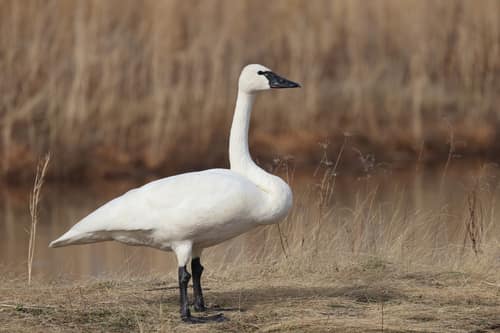
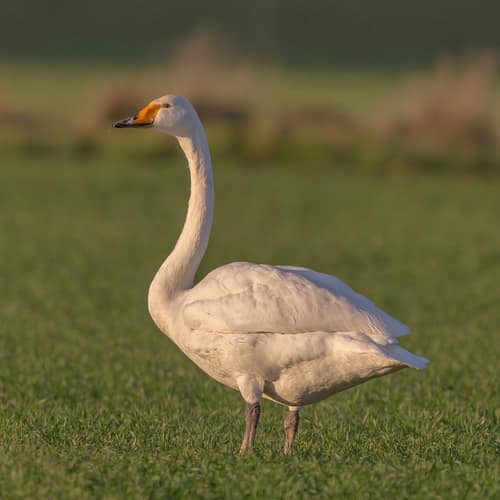
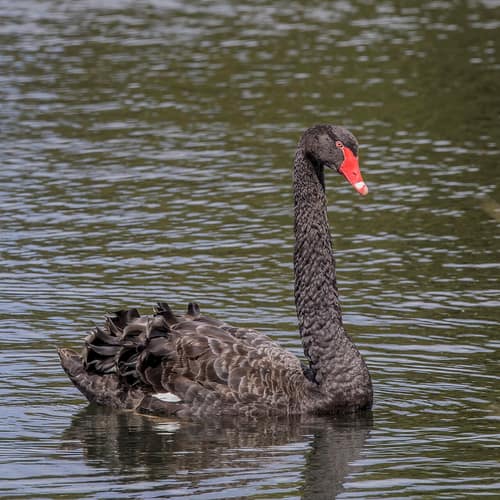
Mute swans glide gracefully across freshwater ponds, lakes, and coastal bays, maintaining lifelong monogamous pairs that aggressively defend their breeding territories. Although quieter than trumpeter or whooper swans, adults communicate through soft grunts, loud hissings, and the rhythmic, musical thrum of their heavy wingbeats in flight. Large nests constructed of reeds and aquatic vegetation are reused and enlarged year after year to raise broods of pale grey cygnets.
ThreatsLead poisoning from fishing tackle, collisions with power lines, habitat degradation, and culling in invasive ranges
HabitatsLakes, ponds, slow-moving rivers, coastal lagoons, and urban park waters
Life span10–20 years in the wild
Classification
OrderAnseriformes
FamilyAnatidae
GenusCygnus
SpeciesCygnus olor
Range & activity
Range data is not available yet.
Safe observation
Interaction riskHigh
Low
Moderate
High
Very high
Why interaction risk is high
Nesting parents aggressively defend territory with wing slaps and bites; keep a respectful distance, especially near cygnets.
Why it is dangerous
Territorial cob swans aggressively charge threats during nesting season, using powerful wingknuckles and beak strikes that can cause severe bruising or lacerations.
How to recognize a risky encounter
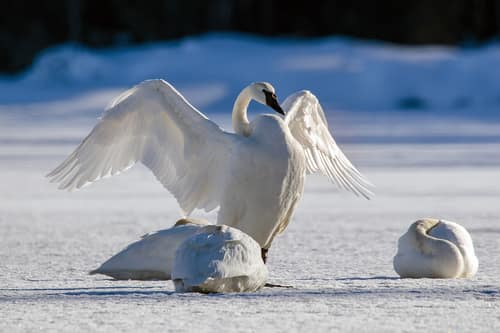
Identified by pure white plumage, an orange bill with a black base knob, and a raised wings pose when threatening intruders.
What to do
Never approach nesting swans or swimming broods, and step back immediately if a swan arches its wings and hisses.
Responsible observation
Observe from Shore: Keep a safe distance, particularly during spring and summer when adults guard eggs and cygnets.
Avoid Feeding Bread: Offer healthy alternatives like leafy greens or grain rather than processed bread, which causes malnutrition.
Watch Body Language: Retreat if a swan arches its wings over its back, lowers its head, and hisses loudly.