
Bird
Long-eared Owl
Asio otusAlso known as Northern Long-eared Owl, Lesser Horned Owl, Cat Owl
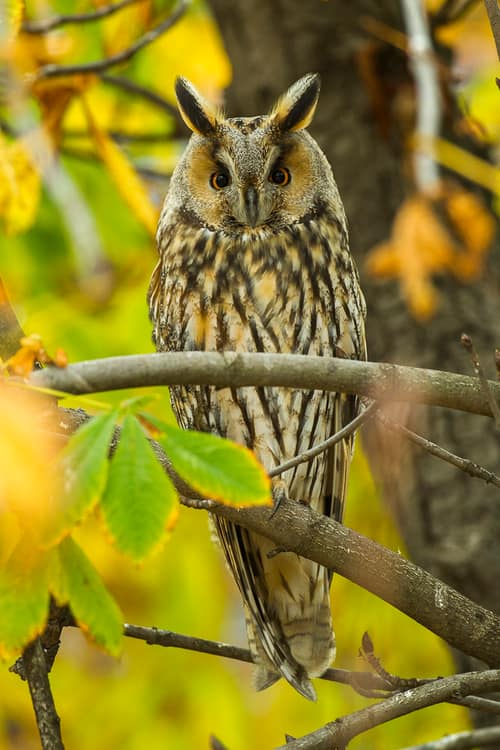
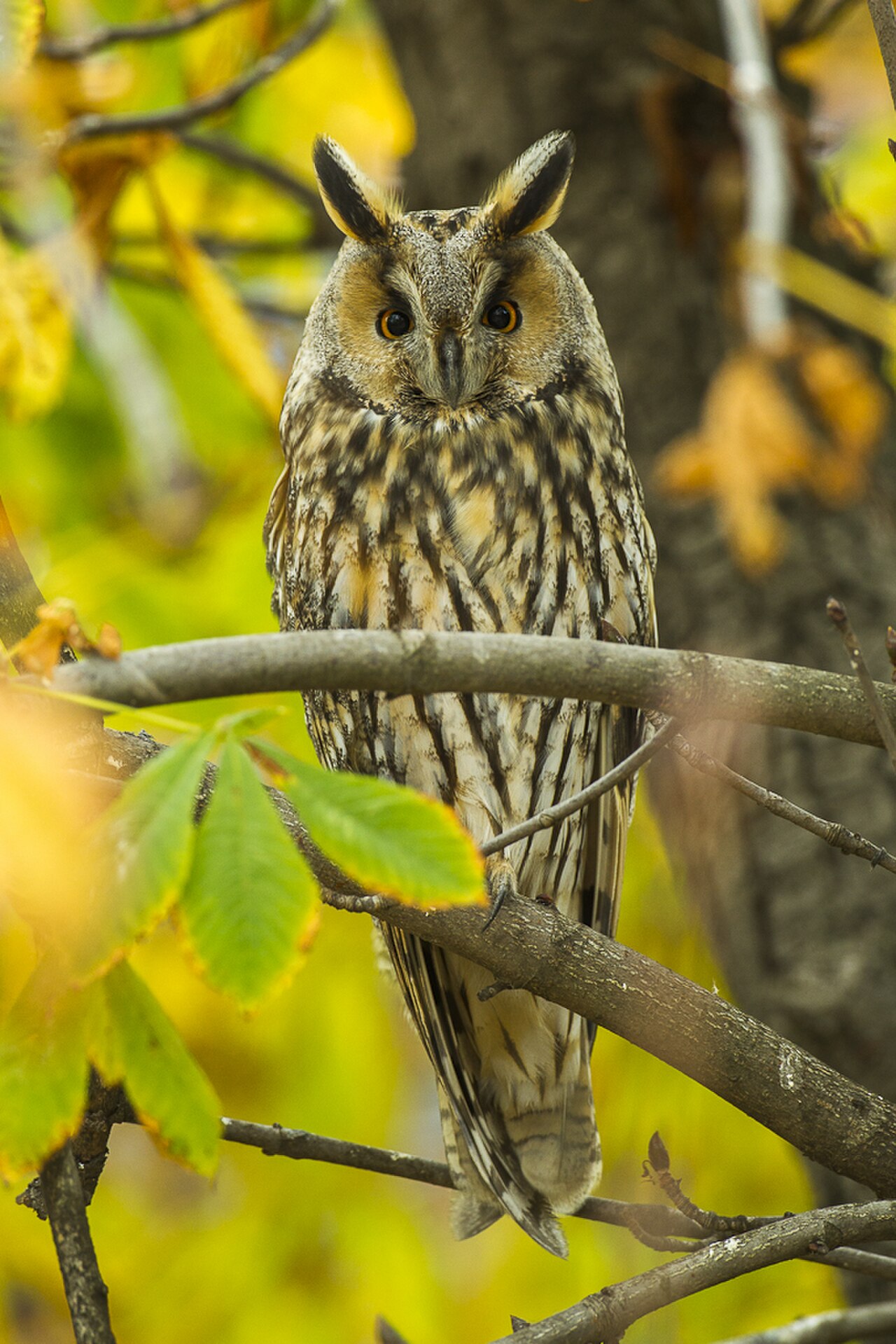
Long-eared Owls are masters of camouflage, spending their days roosting in dense coniferous foliage where they compress their bodies to resemble broken tree branches. Under the cover of darkness, they hunt over open fields and meadows, using incredibly sensitive hearing to locate prey beneath snow or vegetation. During winter, these otherwise solitary birds often gather in communal roosts, sometimes numbering dozens of individuals in a single grove.
NocturnalCamouflagedBird of Prey
—observations
—countries
—peak records
Least ConcernConservation statusIUCN Red List categoriesLCNTVUENCREWEXLeast ConcernRed List categories, explained →
Diet & preyVoles, Deer Mice, Pocket Gophers
Predators
- Great Horned Owl
- Red-tailed Hawk
- Northern Goshawk
ThreatsHabitat loss, rodenticide poisoning, vehicle collisions, and predation by larger raptors
HabitatsConiferous and mixed forests, open woodlands, grasslands, and shrublands
Life span10 to 15 years in the wild
Classification
- FamilyStrigidae
- SpeciesAsio otus
Range data is not available yet.
Interaction riskLow
- Low
- Moderate
- High
- Very high
- Why interaction risk is low
- Capable of inflicting painful scratches with sharp talons if cornered; observe quietly from a distance.
- What to notice
- Identified by long, closely-set ear tufts, bright orange facial discs, and heavily streaked underparts.
- Support conservation
- Never approach a roosting owl closely; use binoculars or a spotting scope to observe without causing them to flush.
Responsible observation
- Scan Dense Conifers: Look for their long, vertical ear tufts and orange facial discs deep within thick evergreen branches.
- Listen for Hoots: Listen at night for the male's low, single, repeating hoot, which carries surprisingly far.
- Respect Winter Roosts: Keep a respectful distance from communal winter roosts to avoid causing energy-depleting flight.
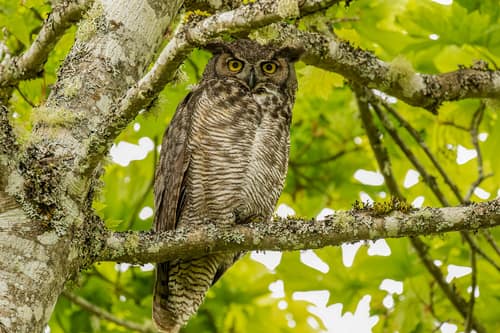
Predator and Competitor "Great Horned Owl, the first I've seen in decent light this year. Didn't want to disturb it for too long so we continued along the trail" by island deborah- is licensed under CC BY-SA 2.0. To view a copy of this license, visit https://creativecommons.org/licenses/by-sa/2.0/. · cc-by-sa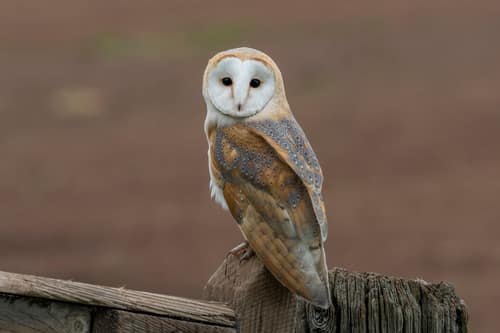
Ecological Competitor (c) caroline legg, some rights reserved (CC BY) · cc-by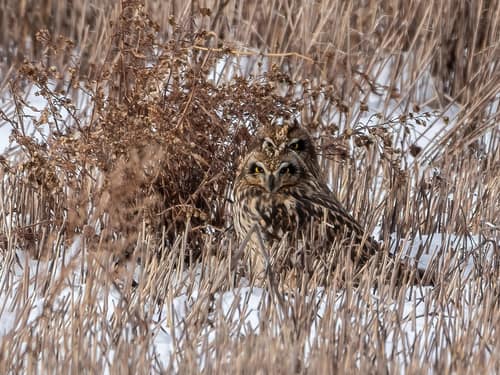
Close Relative (c) Derek Spencer, some rights reserved (CC BY) · cc-by
Help improve the field guideSomething wrong?
Checking your Fauna account…Report a name, category, or profile issue for review.