
Bird
Black Phoebe
Sayornis nigricansAlso known as White-winged Phoebe, Black Flycatcher
Black phoebes are distinctively charcoal-black flycatchers with stark white bellies that frequent streams, ponds, and irrigated gardens. They pump their tails continuously while perched on low branches or fences, making sudden aerial sallies to snap up flying insects before returning to the exact same vantage point. Breeding pairs build cup-shaped mud nests plastered against vertical surfaces such as bridge supports, cliff faces, and building eaves.
InsectivoreUrban TolerantPerch Hunter
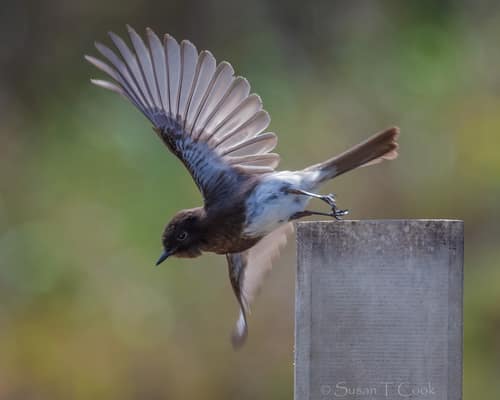
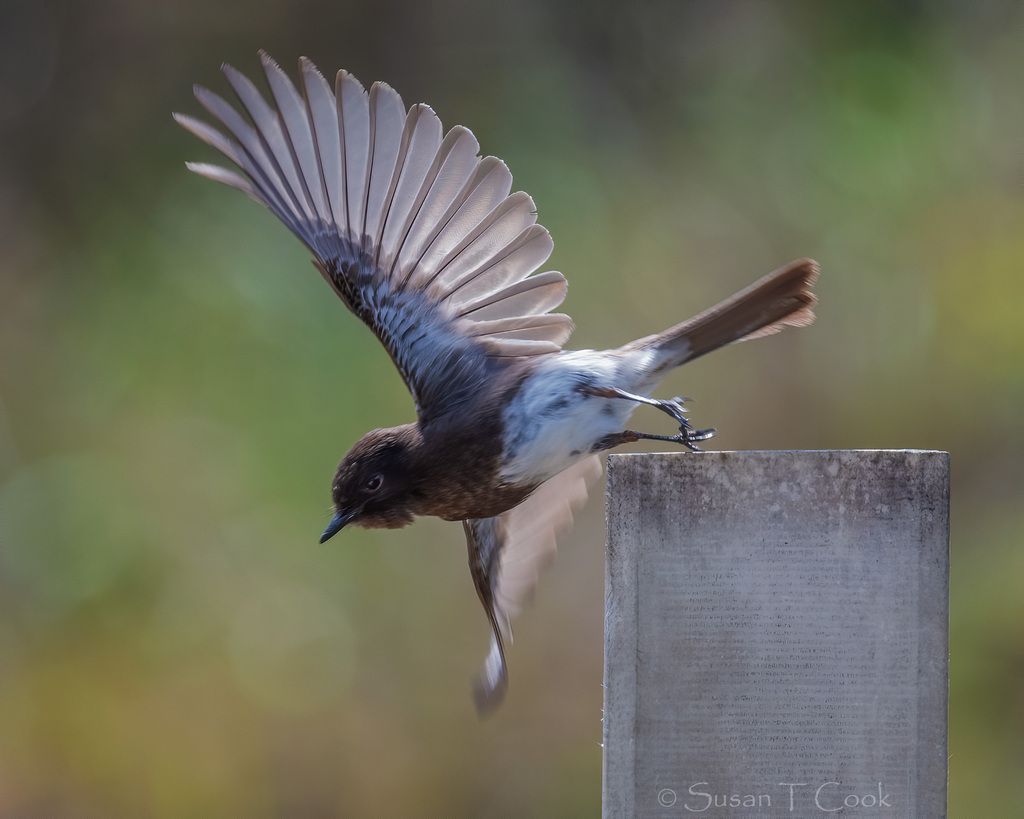
—observations
—countries
—peak records
Least ConcernConservation statusIUCN Red List categoriesLCNTVUENCREWEXLeast ConcernRed List categories, explained →
Diet & preyFlies, Beetles, Bees
Predators
- Cooper's Hawk
- Domestic Cat
- Snakes
ThreatsPesticide accumulation, riparian habitat destruction
HabitatsRiparian corridors, lakeshores, coastal cliffs, suburban parks
Life span5–8 years
Classification
- OrderPasseriformes
- FamilyTyrannidae
- GenusSayornis
- SpeciesSayornis nigricans
Range data is not available yet.
Interaction riskLow
- Low
- Moderate
- High
- Very high
- Why interaction risk is low
- Safe to observe at a normal distance.
Responsible observation
- Look Near Water: Search for individuals sallying out over streams, ponds, or lawn sprinklers.
- Watch the Tail: Spot low perches by looking for their rhythmic downward tail-dipping behavior.
- Respect Nest Sites: Keep a safe distance from mud nests plastered under eaves or bridge supports.
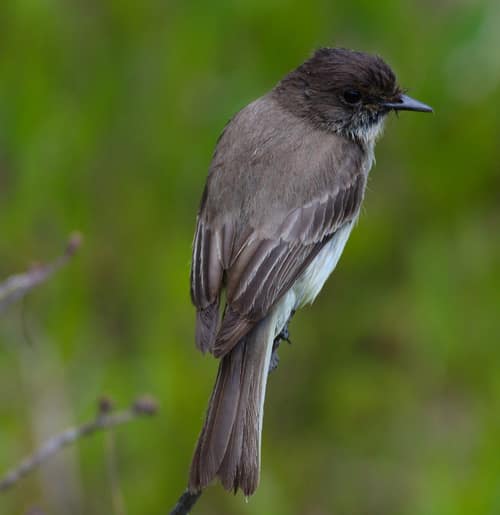
Close Relative no rights reserved, uploaded by Mark Connolly · cc0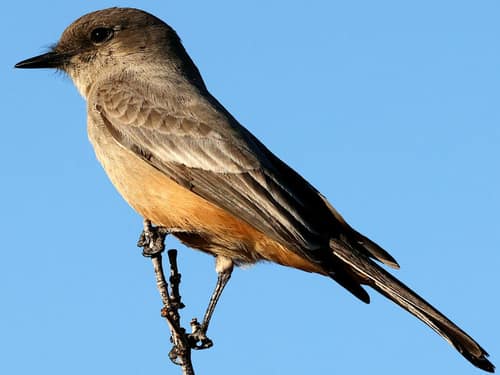
Close Relative (c) Peter Chen 2.0, some rights reserved (CC BY) · cc-by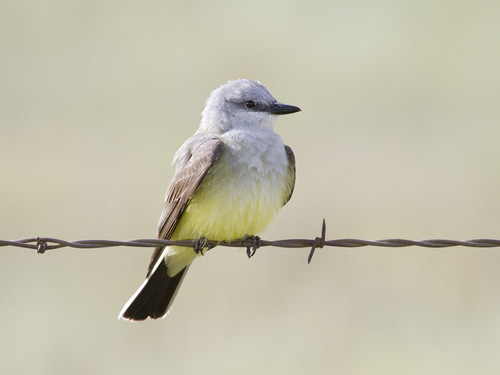
Family Member (c) Bill Bouton, some rights reserved (CC BY-SA) · cc-by-sa
Help improve the field guideSomething wrong?
Checking your Fauna account…Report a name, category, or profile issue for review.