
Bird
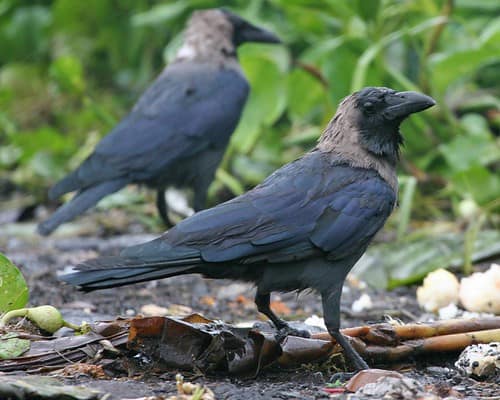
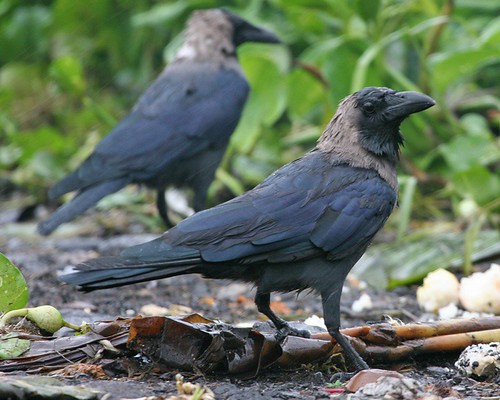
House Crow
Corvus splendensAlso known as Indian Crow, Greynecked Crow, Ceylon Crow, Colombo Crow
House crows thrive alongside human settlements, relying on urban waste, open markets, and anthropogenic food scraps for survival. Highly social and vocal, they form massive nocturnal roosts in city trees and communicate with persistent, harsh caws. Their remarkable adaptability and ship-assisted transport have allowed them to establish thriving breeding populations in coastal hubs worldwide.
UrbanIntelligentInvasive
—observations
—countries
—peak records
Least ConcernConservation statusIUCN Red List categoriesLCNTVUENCREWEXLeast ConcernRed List categories, explained →
Diet & preyFood Scraps, Insects, Small Lizards
Predators
- Raptors
- Feral Cats
- Snakes
ThreatsLocal eradication efforts and urban pest management
HabitatsCities, coastal ports, farmlands, villages
Life span6–12 years
Classification
- OrderPasseriformes
- FamilyCorvidae
- GenusCorvus
- SpeciesCorvus splendens
Range data is not available yet.
Interaction riskLow
- Low
- Moderate
- High
- Very high
- Why interaction risk is low
- May dive-bomb or scratch when defending nests; keep a safe distance from active nesting trees.
Responsible observation
- Urban Observation: Watch for their clever foraging strategies around outdoor markets and food stalls.
- Breeding Caution: Give nesting trees wide clearance during peak breeding season to avoid dive-bombing.
- Identification: Look for the contrasting greyish neck mantle that sets them apart from all-black crows.
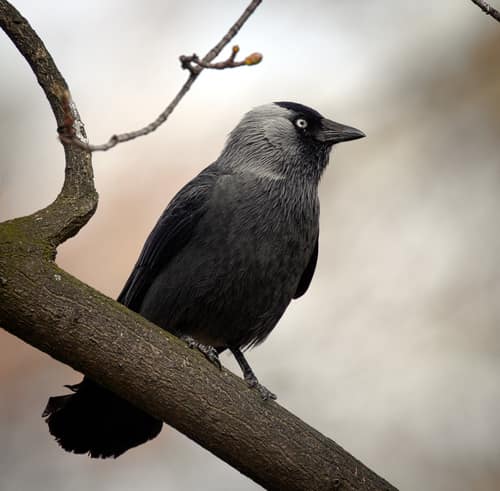
Look-Alike "Western jackdaw" by hedera.baltica is licensed under CC BY-SA 2.0. To view a copy of this license, visit https://creativecommons.org/licenses/by-sa/2.0/. · cc-by-sa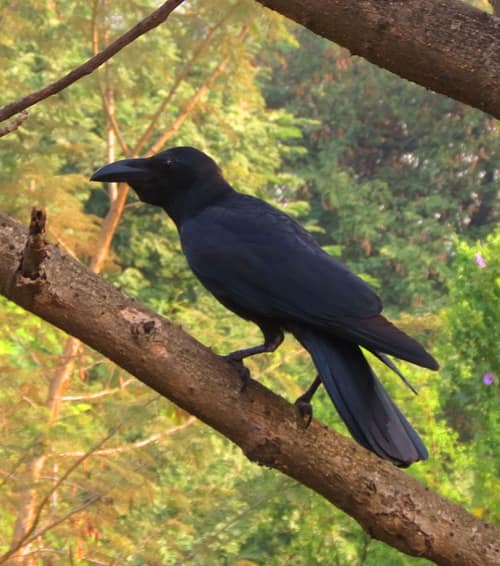
Close Relative (c) Paul Bedell, some rights reserved (CC BY-SA), uploaded by Paul Bedell · cc-by-sa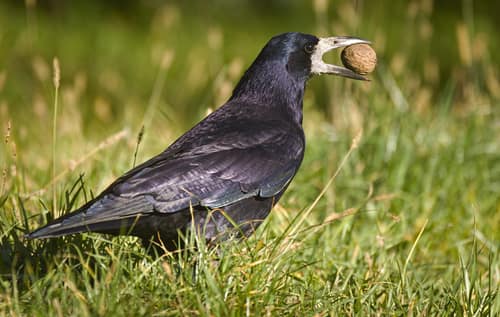
Close Relative (c) hedera.baltica, some rights reserved (CC BY-SA) · cc-by-sa
Keep collecting in Fauna
Found in Collections
Species set Pro
Backyard Birds
House Crow is found in this collection. Identify it in Fauna to fill this slot and continue your progress.
Unlock to track progress
Help improve the field guideSomething wrong?
Checking your Fauna account…Report a name, category, or profile issue for review.