
Bird
Long-billed Dowitcher
Limnodromus scolopaceusAlso known as Greater Grayback, Red-breasted Snipe
Long-billed dowitchers are stocky shorebirds famous for their rapid, vertical probing motion that resembles a sewing machine needle. During the breeding season, they display rich cinnamon-rufous underparts and intricate gold-and-black mottling on their backs, transitioning to a drab grey in winter. They gather in dense, energetic flocks in shallow freshwater wetlands, mudflats, and flooded fields where they forage alongside other waders.
ShorebirdMigratoryWetland
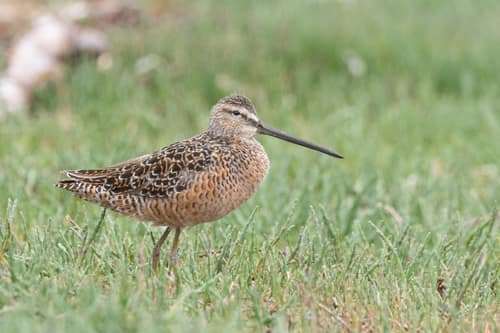
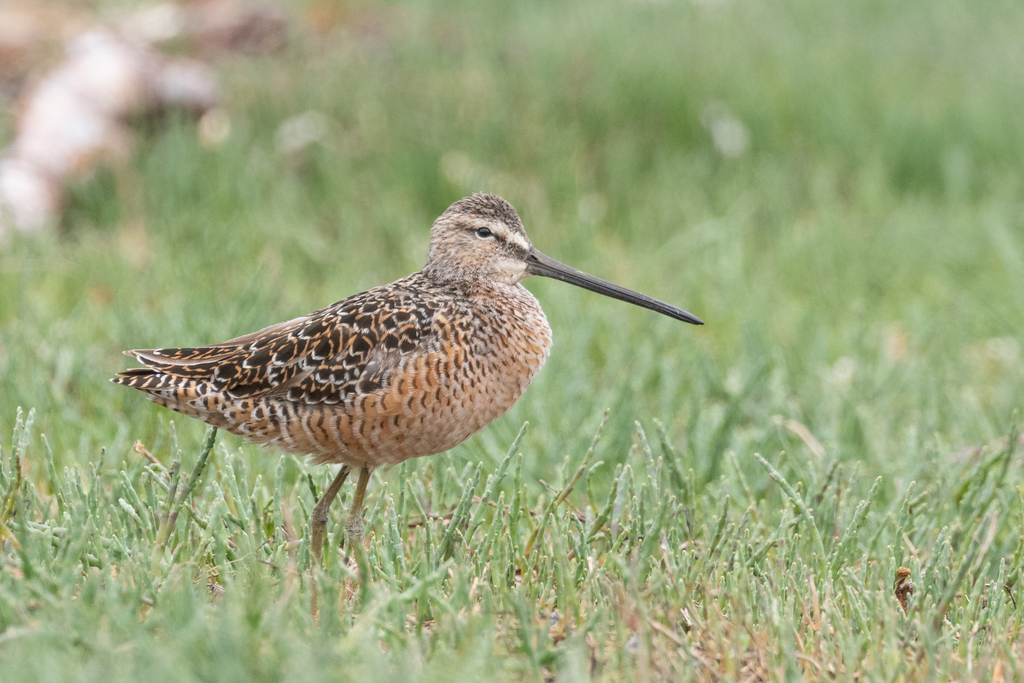
—observations
—countries
—peak records
Near ThreatenedConservation statusIUCN Red List categoriesLCNTVUENCREWEXNear ThreatenedRed List categories, explained →
Diet & preyMidge larvae, Aquatic beetles, Small snails
Predators
- Peregrine Falcon
- Merlin
- Northern Harrier
ThreatsHabitat loss, wetland degradation, and climate change affecting Arctic breeding grounds
HabitatsFreshwater marshes, flooded agricultural fields, mudflats, and tundra breeding grounds
Life span8 to 12 years
Classification
- FamilyScolopacidae
- SpeciesLimnodromus scolopaceus
Range data is not available yet.
Interaction riskLow
- Low
- Moderate
- High
- Very high
- Why interaction risk is low
- Safe to observe at a normal distance.
- What to notice
- Look for a medium-sized shorebird with a very long, straight bill, feeding in dense groups in shallow freshwater.
- Support conservation
- Observe quietly from a distance, especially during migration stopovers when birds need to feed undisturbed.
Responsible observation
- Listen for calls: Distinguish them from short-billed dowitchers by their sharp, high-pitched keek call.
- Watch the feeding style: Look for the rapid, vertical sewing machine probing motion in shallow water.
- Keep your distance: Use binoculars or a spotting scope to avoid flushing feeding flocks from mudflats.
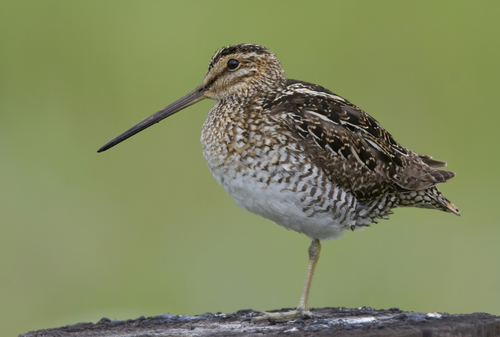
Look-alike (c) Gregory "Slobirdr" Smith, some rights reserved (CC BY-SA) · cc-by-sa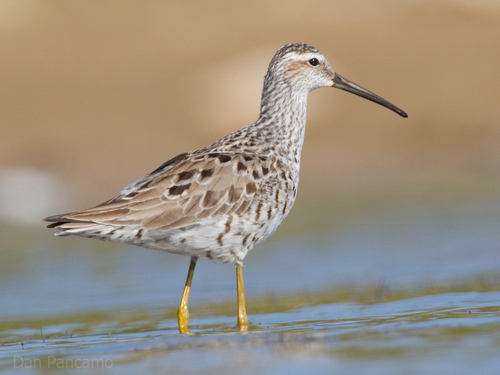
Frequent Companion (c) Dan Pancamo, some rights reserved (CC BY-SA) · cc-by-sa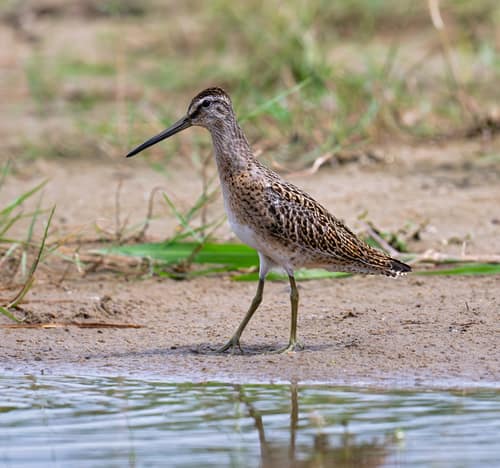
Close Relative (c) Karen Szafrajda, some rights reserved (CC BY) · cc-by
Help improve the field guideSomething wrong?
Checking your Fauna account…Report a name, category, or profile issue for review.