
Bird
Ring-billed Gull
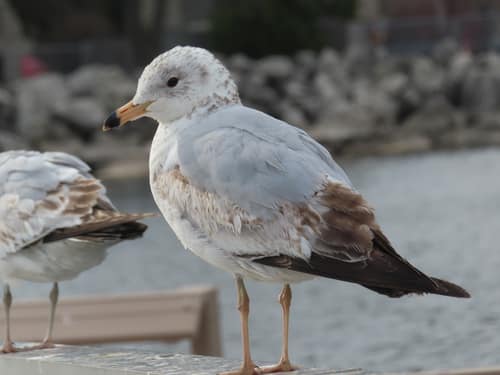
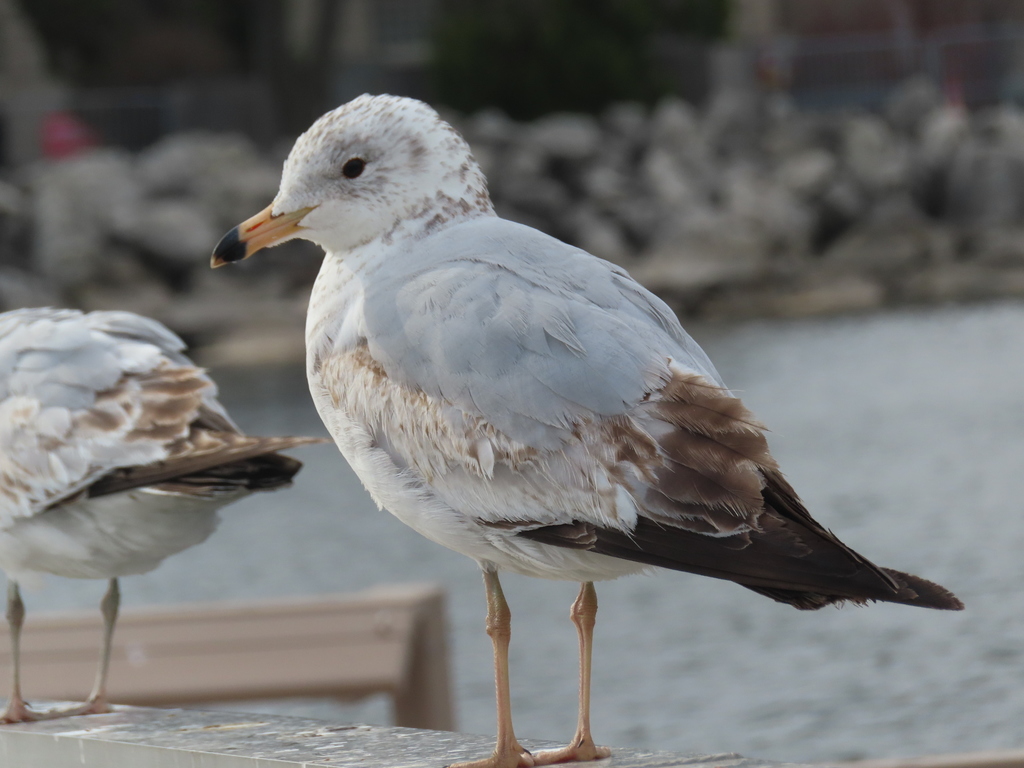
Larus delawarensisRing-billed gulls are highly adaptable, opportunistic foragers that thrive in coastal habitats, agricultural fields, and urban parking lots across North America. Easily identified by the prominent black ring encircling their bright yellow bill, these medium-sized gulls nest in dense colonies on islands and lakeshores. During winter, large noisy flocks gather around landfills, reservoirs, and beaches, displaying remarkable aerial agility while competing for food scraps.
SeabirdAdaptableColonial
—observations
—countries
—peak records
Least ConcernConservation statusIUCN Red List categoriesLCNTVUENCREWEXLeast ConcernRed List categories, explained →
Diet & preyFish, Earthworms, Insects
Predators
- Great Horned Owl
- Red Fox
- Bald Eagle
ThreatsPlastic pollution, entanglement in trash, localized pest control
HabitatsLakes, rivers, coastal beaches, mudflats, farmland, urban areas
Life span10–15 years
Classification
- OrderCharadriiformes
- FamilyLaridae
- GenusLarus
- SpeciesLarus delawarensis
Range data is not available yet.
Interaction riskLow
- Low
- Moderate
- High
- Very high
- Why interaction risk is low
- Can peck or swoop if cornered or defending nests; observe from a polite distance.
Responsible observation
- Watch from afar: Avoid feeding human scraps to prevent aggressive begging behavior.
- Examine the bill: Look for the clean black band near the tip of the yellow bill to confirm identification.
- Avoid nesting islands: Keep clear of island colonies during spring to prevent nest abandonment.
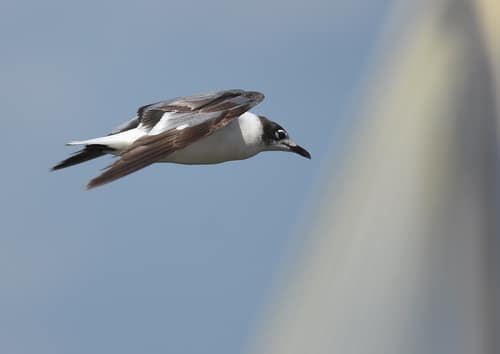
Competitor "Franklin's Gull (1st summer bird, molting)" by Wildreturn is licensed under CC BY 2.0. To view a copy of this license, visit https://creativecommons.org/licenses/by/2.0/. · cc-by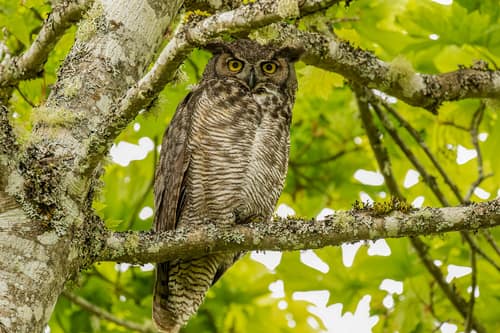
Predator "Great Horned Owl, the first I've seen in decent light this year. Didn't want to disturb it for too long so we continued along the trail" by island deborah- is licensed under CC BY-SA 2.0. To view a copy of this license, visit https://creativecommons.org/licenses/by-sa/2.0/. · cc-by-sa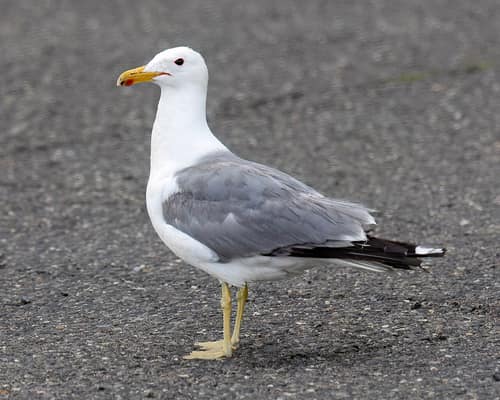
Close Relative Polinova / CC BY-SA 4.0 · cc-by-sa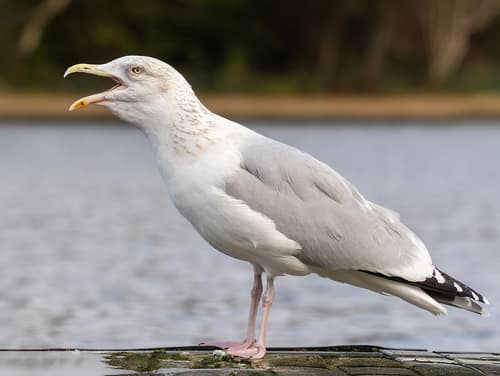
Close Relative Rhododendrites / CC BY-SA 4.0 · cc-by-sa
Keep collecting in Fauna
Found in Collections
Species set Pro
Shore Life
Ring-billed Gull is found in this collection. Identify it in Fauna to fill this slot and continue your progress.
Unlock to track progress
Help improve the field guideSomething wrong?
Checking your Fauna account…Report a name, category, or profile issue for review.