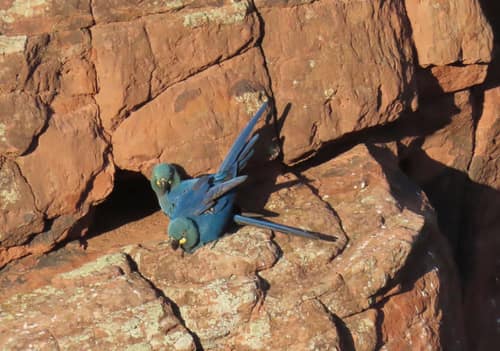
Hyacinth macaws mate for life and form devoted monogamous pairs that travel together within small flocks, frequently vocalizing with guttural, rasping shrieks that carry across great distances. Equipped with an exceptionally powerful hooked beak capable of cracking open hard-shelled palm nuts that other birds cannot pierce, they often ingest clay to neutralize plant toxins and aid mineral intake. Pairs nest almost exclusively in large hollow cavities of mature trees or sandstone cliff faces, investing months of parental care into raising usually just one surviving fledgling per clutch.
ThreatsIllegal pet trade trapping, habitat loss, fire, and loss of nesting trees
HabitatsSemi-open woodlands, palm groves, riverine forests, and seasonally flooded savannas
Life span50–60 years in the wild
Classification
FamilyPsittacidae
SpeciesAnodorhynchus hyacinthinus
Range & activity
Native
Safe observation
Interaction riskLow
Low
Moderate
High
Very high
Why interaction risk is low
Possesses immense jaw strength capable of crushing bone; maintain a respectful distance and never corner or handle.
Why it is dangerous
The beak can exert over 300 pounds per square inch of crushing pressure, easily severing fingers or causing severe lacerations if the bird feels trapped.
How to recognize a risky encounter
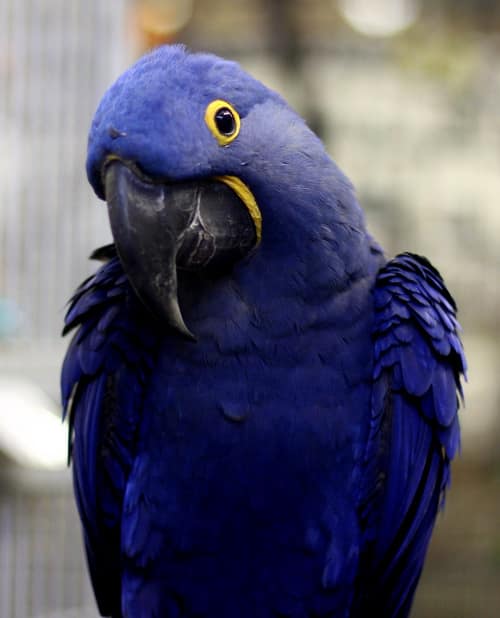
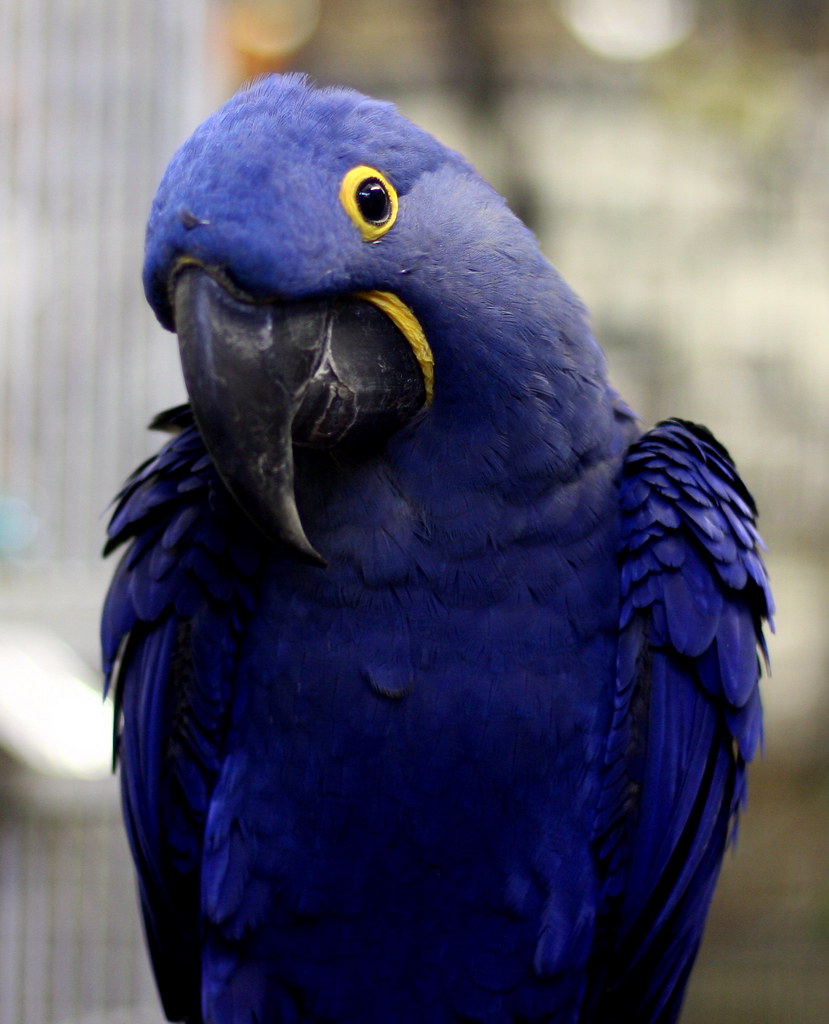
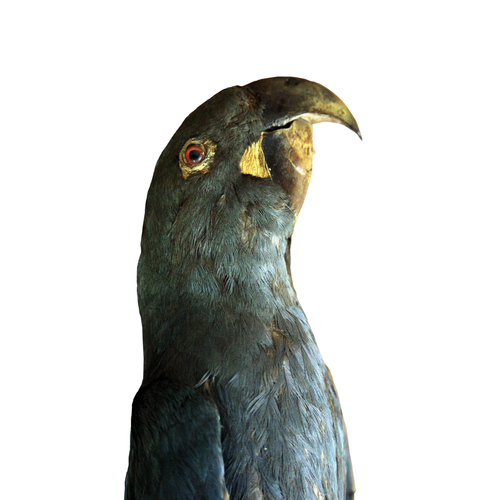
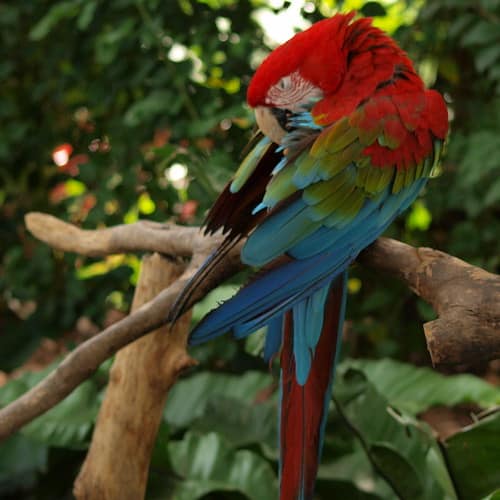
Recognized by its massive size, cobalt-blue plumage, large black beak, and bright yellow eye-rings and mandible patches.
What to do
Never attempt to touch or capture wild individuals; give injured birds wide berth and contact local wildlife rescue professionals.
What to notice
Distinguished as the world's longest flying parrot, showing uniform cobalt blue with prominent bright yellow patches around the lower beak and eyes.
Support conservation
Keep noise levels low, stay strictly on designated trails in conservation reserves, and never disclose precise nesting locations on public tracking platforms.
Responsible observation
Distance: Observe from at least 30 meters using binoculars or a telephoto lens to prevent flushing feeding or nesting pairs.
Nesting Etiquette: Avoid lingering near occupied manduvi tree hollows, as human presence can disrupt critical brooding routines.
Timing: Look for flight activity in open palm savannas during the first hours after dawn and late afternoon.