
Bird
Golden-collared Macaw
Primolius auricollisAlso known as Yellow-collared Macaw, Cassin's Macaw
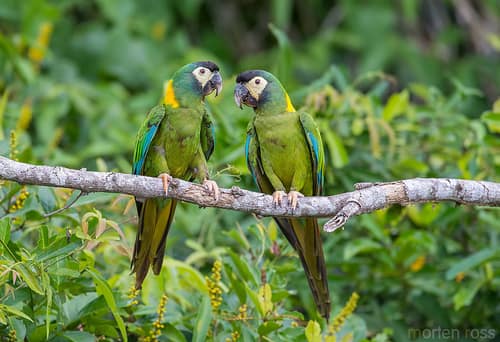
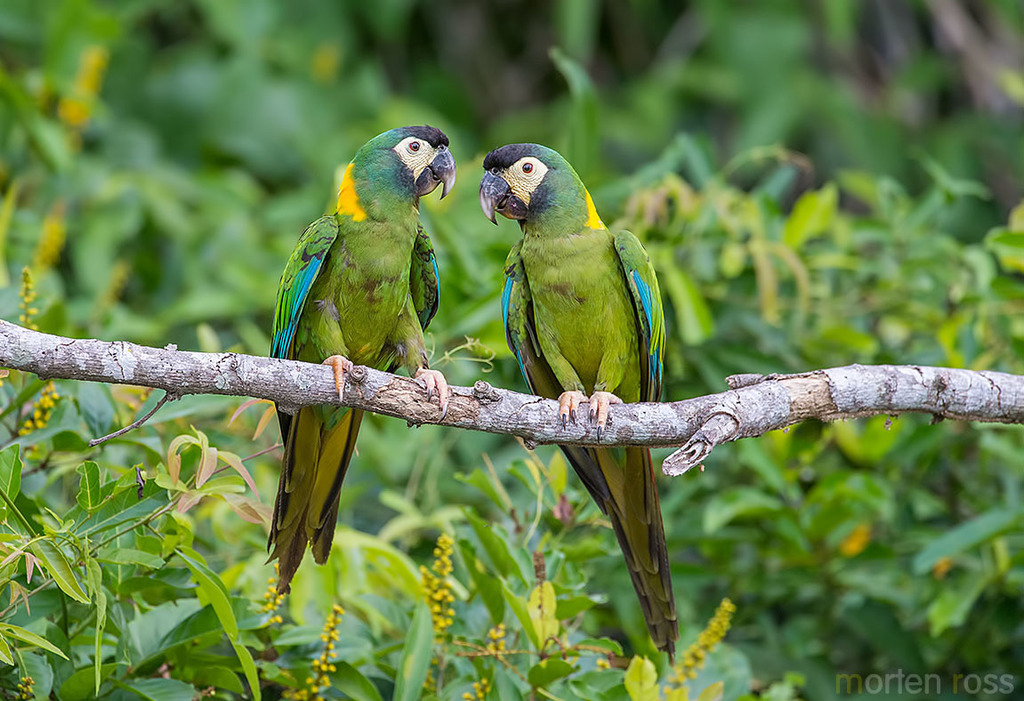
Golden-collared macaws are vibrant, medium-sized parrots easily recognized by the bright yellow band wrapping around the back of their necks. Highly social and expressive, they travel in noisy pairs or small flocks across South American woodlands, maintaining constant communication with harsh, metallic screeches. They play a vital ecological role as seed dispersers, feeding on a variety of canopy fruits and nuts.
VocalSocialCanopy-dwelling
—observations
—countries
—peak records
Least ConcernConservation statusIUCN Red List categoriesLCNTVUENCREWEXLeast ConcernRed List categories, explained →
Diet & preyPalm fruits, Figs, Seeds
Predators
- Harpy eagles
- Tree-climbing snakes
- Coatis
ThreatsHabitat loss, deforestation, and capture for the illegal pet trade
HabitatsDeciduous woodlands, gallery forests, humid forests, and Pantanal savannas
Life span30 to 40 years
Classification
- FamilyPsittacidae
- SpeciesPrimolius auricollis
Range data is not available yet.
Interaction riskLow
- Low
- Moderate
- High
- Very high
- Why interaction risk is low
- Capable of a powerful bite if cornered; observe from a respectful distance.
- Why it is dangerous
- Possesses a strong, hooked beak designed for cracking hard nuts, which can inflict deep puncture wounds if the bird feels threatened.
- How to recognize a risky encounter
- Look for the bright yellow collar on the hindneck, green body, and blue-tipped wings.
- What to do
- Never attempt to handle wild macaws; admire their flight and social behaviors from a safe distance.
Responsible observation
- Listen for calls: Locate them by listening for their loud, screeching contact calls in the canopy.
- Scan palm trees: Look for them feeding on palm nuts, especially in early morning or late afternoon.
- Keep your distance: Avoid approaching nesting cavities in tree hollows to prevent disturbing breeding pairs.
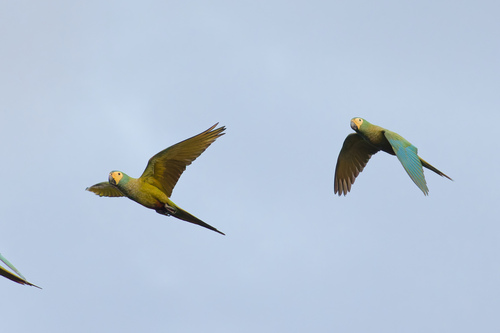
Frequent Companion (c) Donald Davesne, some rights reserved (CC BY) · cc-by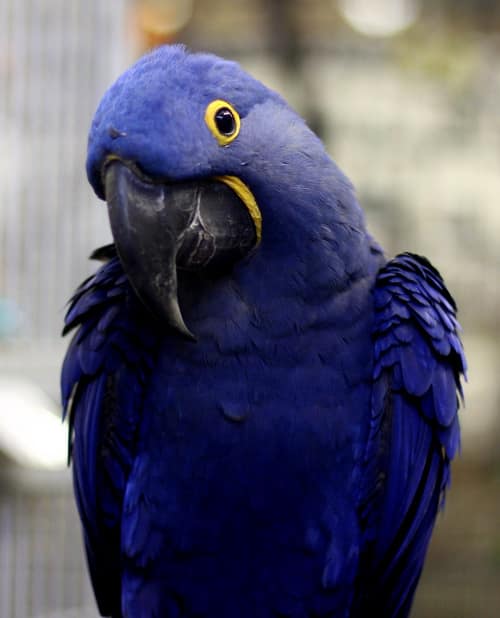
Co-occurring Species "Hyacinth Macaw" by eflon is licensed under CC BY 2.0. To view a copy of this license, visit https://creativecommons.org/licenses/by/2.0/. · cc-by Image unavailable
Close Relative
Help improve the field guideSomething wrong?
Checking your Fauna account…Report a name, category, or profile issue for review.