
Bird
Sword-billed Hummingbird
Ensifera ensiferaAlso known as Swordbill, Sword-bill
Sword-billed Hummingbirds zip through Andean cloud forests, easily recognized by an extraordinary bill that stretches longer than their entire body. This extreme adaptation allows them to monopolize deep, tube-shaped flowers that other birds cannot reach, particularly passionflowers. Because of this massive beak, they must perch with their heads tilted upward to balance the weight and preen their feathers using their feet instead of their bills.
AndeanNectarivoreHigh-Altitude
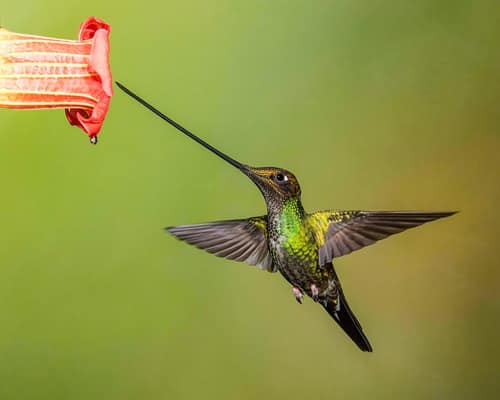
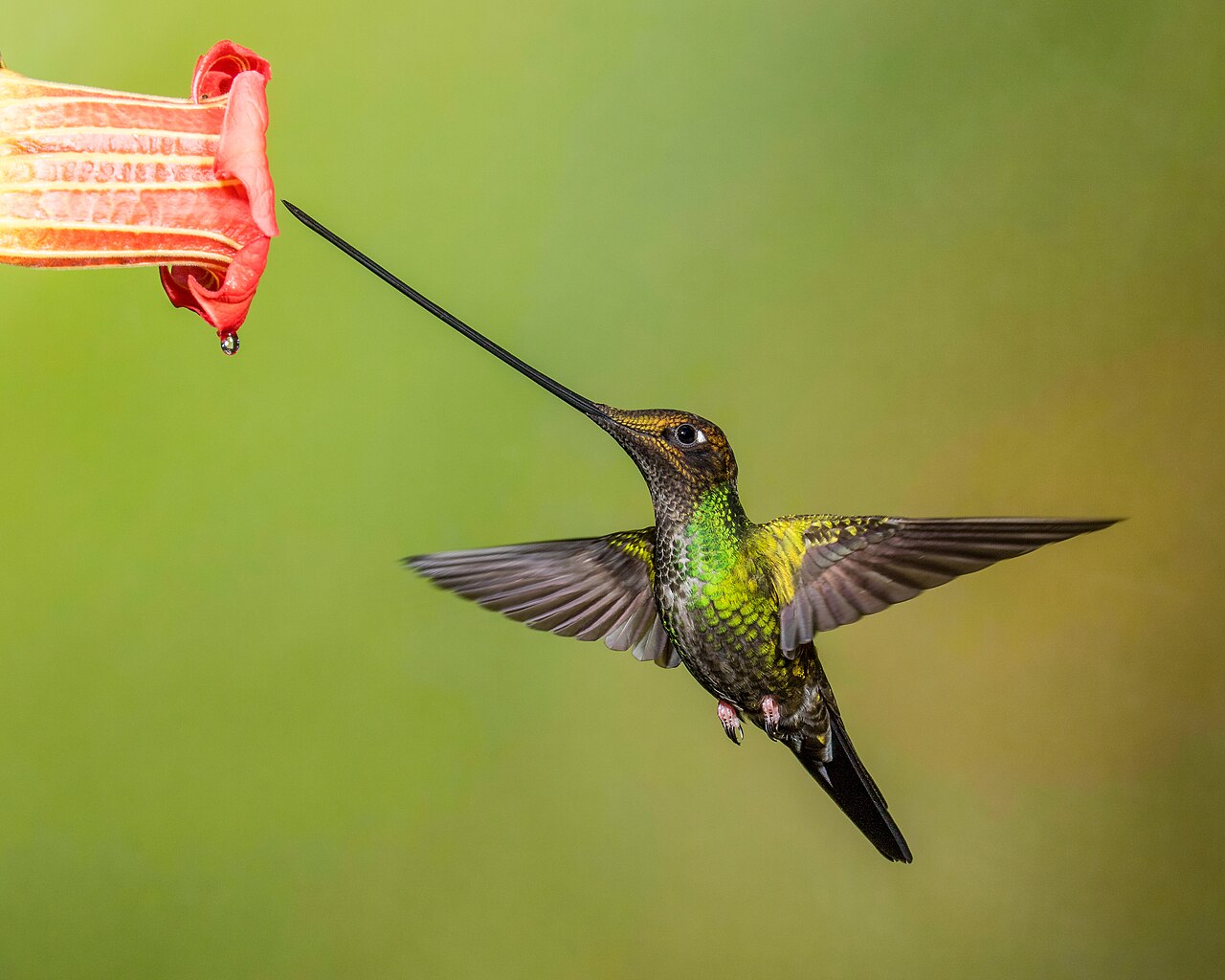
—observations
—countries
—peak records
Least ConcernConservation statusIUCN Red List categoriesLCNTVUENCREWEXLeast ConcernRed List categories, explained →
Diet & preyPassionflower Nectar, Small Insects, Spiders
Predators
- Raptors
- Arboreal Snakes
- Feral Cats
ThreatsHabitat loss and deforestation
HabitatsAndean cloud forests and montane shrublands
Life span3 to 5 years
Classification
- FamilyTrochilidae
- SpeciesEnsifera ensifera
Range data is not available yet.
Interaction riskLow
- Low
- Moderate
- High
- Very high
- Why interaction risk is low
- Safe to observe at a normal distance.
Responsible observation
- Look Up: Watch for these birds perching with their bills pointing nearly straight up to reduce neck strain.
- Target Passionflowers: Locate patches of wild pink passionflowers where these specialists feed regularly.
- Listen for Buzzing: Listen for the deep, heavy wing-beat hum that distinguishes them from smaller hummingbirds.

Coevolved Partner no rights reserved, uploaded by Jhon Antony Yuca Palomino · cc0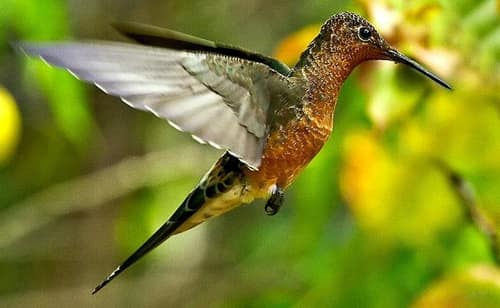
Co-occurring Giant Arturo Nahum / CC BY-SA 2.5 · cc-by-sa Image unavailable
High-Altitude Competitor
Help improve the field guideSomething wrong?
Checking your Fauna account…Report a name, category, or profile issue for review.