
Bird
Common Crane
Grus grusAlso known as Eurasian Crane, Eurasian Common Crane
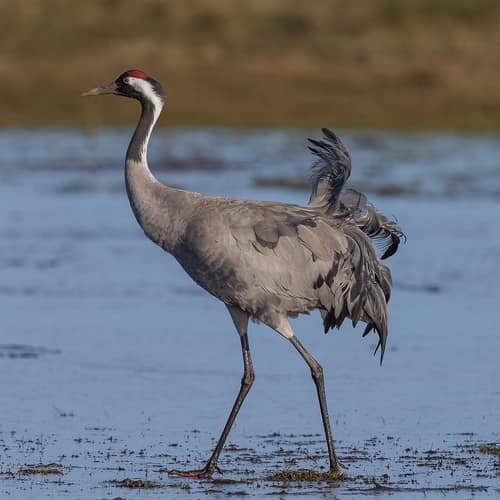
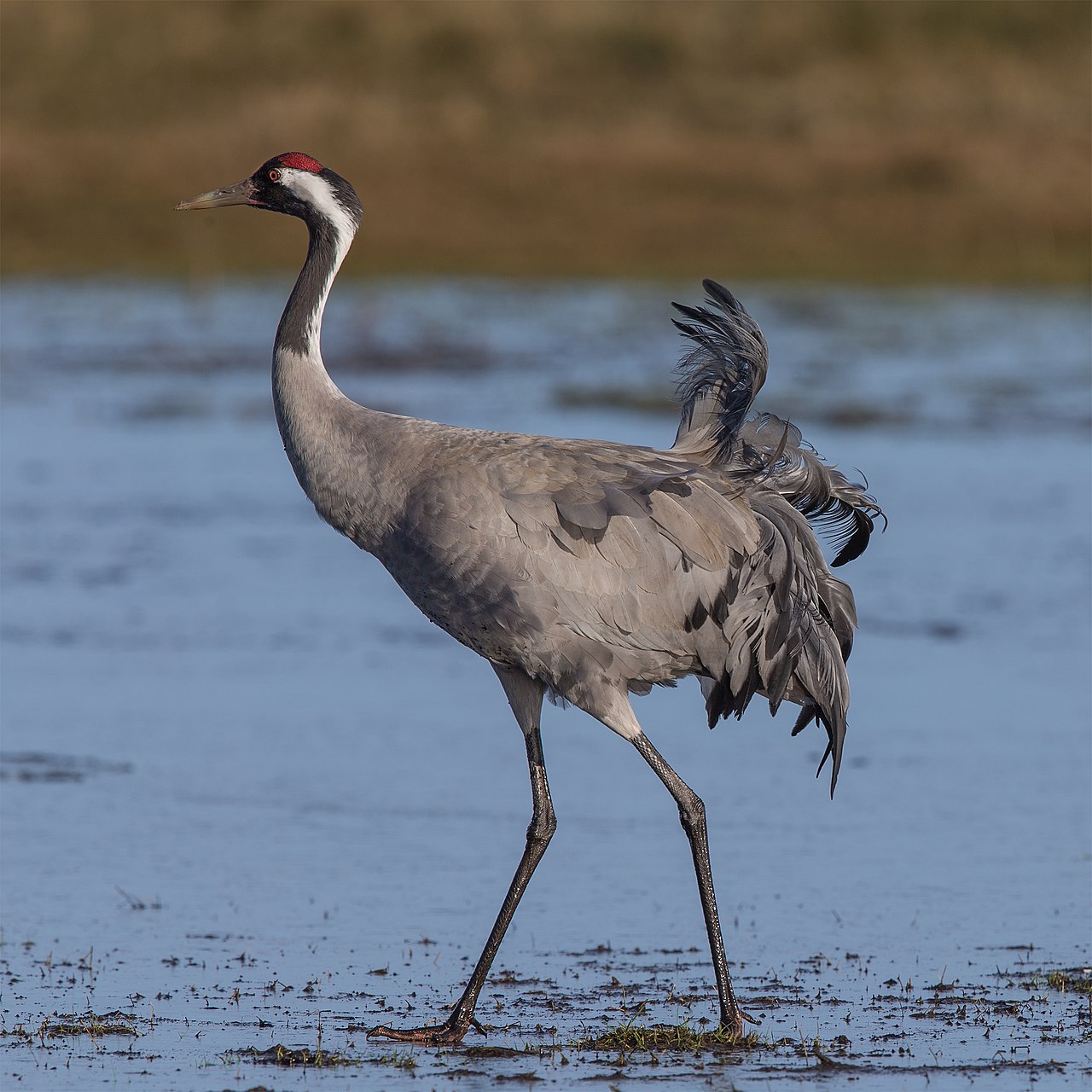
Common cranes fill northern wetlands with trumpet-like bugling calls that carry for miles across open marshland. During spring, breeding pairs perform elaborate courtship dances featuring synchronized leaps, bows, and wing spreads that reinforce lifelong pair bonds. These social birds travel thousands of kilometers each autumn in majestic V-formations to winter in southern Europe and northern Africa.
MigratoryVocalWetland
—observations
—countries
—peak records
Least ConcernConservation statusIUCN Red List categoriesLCNTVUENCREWEXLeast ConcernRed List categories, explained →
Diet & preyInsects, Frogs, Grains
Predators
- Red Fox
- Golden Eagle
- Eurasian Lynx
ThreatsWetland drainage, collision with power lines, agricultural intensification
HabitatsWetlands, shallow lakes, peat bogs, agricultural fields
Life span15–20 years
Classification
- FamilyGruidae
- SpeciesGrus grus
Native
Interaction riskLow
- Low
- Moderate
- High
- Very high
- Why interaction risk is low
- Capable of striking with a sharp beak if cornered; observe from a safe distance.
- What to notice
- Look for tall, slate-grey birds with black-and-white neck stripes and a bright red crown patch.
- Support conservation
- Remain on established trails and use binoculars to observe nesting sites from a distance.
Responsible observation
- Scanning roosts: Use a spotting scope to view resting flocks without flushing them from shallow water.
- Listening for calls: Listen for loud, trumpet-like calls miles away during spring migration.
- Maintaining distance: Keep back during spring courtship displays to avoid interrupting nesting pairs.
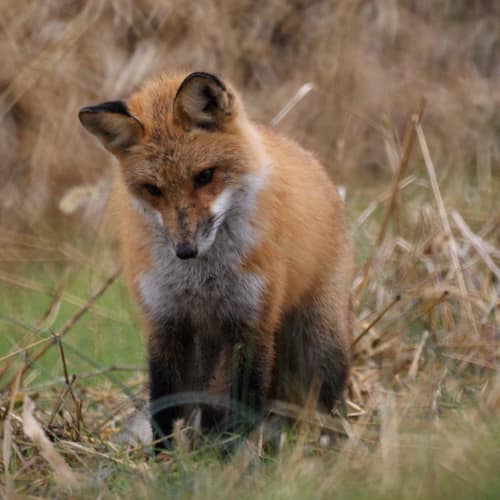
Predator "Red Fox" by Mike's Birds is licensed under CC BY-SA 2.0. To view a copy of this license, visit https://creativecommons.org/licenses/by-sa/2.0/. · cc-by-sa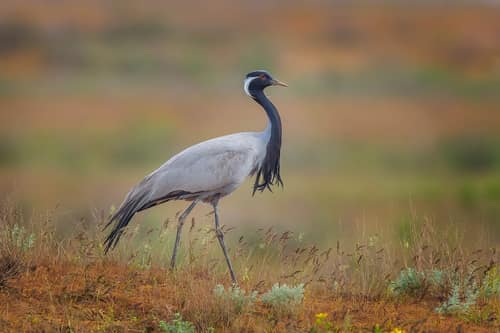
Close Relative (c) egorbirder, some rights reserved (CC BY) · cc-by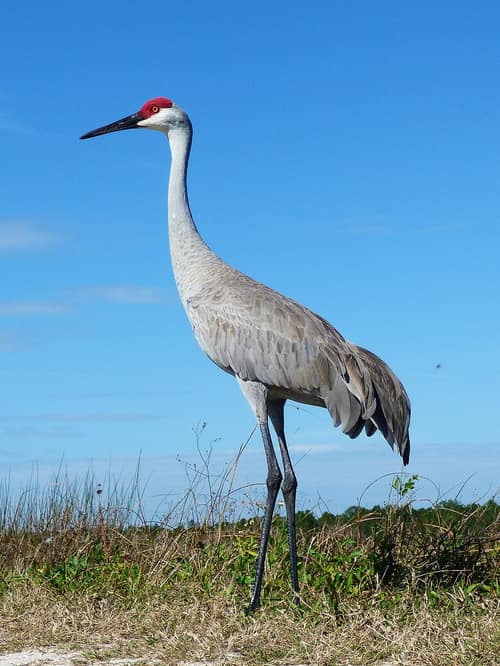
Close Relative JeffreyGammon / CC BY 4.0 · cc-by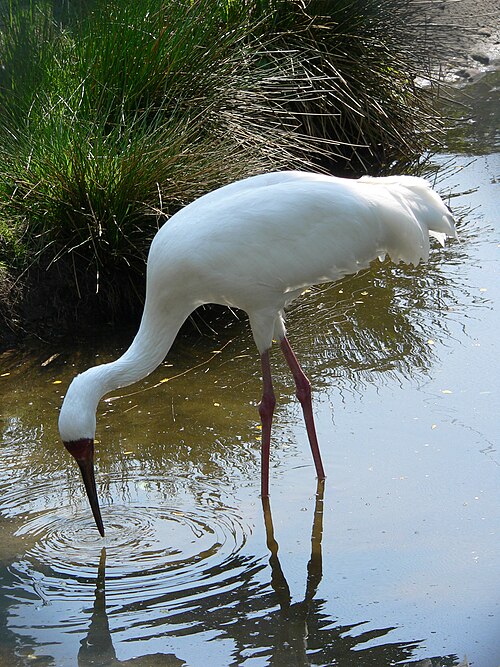
Close Relative BS Thurner Hof / CC BY-SA 3.0 · cc-by-sa
Help improve the field guideSomething wrong?
Checking your Fauna account…Report a name, category, or profile issue for review.