Also known as Indian Rock Python, Asian Rock Python, Black-tailed Python
Indian pythons are sluggish but powerful constrictors that spend their days hidden in rocky crevices, abandoned burrows, or dense riverbank vegetation. These master ambush predators rely on heat-sensing pits along their lips to locate warm-blooded prey in total darkness. During the breeding season, females incubate their clutch of up to one hundred eggs by twitching their muscles to generate vital warmth.
ThreatsHabitat loss, poaching for skin and meat, and road mortality
HabitatsForests, swamps, rocky foothills, and grasslands
Life span20 to 30 years
Classification
FamilyPythonidae
SpeciesPython molurus
Range & activity
Native
Safe observation
Interaction riskHigh
Low
Moderate
High
Very high
Why interaction risk is high
Capable of delivering a painful defensive bite; maintain a respectful distance when observing.
Why it is dangerous
While non-venomous, their massive size and powerful backward-curved teeth can inflict severe lacerations and constriction injuries if they feel threatened.
How to recognize a risky encounter
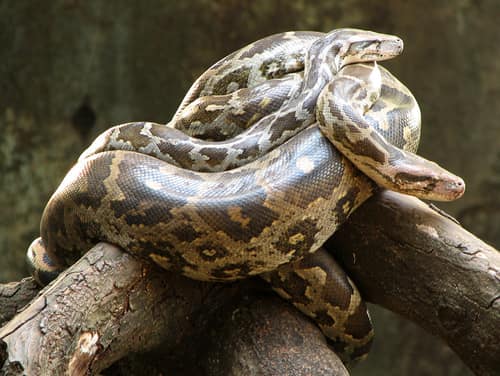
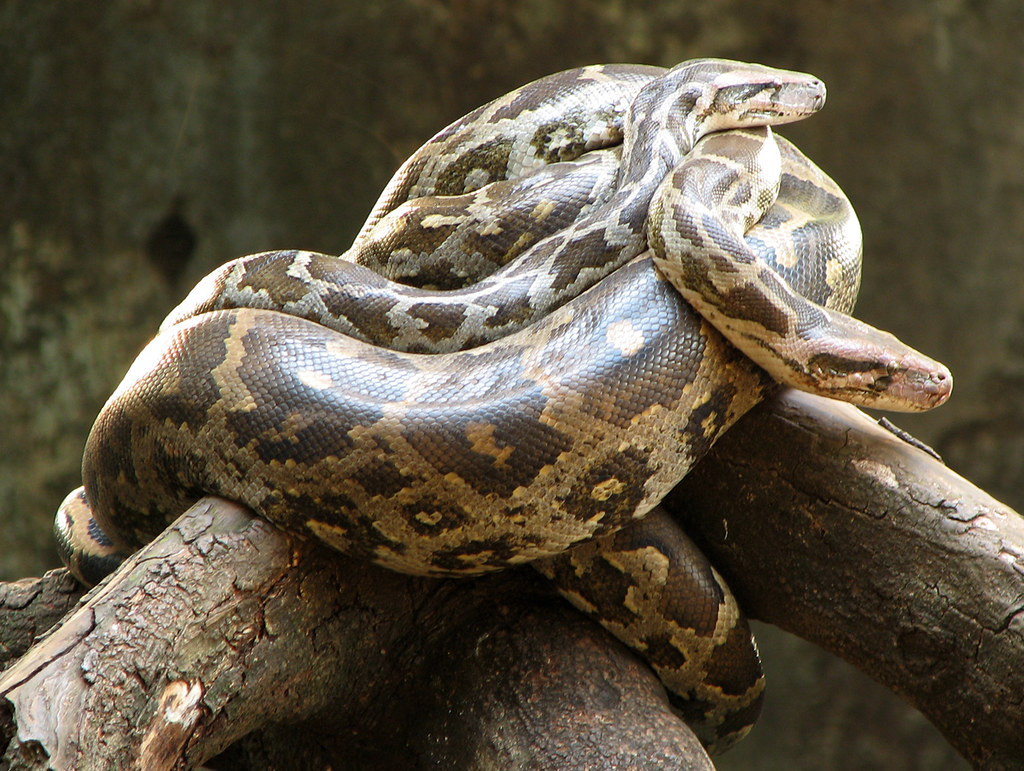
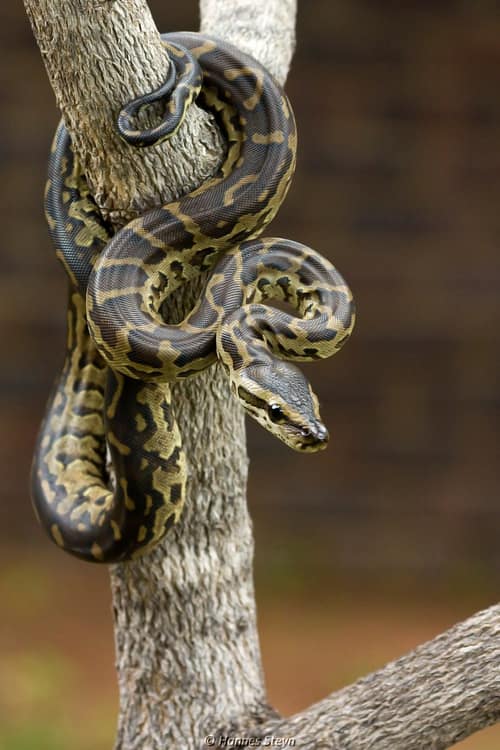
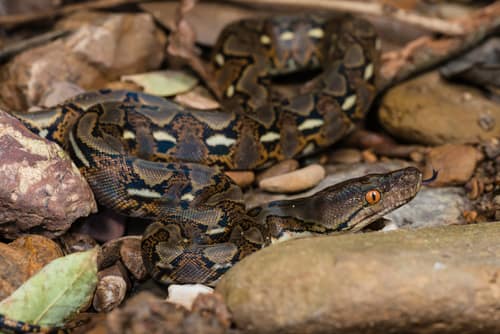
Look for a stout body with a pale grey or yellowish ground color covered in dark brown, irregular blotches, and a distinct arrow-shaped mark on the head.
What to do
Never attempt to handle or corner a wild python; back away slowly and give the snake plenty of space to retreat.
What to notice
Recognized by its large size, slow-moving nature, and preference for rocky crevices or water bodies near forests.
Support conservation
Report sightings to local wildlife authorities instead of disturbing the animal, and never disclose nesting locations publicly.
Responsible observation
Observe from afar: Use binoculars or a telephoto lens to watch their behavior without causing stress.
Watch the water: Look for them swimming slowly in quiet forest pools or basking along muddy banks.
Respect their space: Never block their path to water or shelter, as they can move surprisingly fast when startled.