
Reptile
Flatback
Natator depressusAlso known as Australian Flatback, Flatback Turtle, Flatback Sea Turtle
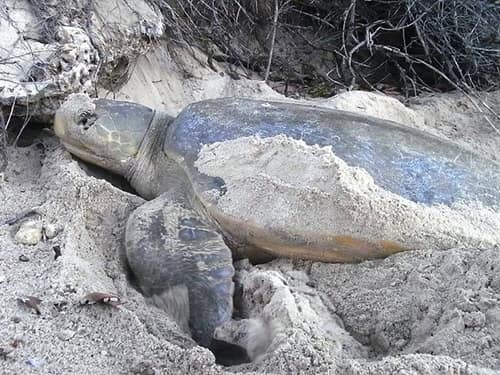
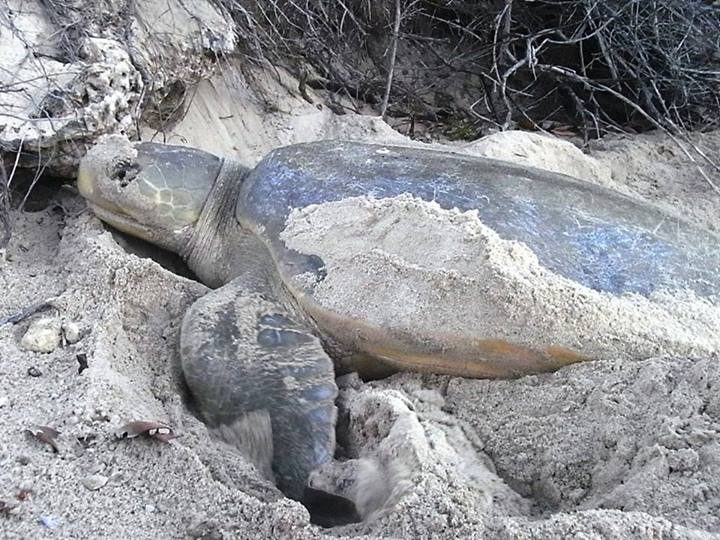
Flatback sea turtles are unique among sea turtles for their exceptionally flat, smooth carapaces with upturned edges. They spend their entire lives in the shallow, turbid coastal waters of the Australian continental shelf, never venturing into the deep open ocean. Females return to the same tropical Australian beaches where they hatched to lay clutches of unusually large eggs, producing robust hatchlings that are less vulnerable to small marine predators.
MarineEndemicReptile
—observations
—countries
—peak records
Data DeficientConservation statusIUCN Red List categoriesLCNTVUENCREWEXData Deficient — not placed on the risk ladderRed List categories, explained →
Diet & preySea Cucumbers, Jellyfish, Soft Corals
Predators
- Saltwater Crocodile
- Tiger Shark
- Feral Pig
ThreatsBycatch in fishing gear, marine debris, coastal development, feral predators eating eggs, and climate change.
HabitatsShallow coastal waters, bays, grassy lagoons, and coral reefs of the Australian continental shelf.
Life span50 to 80 years
Classification
- FamilyCheloniidae
- SpeciesNatator depressus
Range data is not available yet.
Interaction riskLow
- Low
- Moderate
- High
- Very high
- Why interaction risk is low
- Capable of a painful bite if handled; observe nesting females quietly from a respectful distance.
- What to notice
- Recognized by their flat, olive-grey shell with upturned edges and their preference for shallow coastal waters.
- Support conservation
- Never touch, ride, or obstruct a turtle on land or in the water, and report any injured individuals to local authorities.
Responsible observation
- Keep your distance: Stay at least fifteen meters away from nesting females to avoid disrupting their egg-laying process.
- Avoid artificial lights: Do not use flashlights or flash photography on nesting beaches, as light disorients hatchlings.
- Minimize movement: Sit quietly in the sand if a turtle approaches, allowing her to move undisturbed.
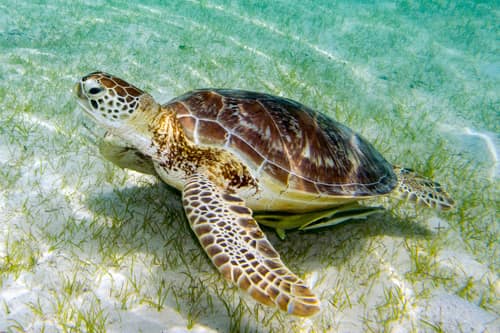
Close Relative (c) Paul Asman and Jill Lenoble, some rights reserved (CC BY), uploaded by Paul Asman and Jill Lenoble · cc-by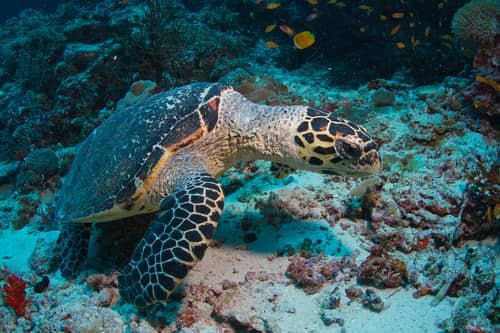
Close Relative "Hawksbill Turtle" by Tchami is licensed under CC BY-SA 2.0. To view a copy of this license, visit https://creativecommons.org/licenses/by-sa/2.0/. · cc-by-sa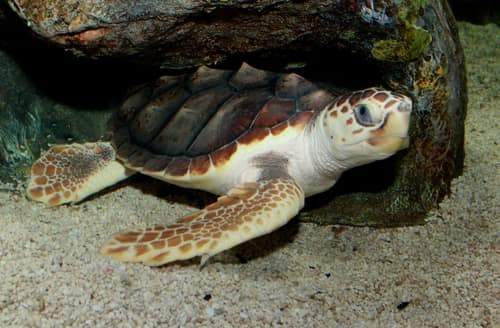
Close Relative "Loggerhead Sea Turtle (Caretta caretta)" by brian.gratwicke is licensed under CC BY 2.0. To view a copy of this license, visit https://creativecommons.org/licenses/by/2.0/. · cc-by
Help improve the field guideSomething wrong?
Checking your Fauna account…Report a name, category, or profile issue for review.