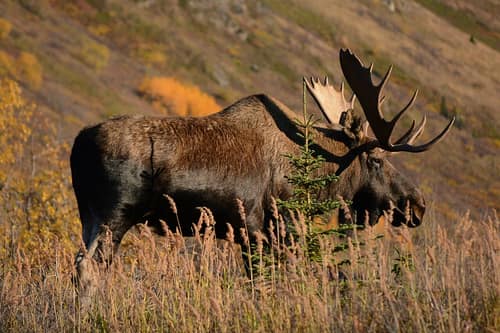
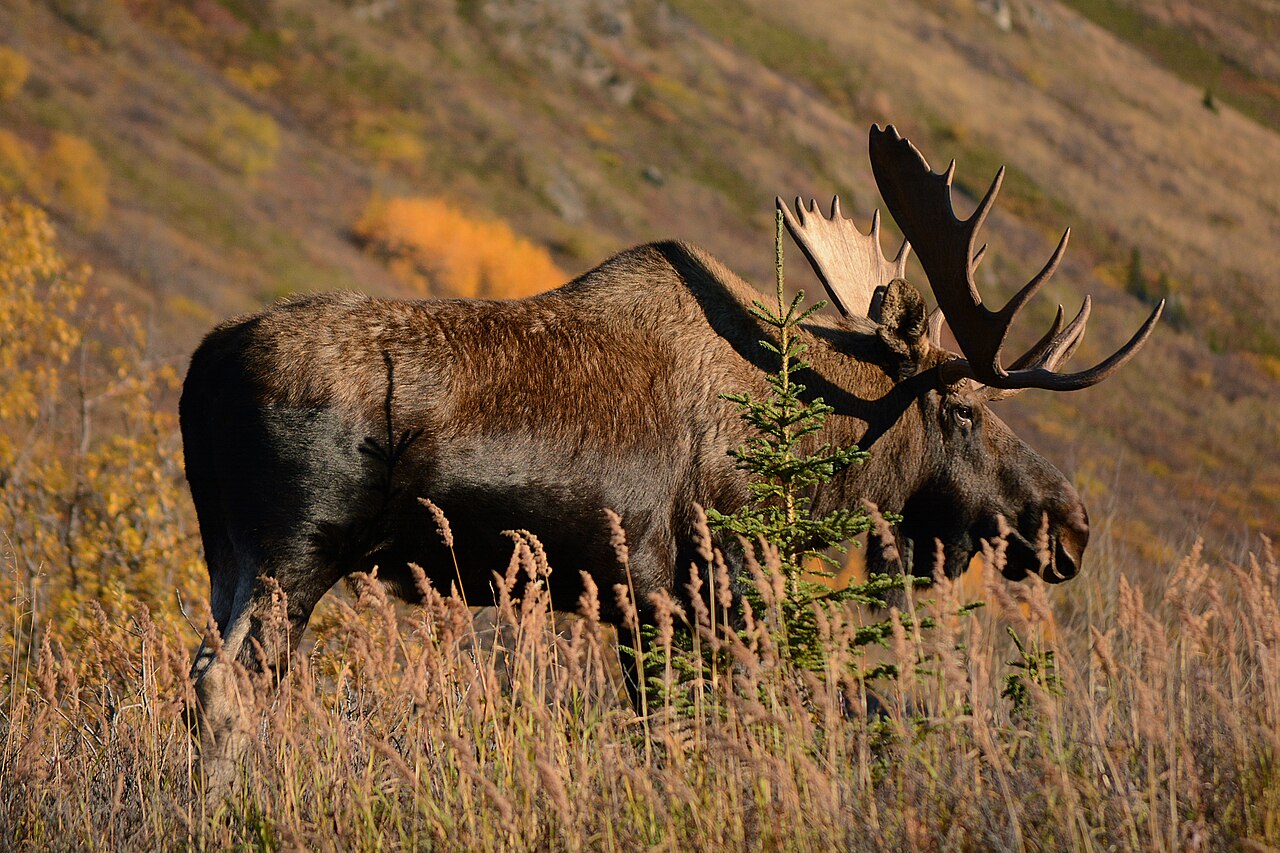
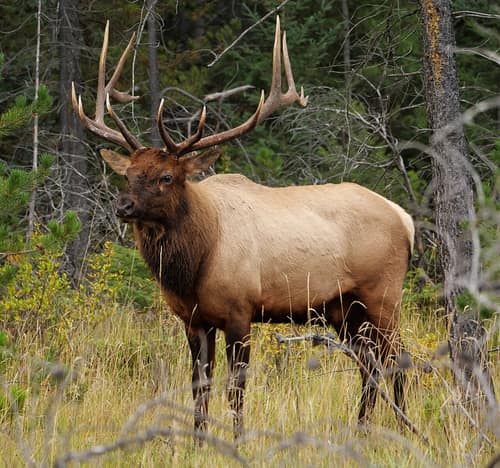
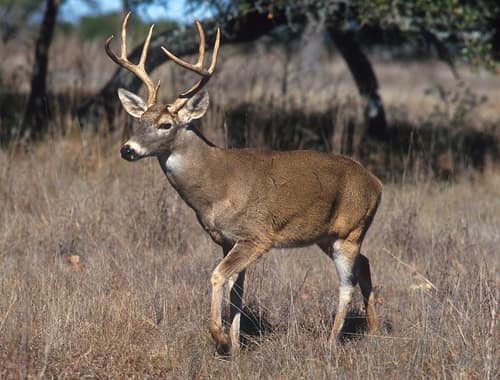
Moose are solitary giants of the northern forests, easily recognized by their massive humped shoulders, broad palmate antlers on males, and long drooping snouts. Excellent swimmers, they dive into lakes and slow-moving rivers during summer to feast on aquatic plants rich in sodium. In autumn, bulls engage in intense rutting displays and clashes to win access to cows, making them particularly volatile and aggressive during breeding season.
Extremely large and unpredictable animal; maintain a distance of at least 50 meters and give a wide berth.
Why it is dangerous
Moose are exceptionally heavy and powerful animals that will charge, kick, and trample humans or dogs if threatened, particularly cows protecting calves or bulls during the autumn rut.
How to recognize a risky encounter
Look for a humped back, dark coat, long pale legs, a hanging chin dewlap, and broad palmate antlers on males.
What to do
Never approach a moose; if one lays back its ears, raises its neck hair, or stomps its feet, back away slowly and seek shelter behind a tree.
Responsible observation
Maintain Distance: Stay at least 50 meters away, especially around cows with calves or rutting bulls in autumn.
Control Dogs: Keep dogs on a tight leash, as moose view them as predators and will aggressively attack them.
Use Obstacles: Put a large tree, vehicle, or boulder between yourself and the moose if it shows warning signs.