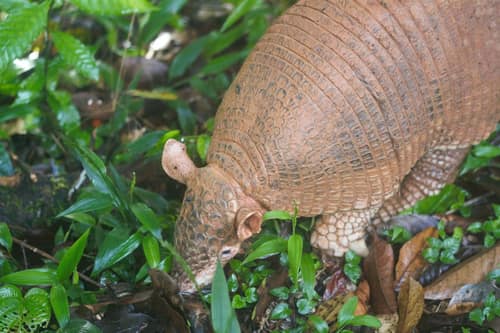
Also known as Brazilian Lesser Long-nosed Armadillo, Seven-banded Long-nosed Armadillo, Lesser Long-nosed Armadillo
These small, armored mammals spend their nights foraging through dry grasslands and scrublands, using their keen sense of smell to locate underground insects. They dig extensive burrow systems that provide shelter from daytime heat, often creating microhabitats that benefit other small savanna animals. When threatened, they rely on their tough, leathery carapace and rapid digging skills to escape rather than curling into a complete ball.
ThreatsHabitat loss from agriculture, wildfires, and hunting
HabitatsDry grasslands, savannas, scrublands, and deciduous forests
Life span12 to 15 years in the wild
Classification
FamilyDasypodidae
SpeciesDasypus septemcinctus
Range & activity
Native
Safe observation
Interaction riskModerate
Low
Moderate
High
Very high
Why interaction risk is moderate
Can scratch with sharp claws and carry bacterial diseases; avoid handling.
Why it is dangerous
Possesses sharp claws designed for digging that can inflict deep scratches, and members of this genus can carry Mycobacterium leprae, the bacterium causing leprosy.
How to recognize a risky encounter
Identified by its small size, pointed snout, and exactly seven movable bands across the midsection of its carapace.
What to do
Never attempt to touch, capture, or handle wild armadillos; observe them quietly from a safe distance.
Responsible observation
Listen closely: Listen for rustling leaves and soft grunting sounds in dry undergrowth during twilight hours.
Watch the burrows: Look for active, dome-shaped burrow entrances in sandy or loose soil near scrub cover.
Keep your distance: Observe foraging individuals quietly from a distance to avoid startling them into their burrows.

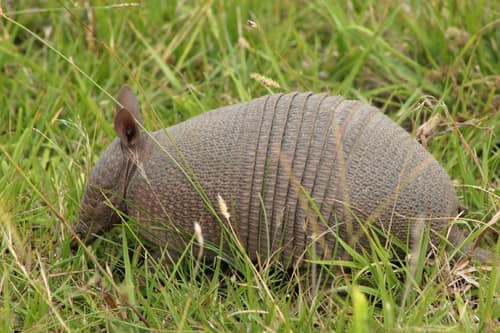
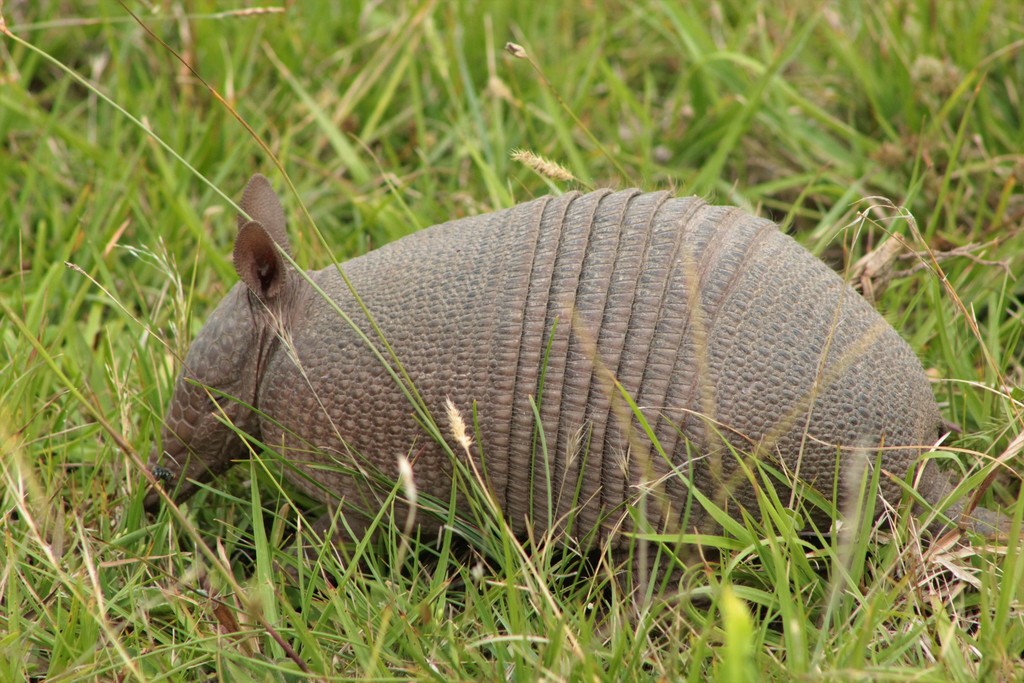
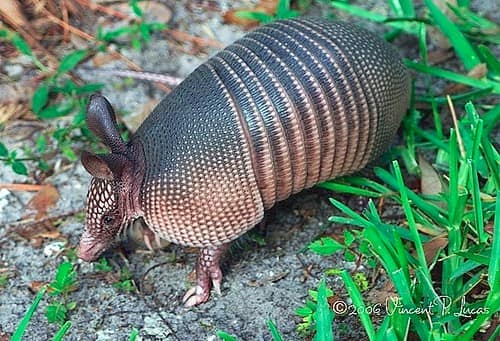
 Image unavailable