
Mammal
Common Opossum
Didelphis marsupialisAlso known as Northern Black-eared Opossum, Manicou, Black-eared Opossum
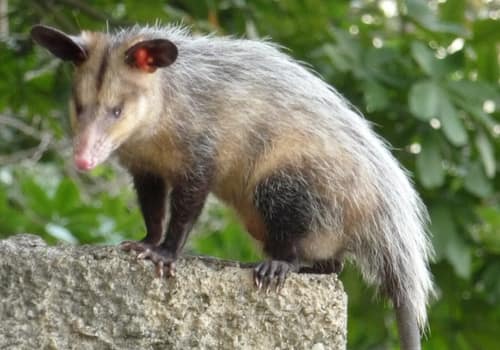
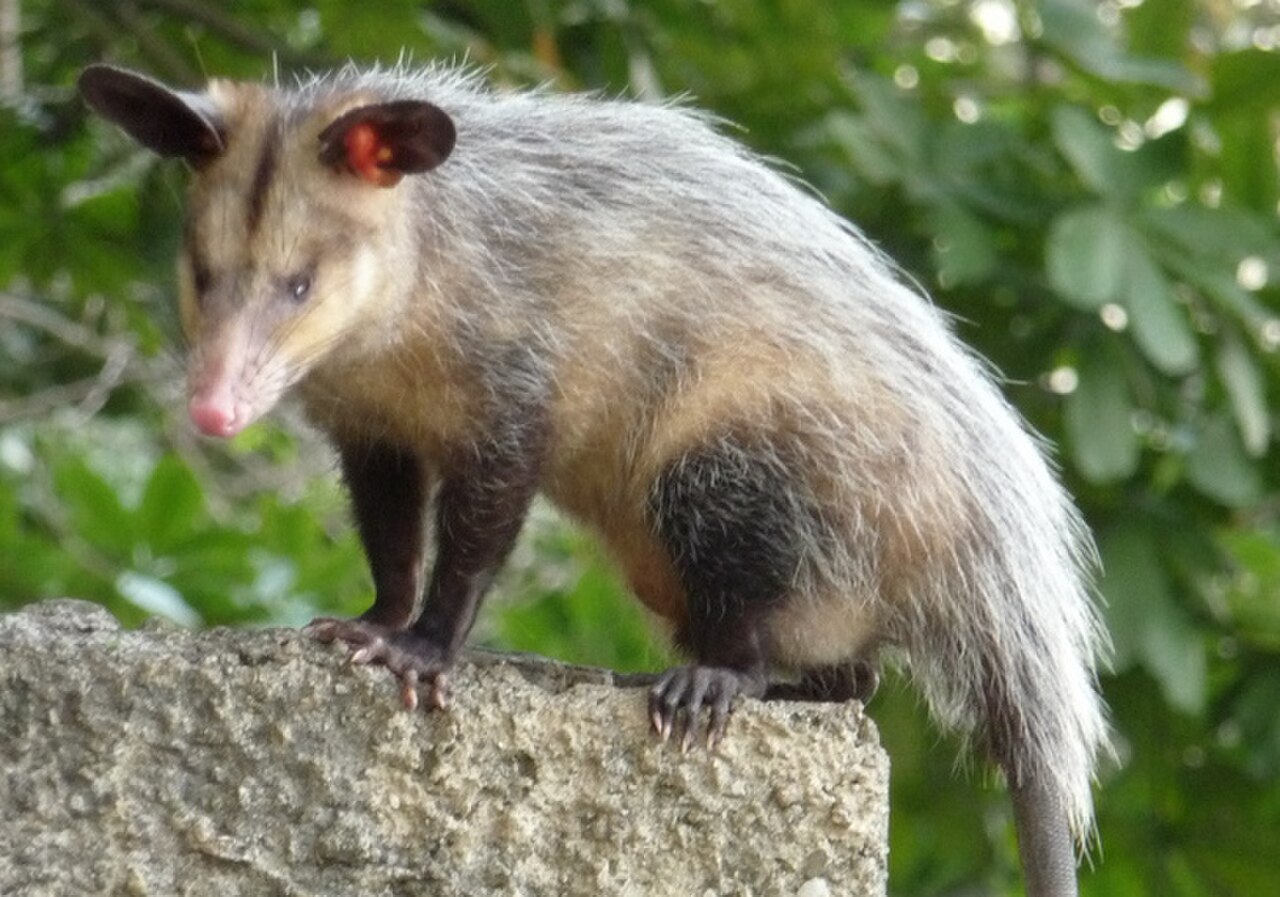
Common opossums navigate the night canopy and forest floor with the help of a prehensile tail and opposable thumbs on their hind feet. Females carry their tiny, underdeveloped young in a well-formed pouch for several months before the growing offspring climb onto their mother's back. These highly adaptable marsupials thrive near human settlements, utilizing their keen sense of smell to forage for a highly varied diet.
NocturnalMarsupialAdaptable
—observations
—countries
—peak records
Least ConcernConservation statusIUCN Red List categoriesLCNTVUENCREWEXLeast ConcernRed List categories, explained →
Diet & preyInsects, Fallen Fruits, Small Rodents
Predators
- Boa Constrictors
- Large Birds of Prey
- Wild Felids
ThreatsHabitat fragmentation, vehicular collisions, domestic dogs, and hunting
HabitatsTropical forests, subtropical woodlands, agricultural fields, and urban areas
Life span2 to 3 years in the wild
Classification
- FamilyDidelphidae
- SpeciesDidelphis marsupialis
Native
Interaction riskLow
- Low
- Moderate
- High
- Very high
- Why interaction risk is low
- May hiss and bare teeth or bite if cornered; observe from a safe distance.
- Why it is dangerous
- Possesses fifty sharp teeth and strong jaws capable of delivering a painful bite if cornered or handled.
- How to recognize a risky encounter
- Look for a cat-sized mammal with coarse gray-black fur, prominent black ears, and a long, hairless prehensile tail.
- What to do
- Never attempt to corner, touch, or capture a wild opossum; back away and allow it an escape route.
Responsible observation
- Secure trash bins: Keep outdoor garbage cans tightly sealed to prevent nocturnal foraging visits.
- Give them space: If encountered at night, shine a light nearby rather than directly in their eyes to let them retreat.
- Keep pets indoors: Restrain dogs at night to prevent harmful encounters for both animals.
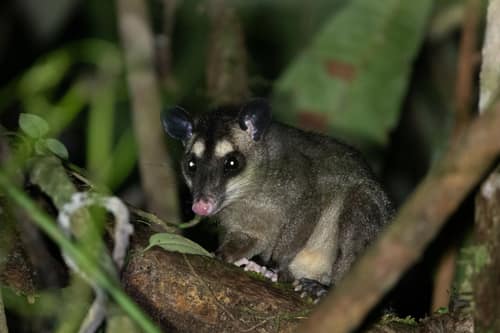
Co-occurring Marsupial "black four-eyed opossums, gray four-eyed opossums" by Demian Hiß is licensed under CC BY 4.0. To view a copy of this license, visit http://creativecommons.org/licenses/by/4.0/. · cc-by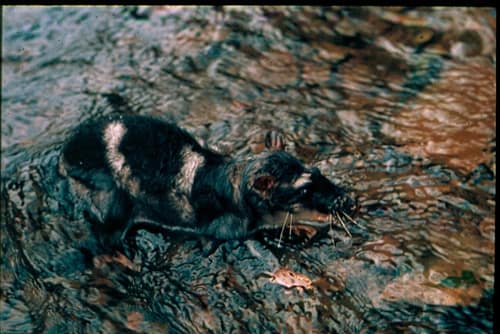
Co-occurring Marsupial Enrique González / CC BY 4.0 · cc-by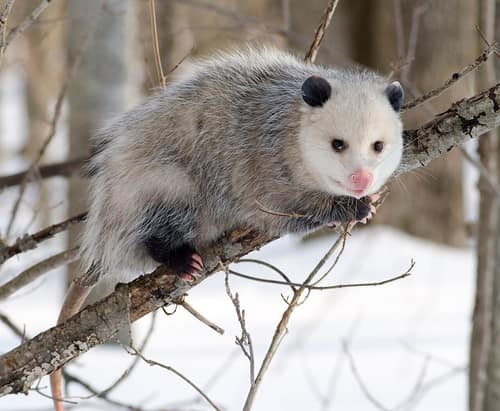
Close Relative Cody Pope / CC BY-SA 2.5 · cc-by-sa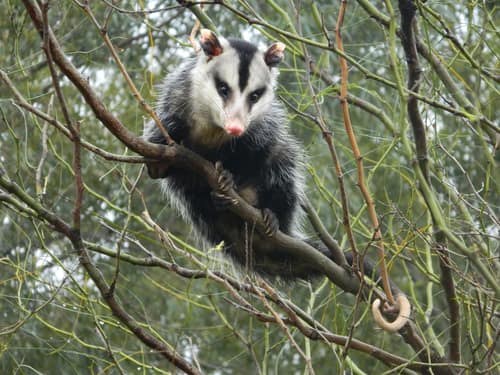
Close Relative (c) Eduardo Luis Beltrocco, some rights reserved (CC BY), uploaded by Eduardo Luis Beltrocco · cc-by
Help improve the field guideSomething wrong?
Checking your Fauna account…Report a name, category, or profile issue for review.