
Mammal
Linnaeus's Mouse Opossum
Marmosa murinaAlso known as Common Mouse Opossum, Murine Mouse Opossum
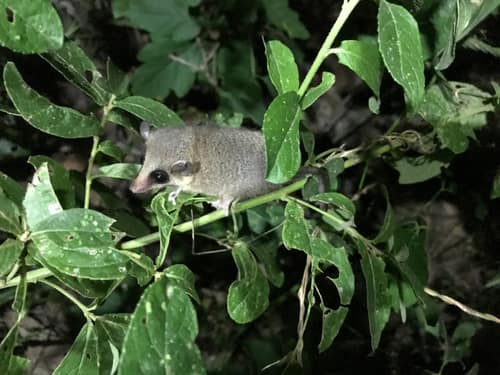
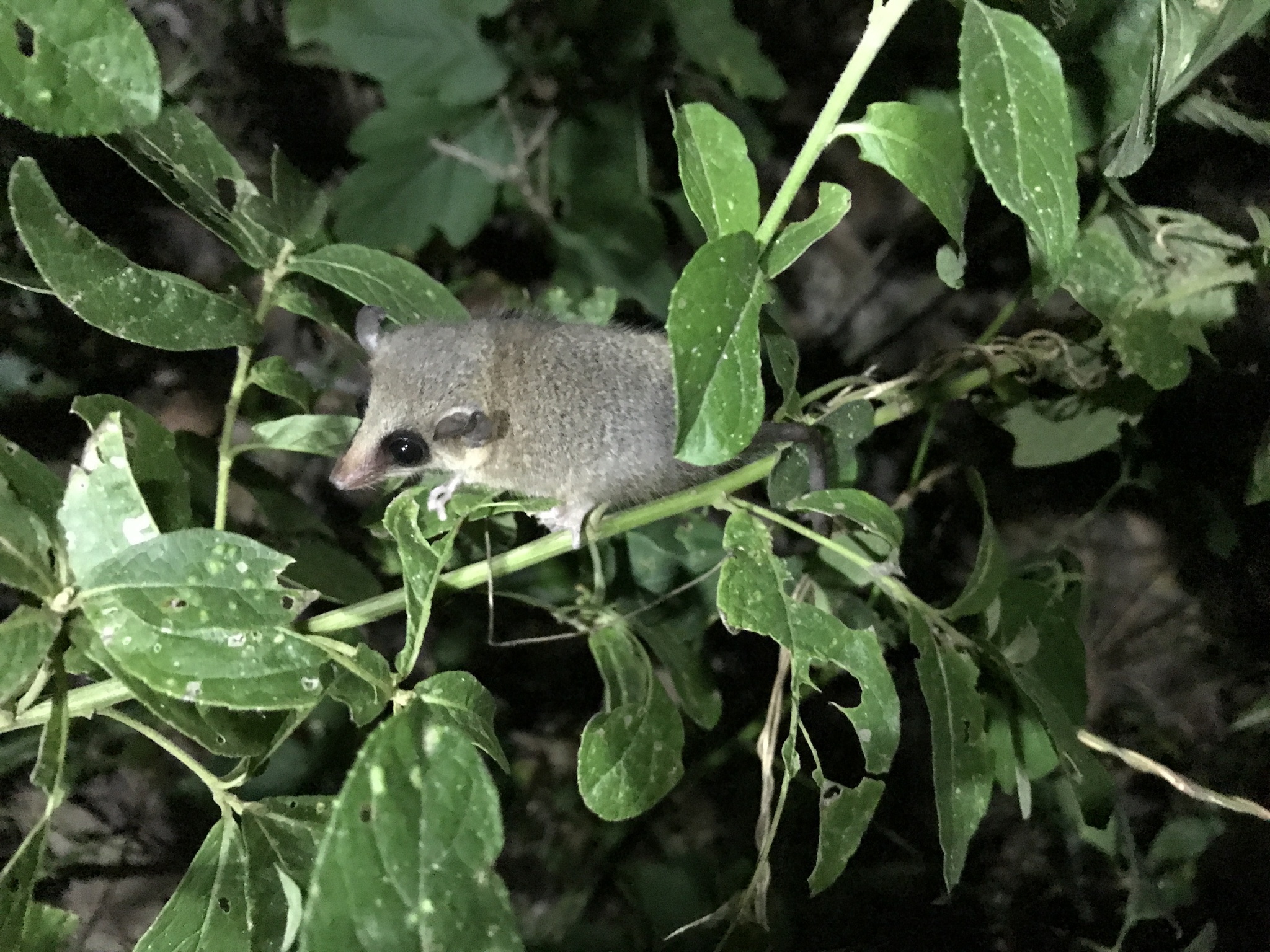
Linnaeus's mouse opossums navigate the tropical forest canopy with remarkable agility, using their long, hairless prehensile tails as a fifth limb. These pouchless marsupials are strictly nocturnal, emerging at dusk to hunt insects and forage for ripe fruit under the cover of darkness. Mothers carry their tiny young clinging directly to their teats and fur rather than tucked inside a protective pouch.
NocturnalArborealMarsupial
—observations
—countries
—peak records
Least ConcernConservation statusIUCN Red List categoriesLCNTVUENCREWEXLeast ConcernRed List categories, explained →
Diet & preyInsects, Spiders, Fruits
Predators
- Owls
- Snakes
- Small wild cats
ThreatsHabitat loss, forest fragmentation, and pesticide use in agricultural areas
HabitatsTropical rainforests, secondary forests, plantations, and gardens
Life span1 to 2 years
Classification
- FamilyDidelphidae
- SpeciesMarmosa murina
Native
Interaction riskLow
- Low
- Moderate
- High
- Very high
- Why interaction risk is low
- May bite defensively if cornered or handled; observe quietly from a distance.
- Why it is dangerous
- Sharp teeth can deliver a painful bite capable of breaking the skin and transmitting bacteria.
- How to recognize a risky encounter
- Look for a small, mouse-like marsupial with a dark mask around its large eyes and a long, naked tail.
- What to do
- Never attempt to touch or corner wild opossums; keep a respectful distance and use binoculars.
Responsible observation
- Spotting at night: Use a red-filtered flashlight to locate their bright, reflective eyes in the forest canopy.
- Listen closely: Listen for soft rustling in low branches or vines where they forage for insects.
 Image unavailable
Close Relative 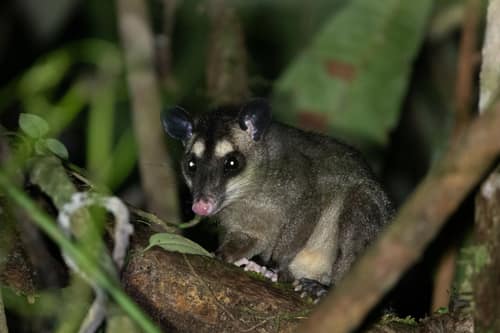
Family Member "black four-eyed opossums, gray four-eyed opossums" by Demian Hiß is licensed under CC BY 4.0. To view a copy of this license, visit http://creativecommons.org/licenses/by/4.0/. · cc-by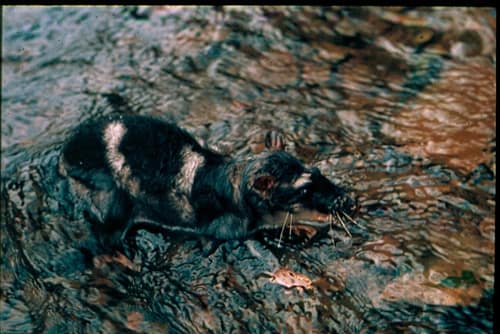
Family Member Enrique González / CC BY 4.0 · cc-by
Help improve the field guideSomething wrong?
Checking your Fauna account…Report a name, category, or profile issue for review.