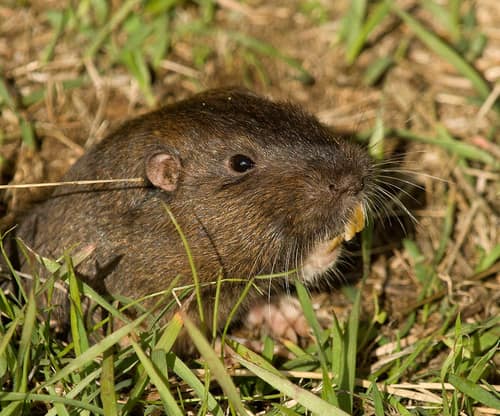
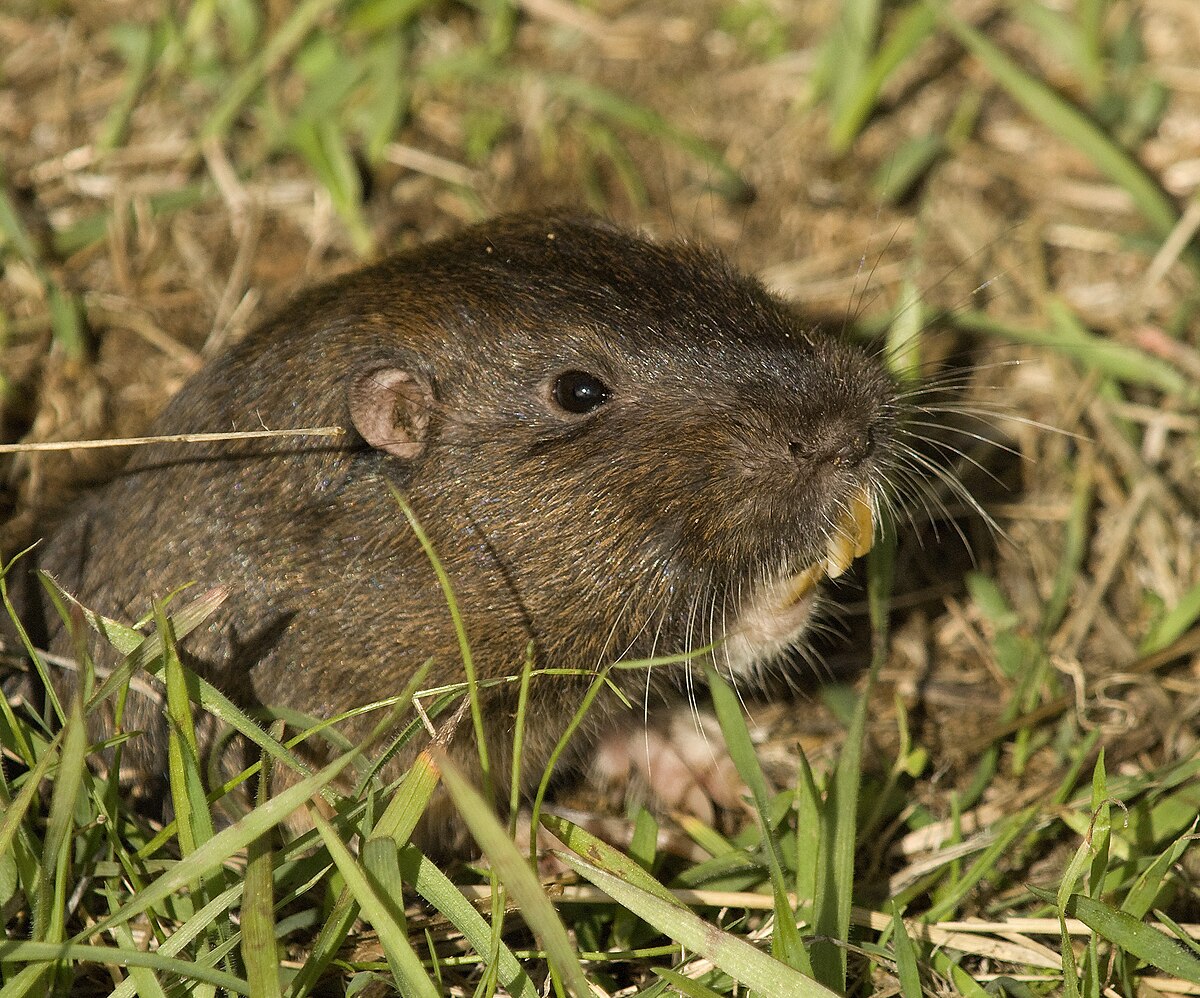
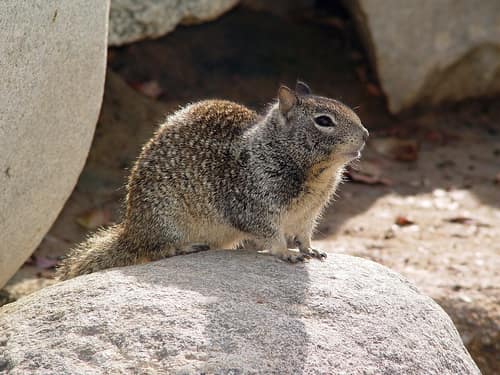
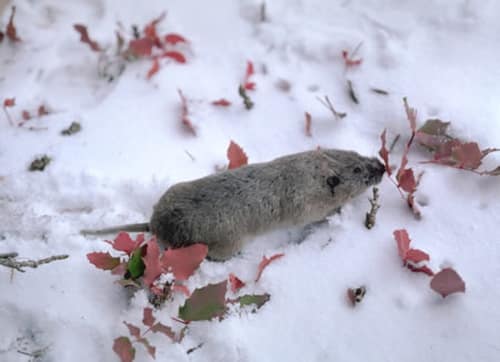
Botta's pocket gophers spend nearly their entire lives underground, constructing intricate burrow systems that can span over a hundred meters of subterranean tunnels. Using powerful clawed forelimbs and ever-growing incisors that sit entirely outside their lips, they excavate compacted soils without swallowing dirt. Their relentless soil-churning aerates earth and cycles nutrients across western ecosystems, though their voracious appetite for root systems frequently brings them into conflict with gardeners and farmers.
Diet & preyTaproots, Geophytes and tubers, Native grasses
Predators
Barn Owl
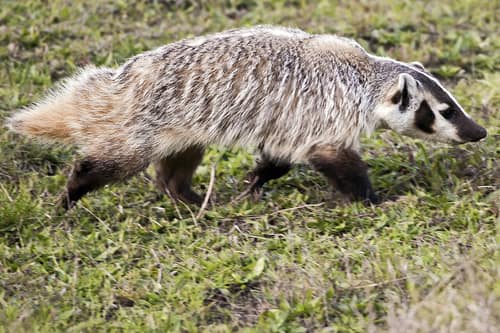
American Badger
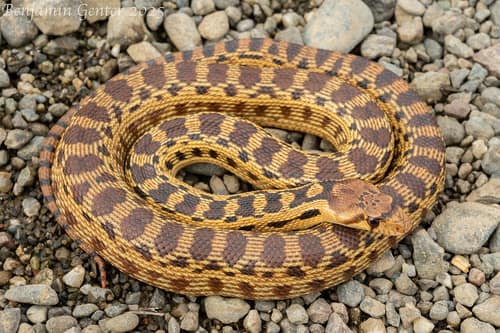
Gopher Snake
ThreatsLethal rodent control, agricultural tilling, and habitat fragmentation
HabitatsChaparral, grasslands, agricultural fields, scrublands, and open woodlands
Life span1–3 years in the wild
Classification
OrderRodentia
FamilyGeomyidae
GenusThomomys
SpeciesThomomys bottae
Range & activity
Native
Safe observation
Interaction riskLow
Low
Moderate
High
Very high
Why interaction risk is low
Possesses sharp incisors capable of severe defensive bites; never attempt to corner or handle.
Why it is dangerous
Equipped with large, chisel-like incisors and strong jaw muscles designed for gnawing roots and compacted soil, inflicting deep puncture wounds if grabbed.
How to recognize a risky encounter
Recognizable by external fur-lined cheek pouches, tiny ears and eyes, and prominent curved upper incisors visible even when the mouth is closed.
What to do
Allow individuals surfaced on lawns or open ground to return to their burrows unhindered, and never handle a cornered animal barehanded.
Responsible observation
Mound Detection: Look for fresh, fan-shaped soil mounds with a plugged central entrance indicating an active burrow system below.
Garden Protection: Install buried wire mesh with half-inch spacing at least 60 centimeters deep to protect prized ornamental or vegetable roots.