
Mammal
Southern Flying Squirrel
Glaucomys volansAlso known as Assapan, Small Eastern Flying Squirrel
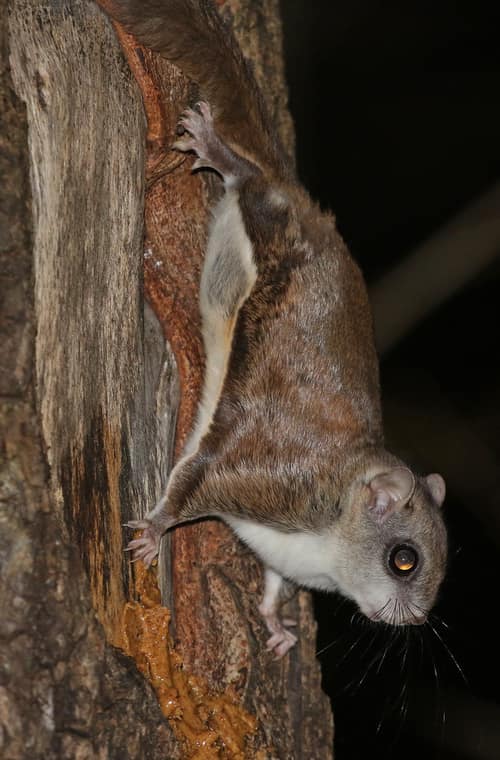
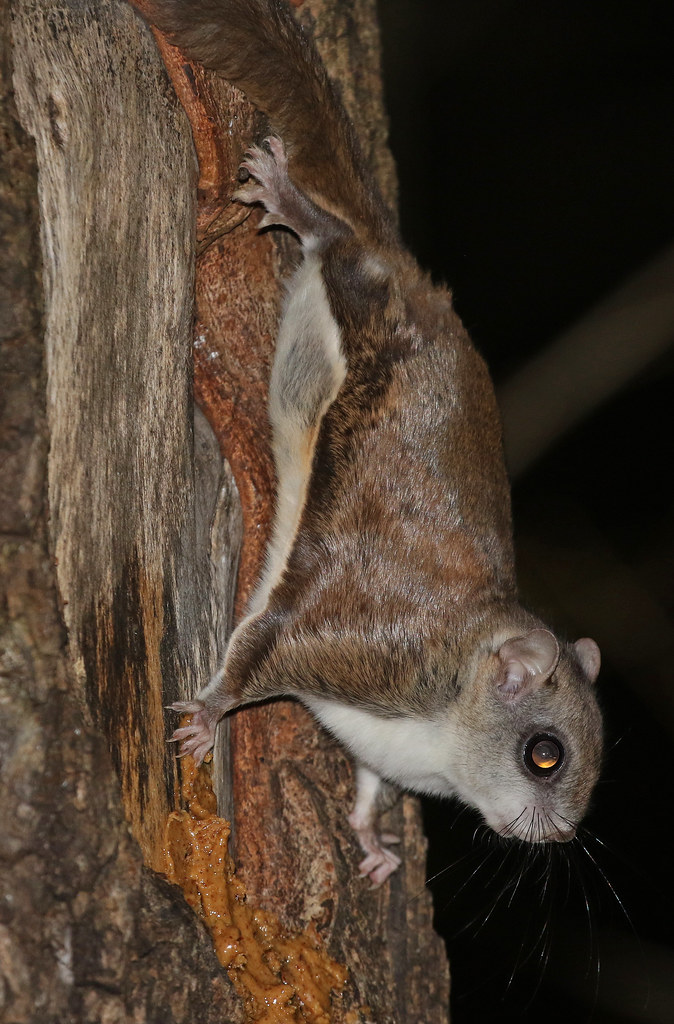
Large, luminous black eyes and a furry gliding membrane extending from wrist to ankle allow southern flying squirrels to leap and steer gracefully through dark forest canopies. They roost in communal tree cavities, often gathering in large winter huddles to conserve body heat. Remarkably, their belly fur fluoresces hot pink under ultraviolet light, a striking trait shared across their genus.
NocturnalArborealGlider
—observations
—countries
—peak records
Least ConcernConservation statusIUCN Red List categoriesLCNTVUENCREWEXLeast ConcernRed List categories, explained →
Diet & preyAcorns, Hickory Nuts, Fungi
Predators
- Barred Owl
- Great Horned Owl
- Domestic Cat
ThreatsHabitat fragmentation, loss of old-growth cavity trees, domestic cat predation
HabitatsDeciduous and mixed forests with mature tree cavities
Life span5–6 years in the wild
Classification
- FamilySciuridae
- SpeciesGlaucomys volans
Native
Interaction riskLow
- Low
- Moderate
- High
- Very high
- Why interaction risk is low
- Will bite or scratch defensively if handled; observe quietly from a distance at night.
- Why it is dangerous
- Possesses sharp incisors capable of inflicting painful bites if cornered or restrained.
- How to recognize a risky encounter
- Identified by glossy dark eyes, plush grey-brown upperparts, and a flattened tail used for steering.
- What to do
- Avoid attempting to touch or catch individuals; observe unobtrusively using red-filtered light.
Responsible observation
- Look at Night: Use a dim red light near acorn-bearing hardwoods after dusk to spot glowing eyes.
- Listen for Calls: Listen for high-pitched, bird-like chirps coming from high in the canopy after sunset.
- Install Nest Boxes: Mount specialized small-aperture flying squirrel boxes in mature woods to provide roosts.
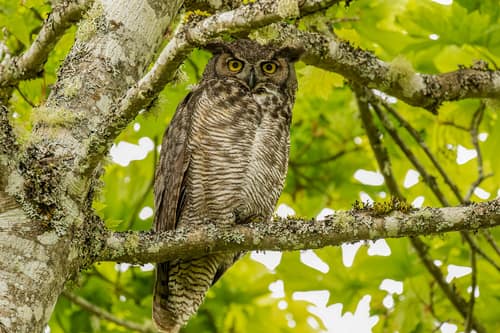
Predator "Great Horned Owl, the first I've seen in decent light this year. Didn't want to disturb it for too long so we continued along the trail" by island deborah- is licensed under CC BY-SA 2.0. To view a copy of this license, visit https://creativecommons.org/licenses/by-sa/2.0/. · cc-by-sa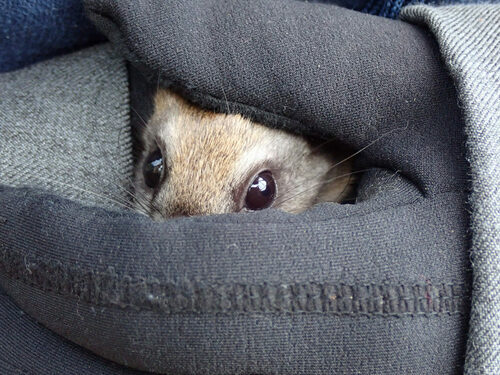
Close Relative (c) Evan M. Raskin, some rights reserved (CC BY) · cc-by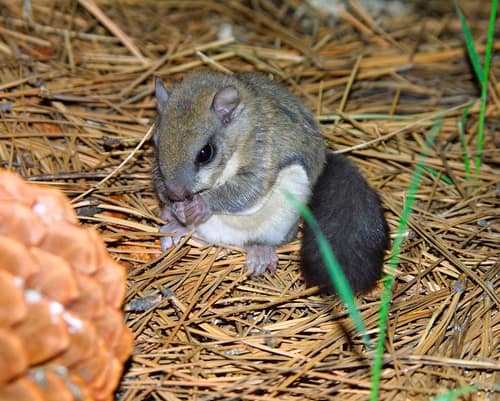
Close Relative (c) Chris Brown, some rights reserved (CC BY) · cc-by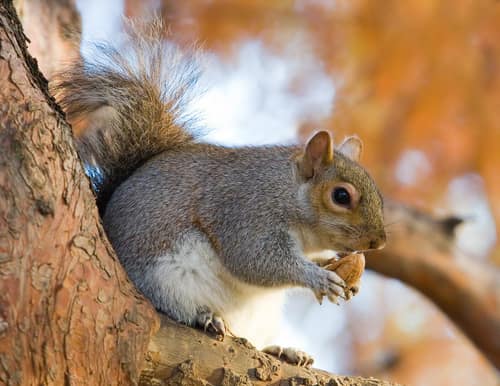
Sympatric Relative (c) Diliff, some rights reserved (CC BY-SA) · cc-by-sa
Help improve the field guideSomething wrong?
Checking your Fauna account…Report a name, category, or profile issue for review.