
Mammal
Maned Three-toed Sloth
Bradypus torquatusAlso known as Northern Maned Sloth, Brazilian Maned Sloth, Ai-moco
Maned three-toed sloths spend nearly their entire lives suspended upside down in the dense canopy of Brazil's Atlantic Forest, rarely descending except to defecate once every several days. Their coarse outer fur provides a fertile microhabitat for specialized green algae, granting vital camouflage among sun-dappled foliage. Adults maintain exceptionally slow metabolic rates and poor thermoregulation, spending up to fifteen hours each day basking in sunlight or resting curled tightly into tree forks.
ArborealHerbivore
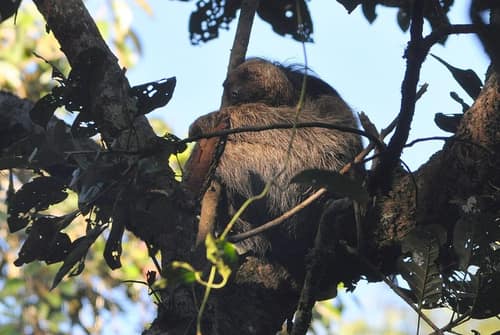
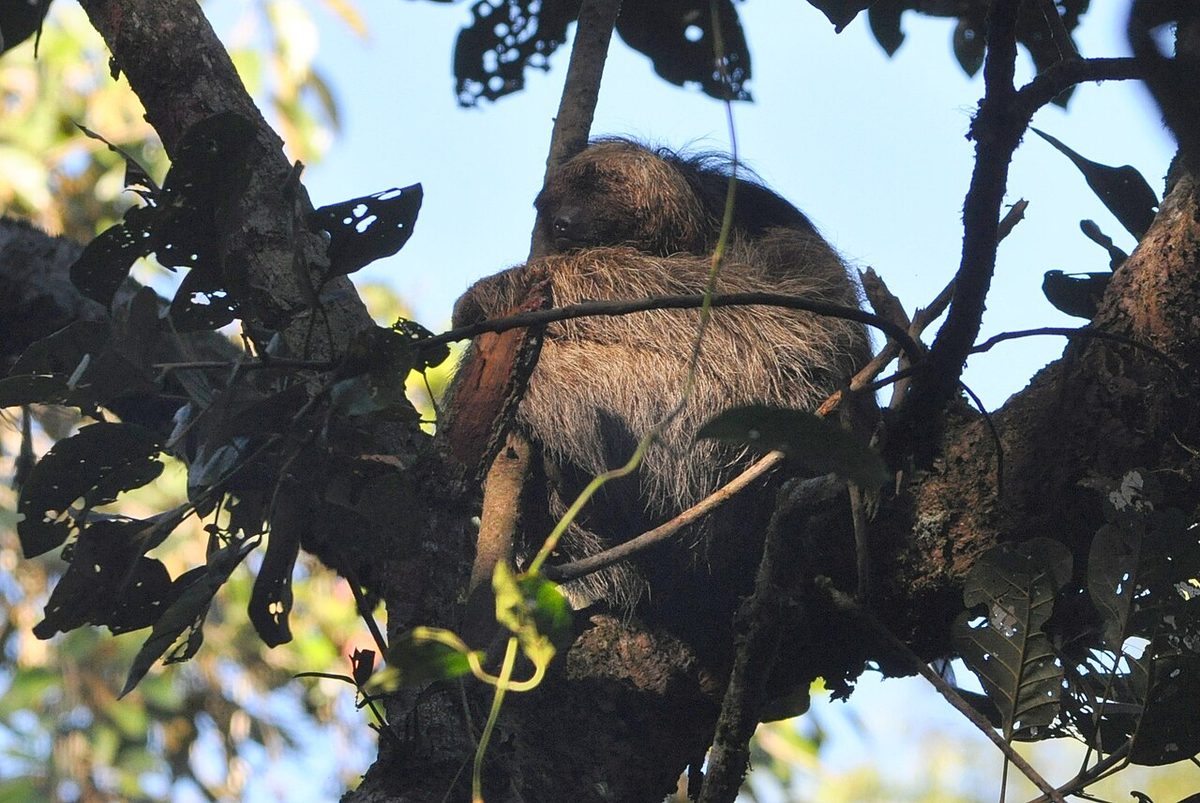
—observations
—countries
—peak records
EndangeredConservation statusIUCN Red List categoriesLCNTVUENCREWEXEndangeredRed List categories, explained →
Diet & preyCecropia leaves, Ficus leaves, Liana foliage
Predators
- Harpy Eagle
- Jaguar
- Ocelot
ThreatsSevere deforestation, habitat fragmentation, urbanization, and agricultural expansion
HabitatsDense coastal Atlantic rainforest canopy
Life span12–20 years
Classification
- FamilyBradypodidae
- SpeciesBradypus torquatus
Native
Interaction riskLow
- Low
- Moderate
- High
- Very high
- Why interaction risk is low
- Possesses sharp curved claws and strong jaws if grabbed; observe respectfully from a distance.
- Why it is dangerous
- Equipped with elongated, curved claws and powerful jaw muscles capable of inflicting deep puncture wounds and scratches if cornered.
- How to recognize a risky encounter
- Distinguished by a conspicuous mane of dark fur around the neck, pale face, and three distinct claws on every limb.
- What to do
- Never attempt to handle or restrain a sloth; give grounded individuals ample space to reach a tree safely.
- What to notice
- Recognizable by the dark mane of coarse hair draped over the nape and shoulders in coastal Brazilian canopy.
- Support conservation
- Maintain a generous viewing distance from below, avoid spotlighting at night, and never launch drones near roost trees.
Responsible observation
- Canopy Scanning: Use binoculars or a spotting scope to inspect high tree forks and liana tangles during daylight hours.
- Patience Required: Watch for motionless, green-tinted clumps in the canopy that occasionally shift positions.
- Ground Encounters: If spotted moving on the ground, keep domestic pets leashed and allow it an unobstructed path to climb.
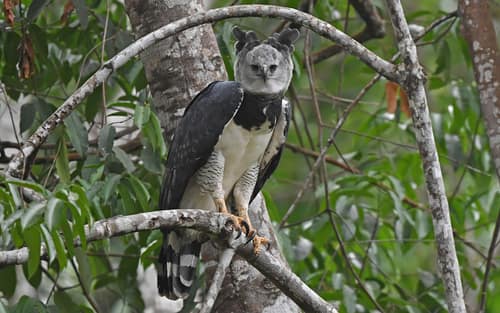
Predator (c) Christoph Moning, some rights reserved (CC BY), uploaded by Christoph Moning · cc-by Image unavailable
Host Plant 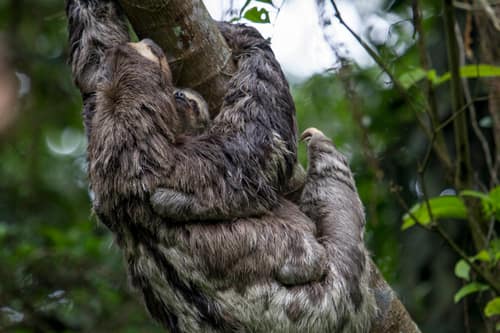
Close Relative (c) Bruno Henrique Aranda, some rights reserved (CC BY), uploaded by Bruno Henrique Aranda · cc-by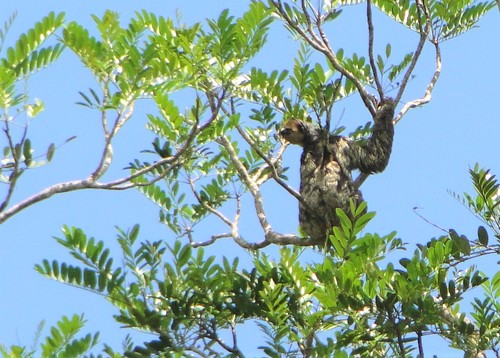
Close Relative (c) Carlos Otávio Gussoni, some rights reserved (CC BY) · cc-by
Help improve the field guideSomething wrong?
Checking your Fauna account…Report a name, category, or profile issue for review.