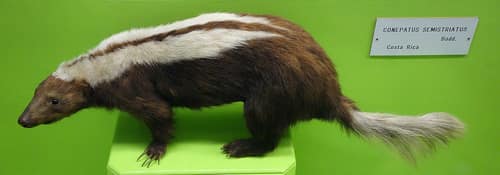
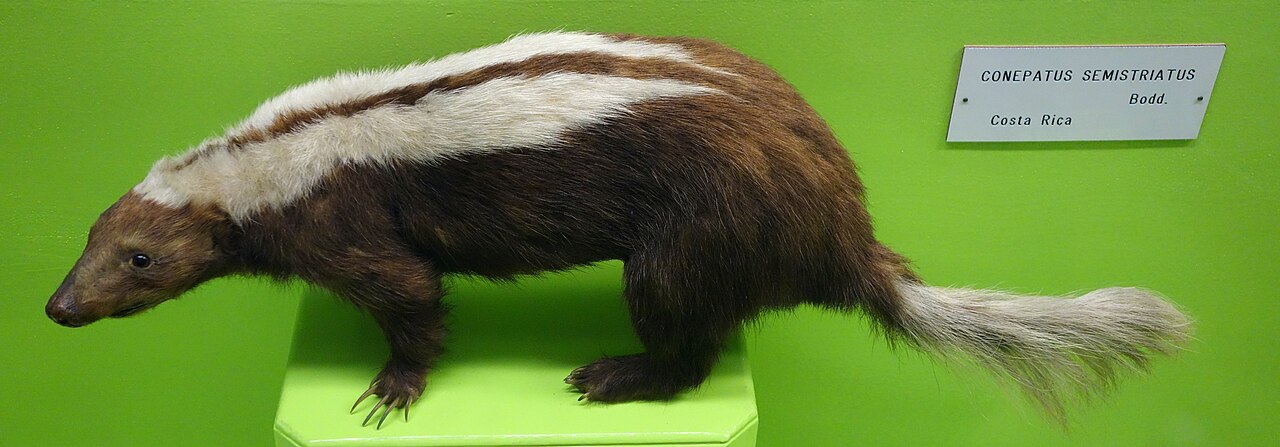
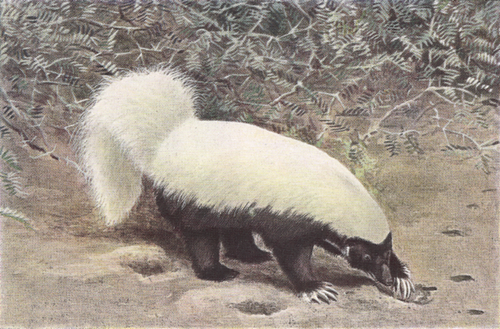
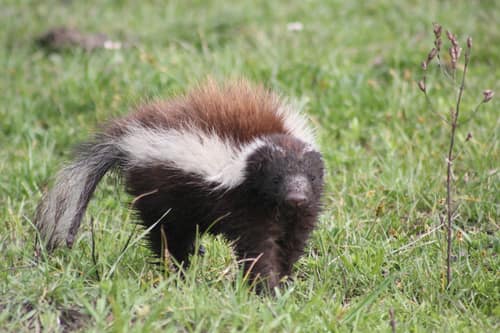
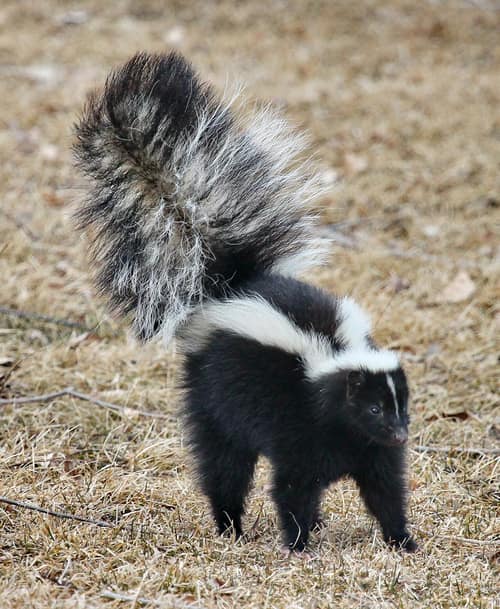
Striped hog-nosed skunks are nocturnal, solitary foragers distinguished by a bare, pig-like snout that they plow through leaf litter and soil in search of buried invertebrates. When threatened, they stomp their front paws, hiss, and can accurately discharge a foul, sulfurous musk from anal scent glands to repel intruders. By day, individuals shelter in hollow logs, rock crevices, or abandoned burrows dug by other animals, emerging at dusk to patrol home ranges that often encompass scrub and open woodland.
Diet & preyScarab beetle grubs, Crickets, Small lizards
Predators
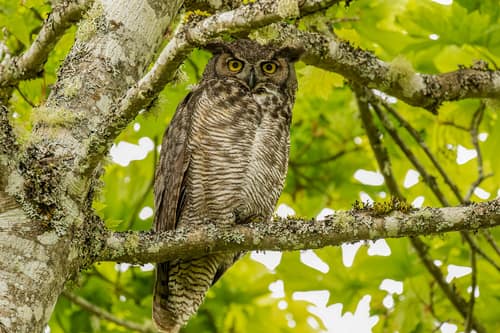
Great horned owl
Jaguar
Ocelot
ThreatsVehicular collisions, hunting for traditional medicine or pelt, and habitat conversion
HabitatsDry deciduous forests, scrublands, pastures, orchards, and rainforest margins
Life span4–8 years in the wild
Classification
FamilyMephitidae
SpeciesConepatus semistriatus
Range & activity
Native
Safe observation
Interaction riskModerate
Low
Moderate
High
Very high
Why interaction risk is moderate
Can carry rabies and spray noxious musk defensively; keep a respectful distance.
Why it is dangerous
Capable of spraying a pungent cocktail of thiols that causes temporary blindness and nausea, and like many wild carnivores, can transmit rabies through bites.
How to recognize a risky encounter
Look for a thick body with two white stripes down the dark back, a bushy tail, and an elongated, hairless snout.
What to do
Never corner or attempt to touch a skunk; give it a wide berth and keep domestic pets on a leash.
Responsible observation
Give Space: Back away steadily if the animal raises its tail or stamps its feet, as a defensive spray often follows.
Road Awareness: Drive cautiously along rural forest borders at night, where foraging individuals frequently cross roadways.
Night Observation: Use a red-filtered flashlight to watch natural foraging behaviors without causing panic or defensive reactions.