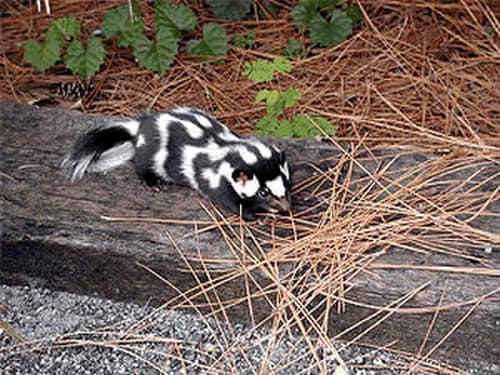
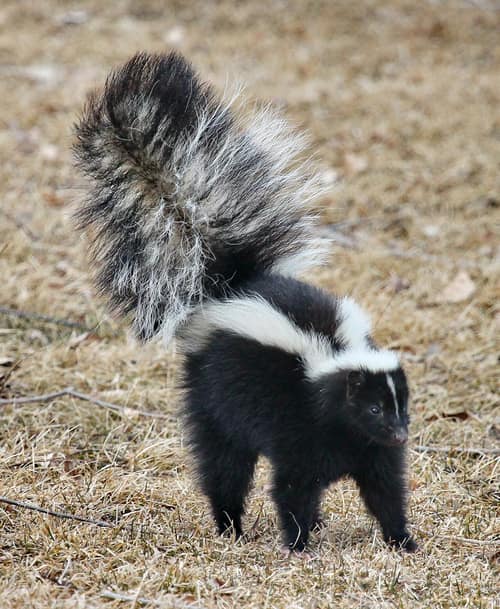
Also known as Spotted Skunk, Civet Cat, Hydrophobia Cat
Western spotted skunks are nimble, nocturnal hunters celebrated for their unusual agility, readily climbing trees and leaping among rocks to pursue prey. When alarmed, they execute a distinctive defensive handstand, balancing upright on their front paws to appear larger before releasing a pungent chemical spray. Delayed embryo implantation allows adults to mate in autumn, pausing embryonic development for months so litters emerge during resource-rich spring weeks.
Life span1–4 years in the wild; up to 10 years in captivity
Classification
FamilyMephitidae
SpeciesSpilogale gracilis
Range & activity
Native
Safe observation
Interaction riskModerate
Low
Moderate
High
Very high
Why interaction risk is moderate
Can transmit rabies and spray burning musk defensively; observe from a distance and back away if threatened.
Why it is dangerous
Can transmit the rabies virus through bites and discharges a caustic, sulfur-rich musk from anal glands that causes temporary blindness and severe nausea.
How to recognize a risky encounter
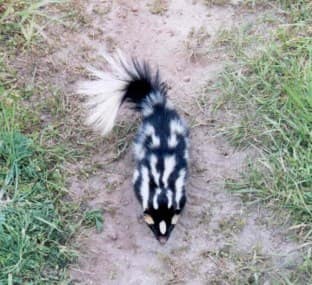
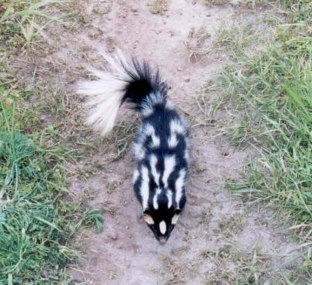
Recognized by a small, slender build with broken white spots and wavy stripes across a glossy black coat.
What to do
Do not corner, touch, or attempt to rescue wild individuals; back away slowly if it elevates its tail or performs a handstand.
Responsible observation
Night Spotting: Use a dim red headlamp near rocky outcrops or brush piles after dusk to spot their reflective eyes without startling them.
Recognizing Warnings: Back away immediately if an individual stomps its front feet, hisses, or balances on its forepaws in a handstand.
Pet Safety: Keep companion dogs leashed in riparian zones and chaparral at twilight to avoid spray exposure or bites.