
Mammal
Eastern Spotted Skunk
Spilogale putoriusAlso known as Civet Cat, Hydrophobia Cat, Spotted Skunk
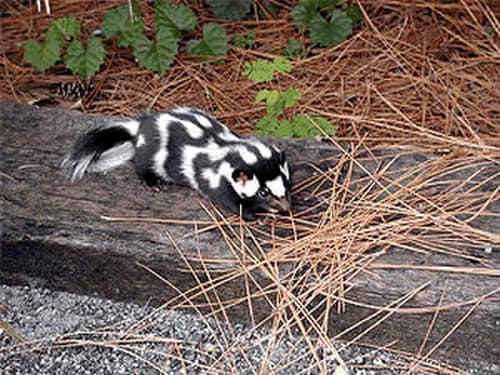
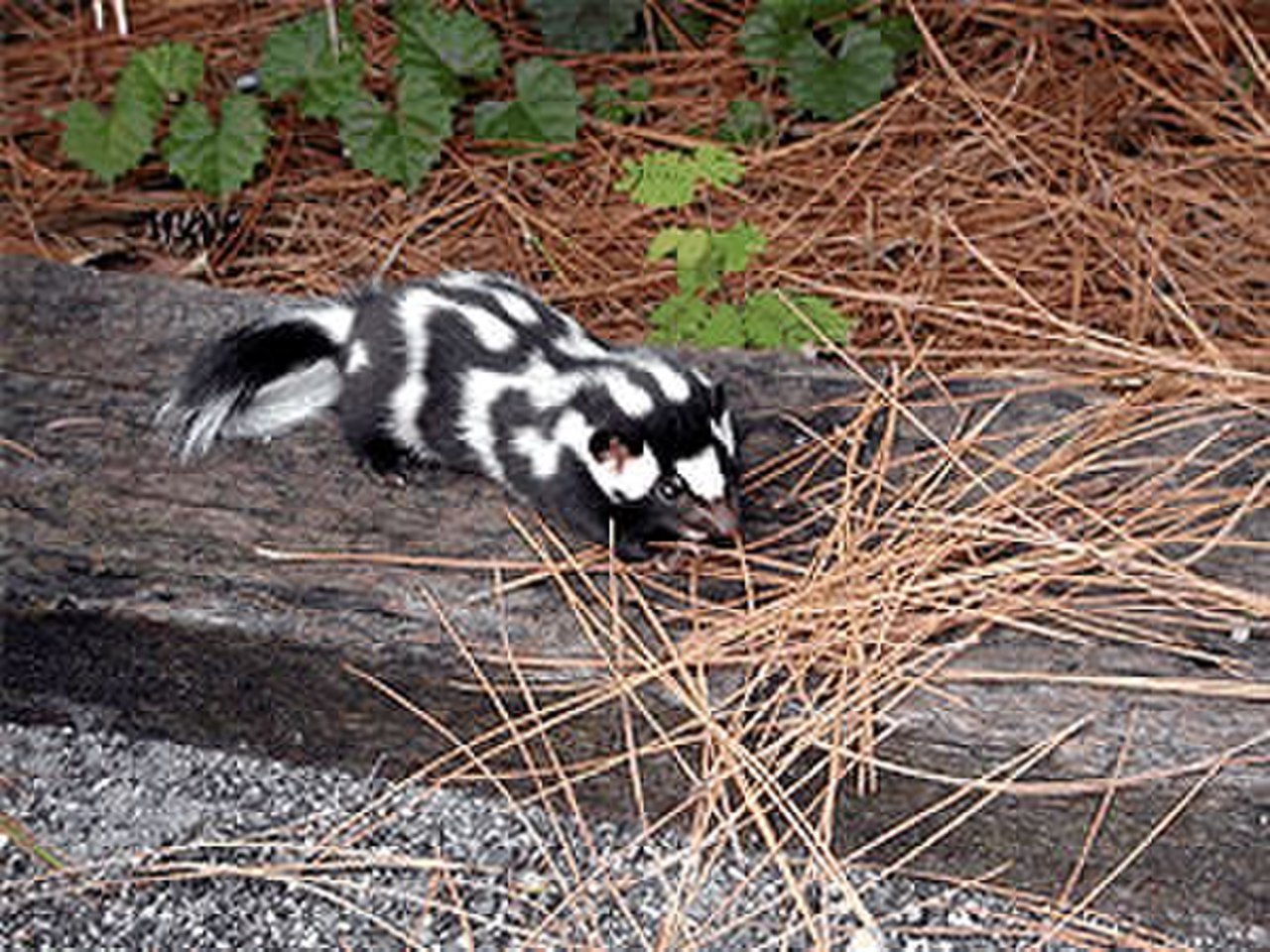
Eastern spotted skunks are nimble, acrobatic carnivores famous for performing a vertical handstand display when threatened, hoisting their hindquarters high into the air before deploying defensive musk. Unlike their heavier striped relatives, they are agile climbers that routinely scale trees, fence posts, and rocky crevices in search of prey or safe hollows. Once widespread across central and southeastern North America, their numbers declined precipitously during the twentieth century, making sightings an exceptional and valuable encounter for wildlife trackers.
NocturnalCarnivoreAgile Climber
—observations
—countries
—peak records
VulnerableConservation statusIUCN Red List categoriesLCNTVUENCREWEXVulnerableRed List categories, explained →
Diet & preyGrasshoppers and beetles, Mice and voles, Persimmons and blackberries
Predators
- Great Horned Owl
- Bobcat
- Coyote
ThreatsHabitat loss and fragmentation, pesticide exposure, disease, and road mortality
HabitatsDeciduous woodlands, brushy borders, rocky outcrops, and overgrown fields
Life span1–4 years in the wild; up to 10 years in captivity
Classification
- FamilyMephitidae
- SpeciesSpilogale putorius
Native
Interaction riskModerate
- Low
- Moderate
- High
- Very high
- Why interaction risk is moderate
- Can carry rabies, bite if handled, and spray pungent musk; give them ample space.
- Why it is dangerous
- Like other carnivores, they can carry rabies and will bite or deliver a pungent, irritating spray of sulfurous thiols if cornered.
- How to recognize a risky encounter
- Look for a slender body with broken white stripes or blotches, a white forehead patch, and a bushy white-tipped tail.
- What to do
- Never corner, touch, or attempt to rescue; back away slowly and contact a licensed wildlife rehabilitator if an individual appears sick.
- What to notice
- Recognized by its small, weasel-like build, complex pattern of white swirls on jet-black fur, and habit of climbing off the ground.
- Support conservation
- Avoid using trail cameras with loud noises or bright white flashes near active dens, and report GPS coordinates to local biologists.
Responsible observation
- Watch for Handstands: If one stamps its front feet or stands on its front paws, immediately step back to avoid being sprayed.
- Report Observations: Because populations are in decline, state wildlife agencies appreciate reports of verified sightings.
- Give Night Access: Keep outdoor pets restrained after dusk in areas where spotted skunks are active to avoid stressful encounters.
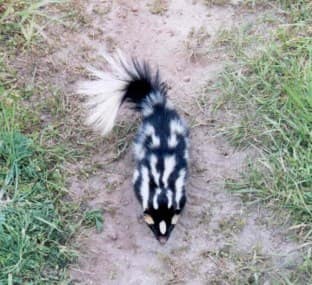
Same Genus NPS / Public domain · cc0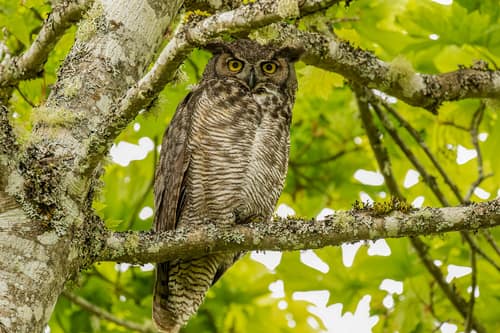
Predator "Great Horned Owl, the first I've seen in decent light this year. Didn't want to disturb it for too long so we continued along the trail" by island deborah- is licensed under CC BY-SA 2.0. To view a copy of this license, visit https://creativecommons.org/licenses/by-sa/2.0/. · cc-by-sa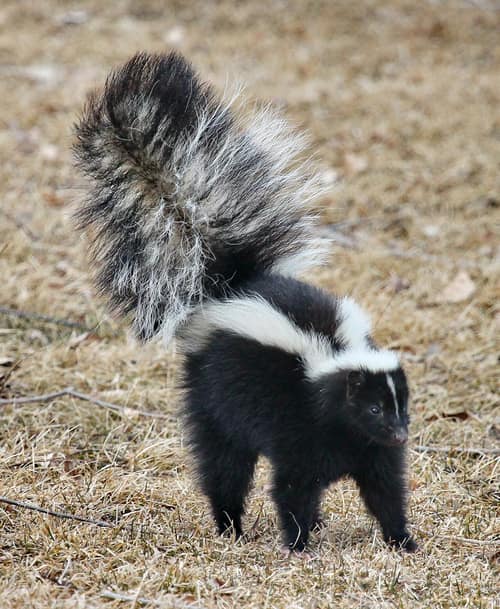
Same Family Wallace Keck / Public domain · cc0 Image unavailable
Close Relative
Help improve the field guideSomething wrong?
Checking your Fauna account…Report a name, category, or profile issue for review.