Also known as Hooker's Sea Lion, Whakahao, Pakake, Kake
New Zealand sea lions are deep-diving marine predators that forage up to 600 meters down for squid, fish, and benthic invertebrates on the subantarctic continental shelf. Unlike many pinnipeds that stay glued to rocky shorelines, females frequently wander inland through coastal forests and sand dunes to nurse pups hidden in vegetation. As one of the rarest otariids in the world, the population faces ongoing pressure from commercial trawl bycatch, coastal disturbance, and episodic bacterial disease outbreaks.
ThreatsBycatch in commercial trawl fisheries, bacterial pup disease outbreaks, and human disturbance
HabitatsSubantarctic islands, sandy beaches, coastal forests, and open marine waters
Life span18–23 years
Classification
OrderCarnivora
FamilyOtariidae
GenusPhocarctos
SpeciesPhocarctos hookeri
Range & activity
Native
Safe observation
Interaction riskHigh
Low
Moderate
High
Very high
Why interaction risk is high
Large and surprisingly fast on land: stay at least 20 meters away and keep dogs strictly leashed.
Why it is dangerous
Massive body mass and powerful canine teeth can inflict catastrophic crushing and puncture wounds, and animals can sprint faster than humans over short distances on sand.
How to recognize a risky encounter
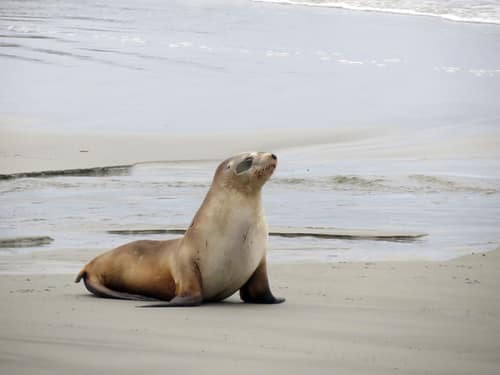
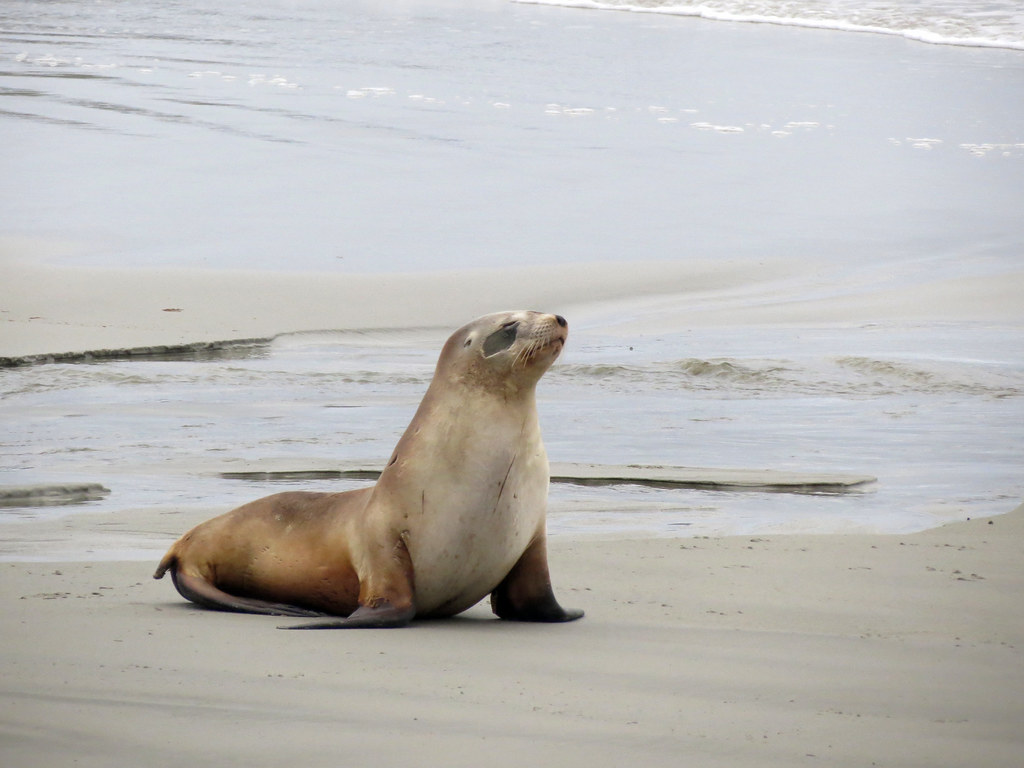
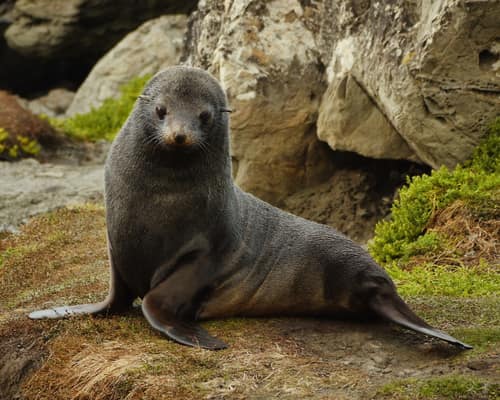
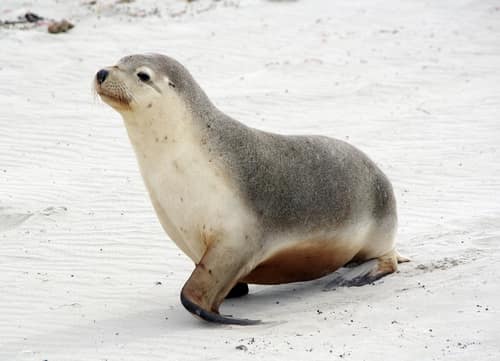
Blunt, squarish muzzles, small external ear flaps, and massive dark brown bulls or pale fawn cows distinguish them on coastal beaches.
What to do
Give all individuals a wide berth, keep dogs away, and never corner an animal in dunes or block its path to the water.
What to notice
Recognizable by their prominent ear flaps, large flippers, and habit of resting well above the tide line in dunes or forests.
Support conservation
Remain silent and maintain ample distance around haul-outs to avoid disrupting resting animals and nursing mother-pup pairs.
Responsible observation
Safe Distance: Maintain at least 20 meters from resting adults and never position yourself between an animal and the sea.
Dog Control: Keep dogs strictly on leashes in coastal habitats, as sea lions frequently rest in grassy dunes and coastal bush.
Retreating Safely: If an animal vocalizes or charges, back away slowly and calmly without turning your back or running.