
Mammal
Honduran White Bat
Ectophylla albaAlso known as Caribbean White Tent-making Bat, Honduran White Tent Bat
Tiny bundles of snow-white fluff, Honduran white bats roost in social colonies of up to a dozen individuals huddled under modified plant leaves. By carefully chewing along the side veins of broad Heliconia leaves, they cause the foliage to collapse downward into a protective V-shaped tent that conceals them from aerial predators and heavy tropical rains. Their bright yellow nose leaves and ears gain their vibrant coloration from dietary carotenoids, contrasting strikingly against their pale coats.
NocturnalFrugivoreRainforest
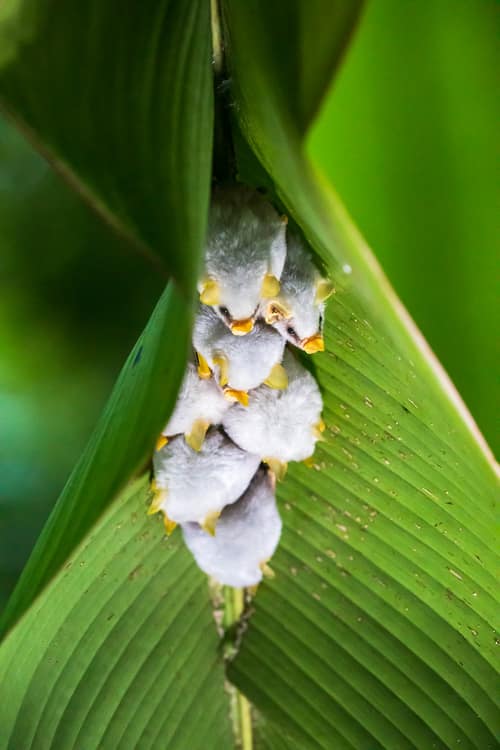
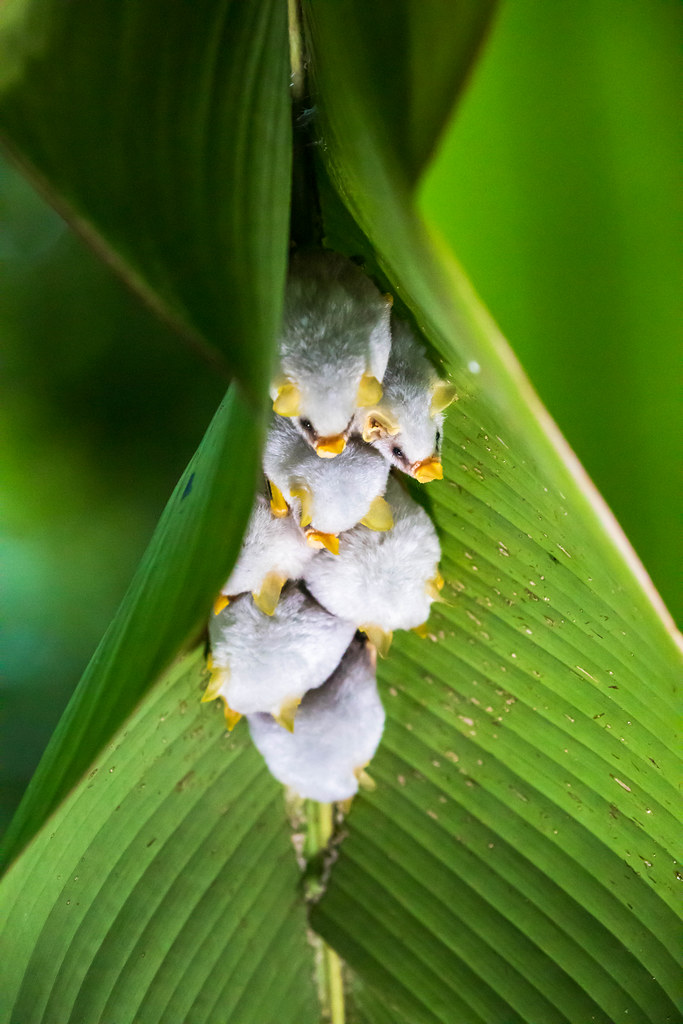
—observations
—countries
—peak records
Near ThreatenedConservation statusIUCN Red List categoriesLCNTVUENCREWEXNear ThreatenedRed List categories, explained →
Diet & preyFicus colubrinae figs, Ficus schippii figs
Predators
- Fer-de-lance
- Spectacled Owl
- Woolly Opossum
ThreatsHabitat loss from agricultural expansion, deforestation, and roost disturbance
HabitatsWet lowland evergreen forests with dense Heliconia understories
Life spanUp to 10–12 years in the wild
Classification
- FamilyPhyllostomidae
- SpeciesEctophylla alba
Native
Interaction riskModerate
- Low
- Moderate
- High
- Very high
- Why interaction risk is moderate
- May bite defensively and carry bat pathogens if handled; view silently from below without touching the tent.
- Why it is dangerous
- Like all wild bats, they can carry rabies and will deliver a defensive bite if grasped or handled.
- How to recognize a risky encounter
- Recognizable by their pure white fur, bright yellow-orange ears and nose leaf, and tiny cotton-ball size.
- What to do
- Never touch or handle roosting bats; observe quietly from a respectful distance without bumping their leaf tent.
- What to notice
- Easily spotted by finding downward-creased Heliconia leaves with tiny white bodies clustered beneath the midrib.
- Support conservation
- Keep at least two meters back and do not touch the roost plant, as disturbance can trigger maternal abandonment of pups.
Responsible observation
- Look Beneath Leaves: Search gently underneath broad Heliconia leaves about two meters off the forest floor without shaking the foliage.
- Maintain Silence: Keep voices down and avoid flash photography, as repeated disturbances cause entire colonies to permanently abandon their tents.
- Do Not Touch: Refrain from grabbing or touching roosting leaves to protect both the fragile roost structure and yourself from defensive bites.
 Image unavailable
Food Plant 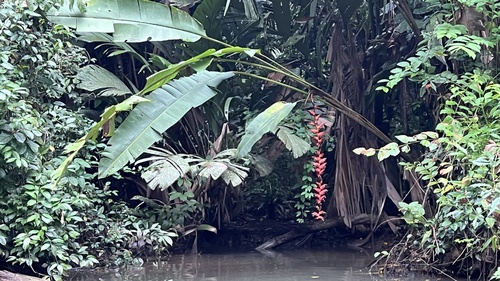
Shelter Plant (c) Keith Seifert, some rights reserved (CC BY-SA) · cc-by-sa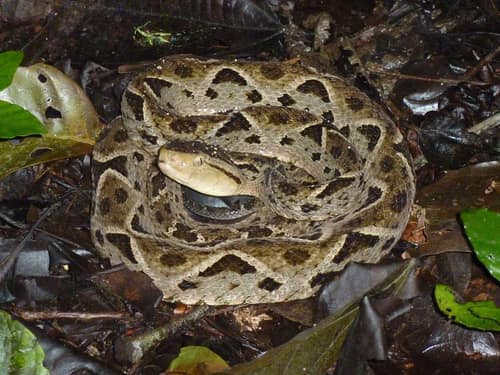
Predator thibaudaronson / CC BY-SA 4.0 · cc-by-saSame Family
Help improve the field guideSomething wrong?
Checking your Fauna account…Report a name, category, or profile issue for review.