
Amphibian
Green and Golden Bell Frog
Litoria aureaAlso known as Green Bell Frog, Green and Golden Swamp Frog, Green Frog
These robust, sun-loving amphibians bask openly on reeds and rocks during the day, soaking up warmth unlike most other nocturnal frogs. Their brilliant green and metallic gold patterns provide excellent camouflage among floating vegetation, where they wait to ambush prey. Despite their classification as tree frogs, they are highly terrestrial and agile swimmers that rarely climb high into the canopy.
AmphibianSun-lovingVibrant
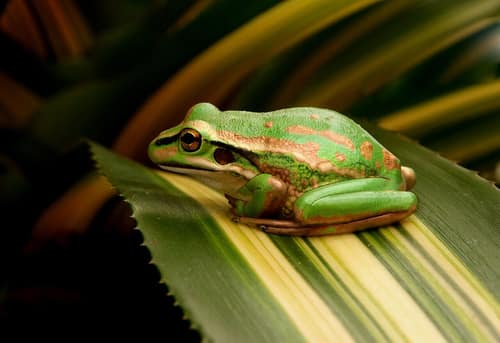
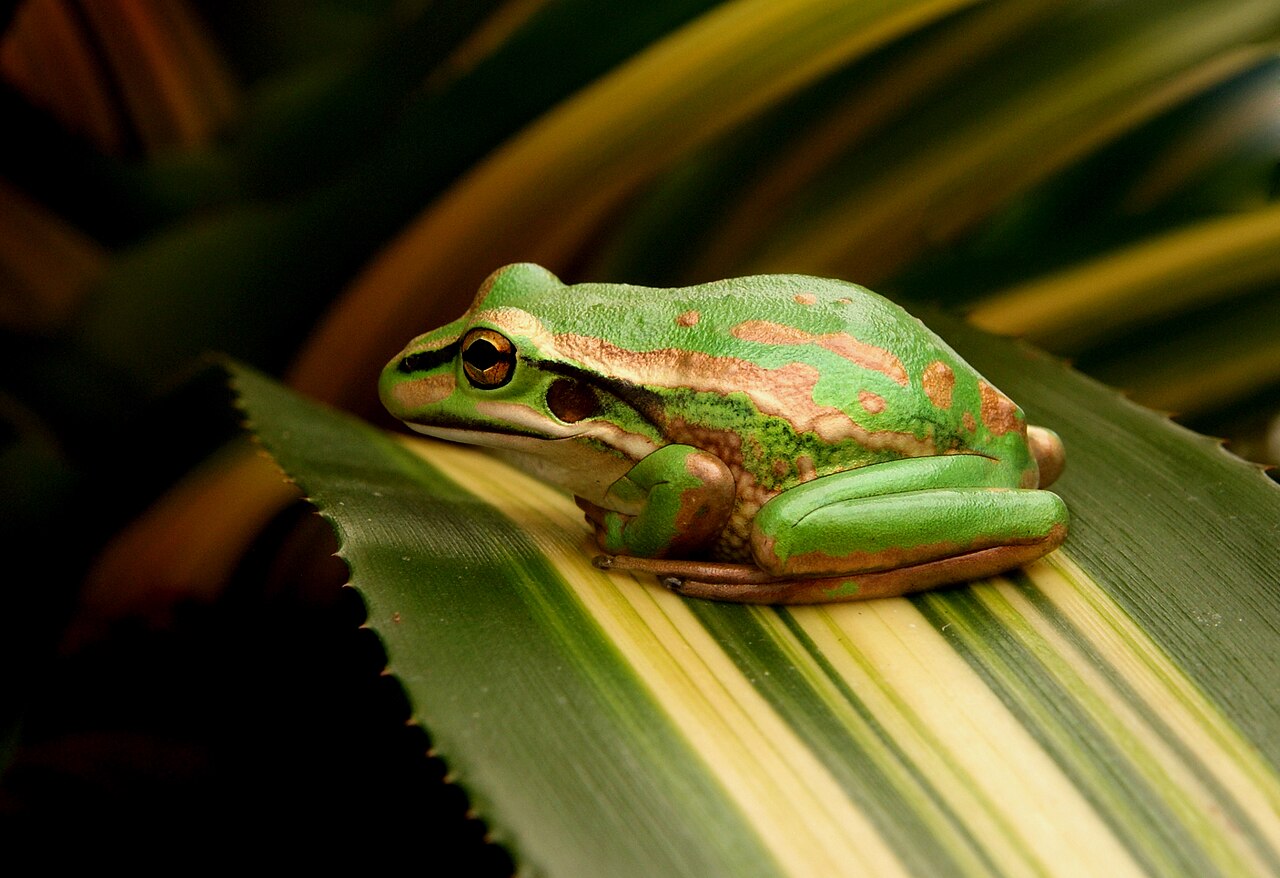
—observations
—countries
—peak records
Near ThreatenedConservation statusIUCN Red List categoriesLCNTVUENCREWEXNear ThreatenedRed List categories, explained →
Diet & preyInsects, Spiders, Smaller frogs
Predators
- Wading birds
- Snakes
- Introduced foxes
ThreatsChytrid fungus, habitat loss, water pollution, and introduced predatory fish
HabitatsSwamps, marshes, farm dams, and coastal lagoons with abundant vegetation
Life span10 to 15 years in the wild
Classification
- FamilyPelodryadidae
- SpeciesLitoria aurea
Range data is not available yet.
Interaction riskLow
- Low
- Moderate
- High
- Very high
- Why interaction risk is low
- Safe to observe at a normal distance.
- What to notice
- Look for a large, bright green frog with irregular gold or bronze patches and a distinct golden-brown stripe running from the nostril to the shoulder.
- Support conservation
- Never touch these frogs or enter their breeding pools, as humans can easily spread deadly fungal spores between wetlands.
Responsible observation
- Listen for calls: Listen for their distinctive, deep grunting call that sounds like a motorbike changing gears.
- Look in the sun: Scan sunny reeds and floating pond vegetation during the day to spot them basking.
- Avoid handling: Keep your distance to protect their sensitive, permeable skin from oils and chemicals on your hands.
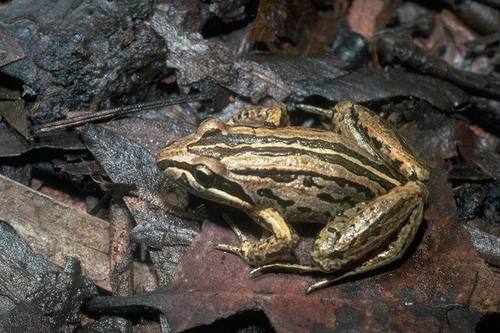
Frequent Companion (c) Jean-Marc Hero, some rights reserved (CC BY-SA) · cc-by-sa Image unavailable
Frequent Companion 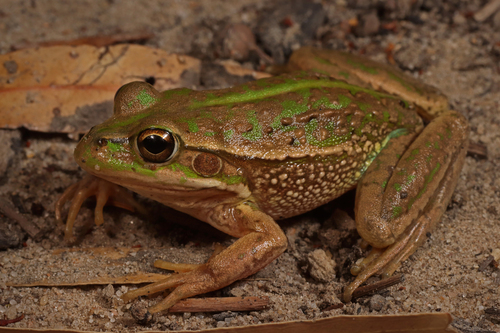
Close Relative no rights reserved, uploaded by Connor Margetts · cc0Close Relative
Help improve the field guideSomething wrong?
Checking your Fauna account…Report a name, category, or profile issue for review.