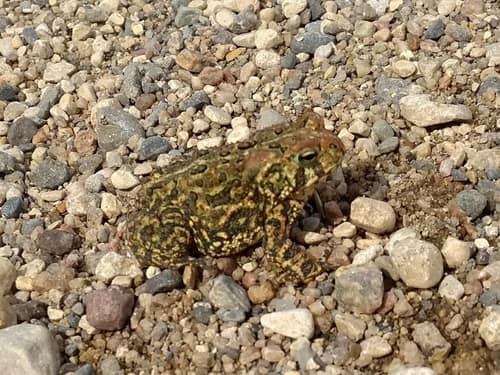
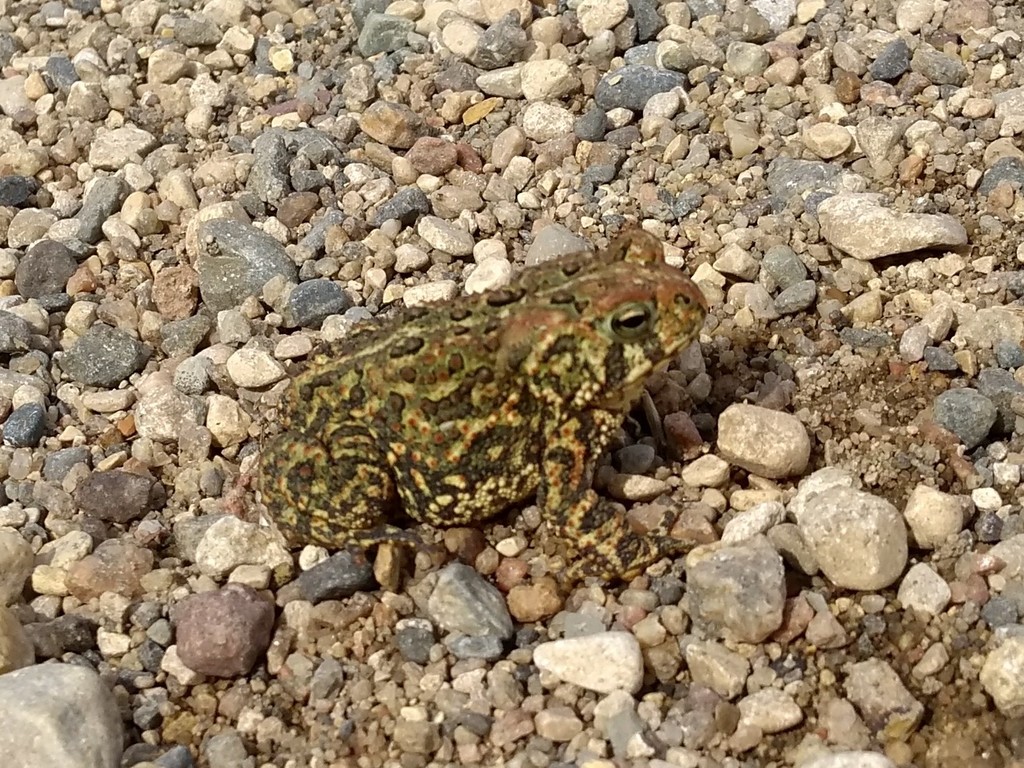
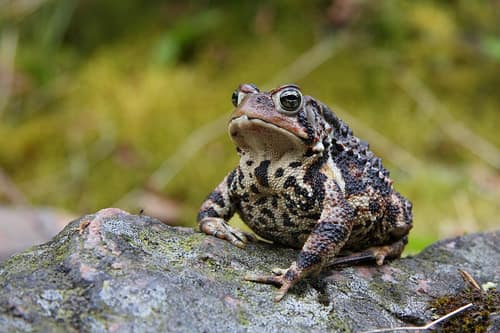
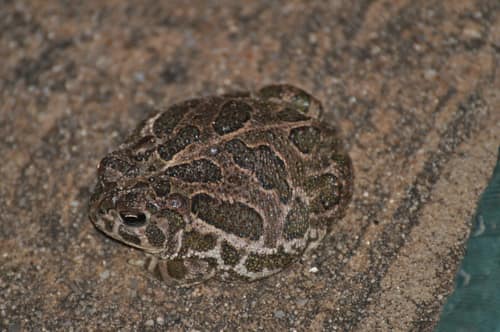
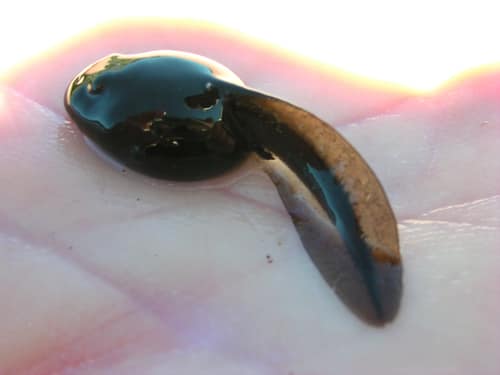
Canadian toads are hardy northern amphibians famous for their communal hibernation burrows, called mima mounds, where hundreds may sleep below the frost line in loose prairie soils. Breeding males congregate in shallow wetlands from late spring to early summer, producing soft, trilling calls that carry over prairie marshes to attract mates. Their thick, warty skin and pronounced bony crest between the eyes provide both water retention and armor against the dry, windblown elements of the northern plains.
ThreatsWetland drainage, agricultural pesticide runoff, road mortality, and habitat fragmentation
HabitatsPrairie grasslands, aspen parkland, wet meadows, and margins of shallow lakes or ponds
Life span7–12 years
Classification
OrderAnura
FamilyBufonidae
GenusAnaxyrus
SpeciesAnaxyrus hemiophrys
Range & activity
Range data is not available yet.
Safe observation
Interaction riskHigh
Low
Moderate
High
Very high
Why interaction risk is high
Parotoid secretions are toxic to dogs and cats if mouthed; wash hands after handling.
Why it is dangerous
Parotoid glands secrete milky bufotoxins that irritate mucous membranes and can cause cardiac arrhythmia or severe distress in pets that mouth or chew them.
How to recognize a risky encounter
Look for a small brownish toad with a prominent, fused bony boss between the eyes and oval parotoid glands directly behind.
What to do
Do not allow pets to mouth them, and wash hands thoroughly with soap after moving one off a road or trail.
Responsible observation
Listening: Visit prairie wetlands on calm, humid May and June nights to hear their soft, repetitive trill.
Pet Safety: Keep curious dogs on a leash near marsh edges, as toad skin secretions cause profuse drooling and vomiting.