
Fish
Spinetail Devil Ray
Mobula mobularAlso known as Devil Fish, Giant Devil Ray, Devil Ray
Spinetail devil rays glide gracefully through temperate and tropical pelagic waters, filtering vast quantities of plankton and small shoaling fish using specialized gill plates. Renowned for spectacular aerial acrobatics, individuals frequently breach entirely clear of the water surface before splashing back into the sea. With an extremely low reproductive rate of just a single pup per litter every few years, populations are exceptionally vulnerable to mortality from industrial pelagic fisheries.
PelagicMarineMigratory
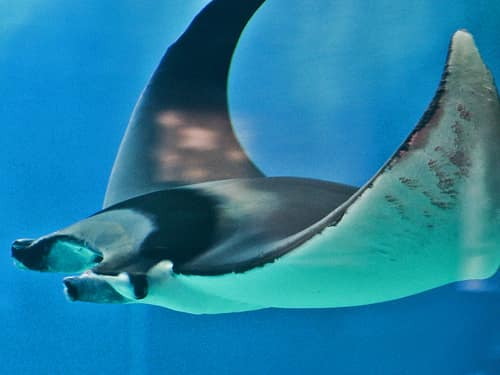
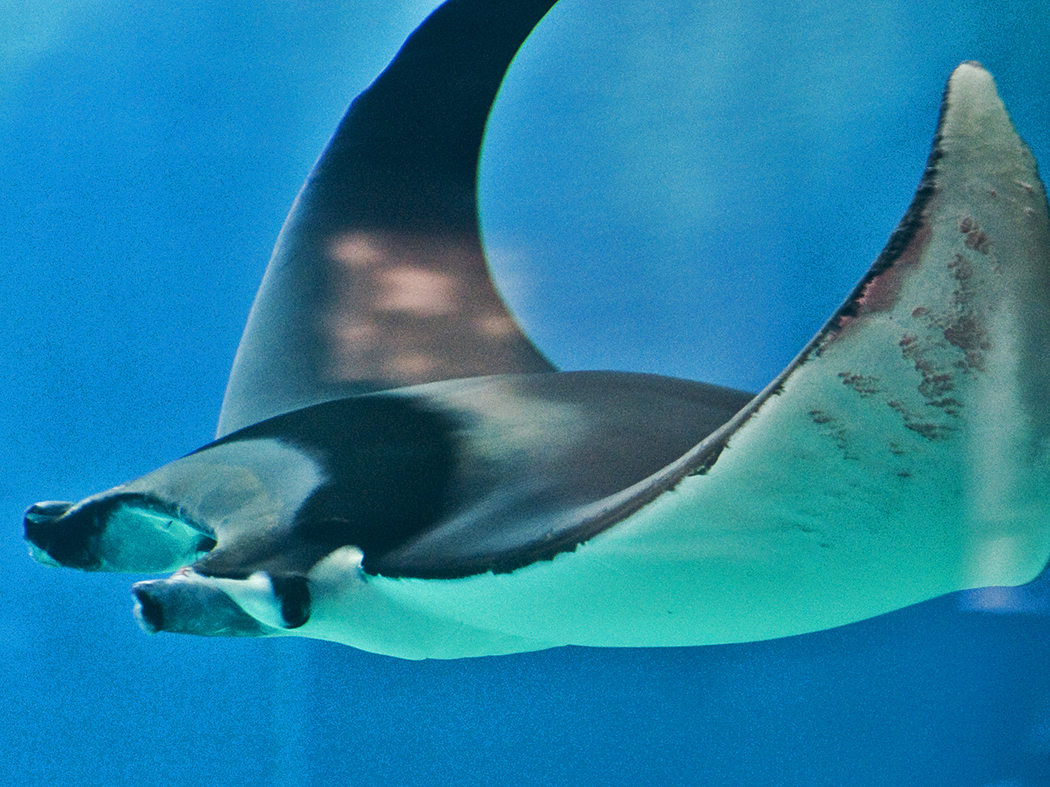
—observations
—countries
—peak records
Critically EndangeredConservation statusIUCN Red List categoriesLCNTVUENCREWEXCritically EndangeredRed List categories, explained →
Diet & preyKrill, Mysid Shrimp, Small Schooling Fish
Predators
- Great White Shark
- Killer Whale
- Shortfin Mako Shark
ThreatsBycatch in pelagic driftnets, longlines, and purse seines, along with targeted fishing for gill plates
HabitatsDeep offshore pelagic waters, continental shelf edges, and open Mediterranean and Atlantic waters
Life span15–20 years
Classification
- FamilyMyliobatidae
- SpeciesMobula mobular
Range data is not available yet.
Interaction riskHigh
- Low
- Moderate
- High
- Very high
- Why interaction risk is high
- Gentle filter-feeder; safe to observe from a respectful distance without touching.
- What to notice
- Look for large pointed pectoral wings, curved cephalic fins beside the mouth, and an exceptionally long tail.
- Support conservation
- Give approaching rays ample swimming clearance and avoid chasing them or blocking access to open water.
Responsible observation
- Diving Etiquette: Maintain passive buoyancy and keep several meters away to avoid altering swimming paths.
- No Touching: Never attempt to ride, pet, or corner rays, as physical contact strips protective skin mucus.
- Boating Awareness: Throttle back vessels when cruising near surface aggregations to prevent propeller strikes.
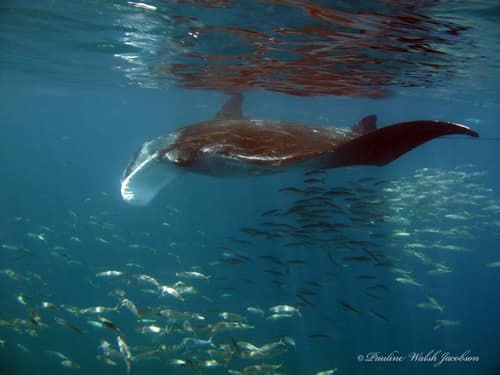
Same Genus "オニイトマキエイ, almindelig djævlerokke, arraia-dois-chifres, atlantic manta, devilfish, devil ray, diable de mer, giant devil ray, giant manta, jamanta, manta, manta gigante, manta ray, manta voladora, munguna, prince alfreds ray, raie manta, 鬼蝠魟" by Pauline Walsh Jacobson is licensed under CC BY 4.0. To · cc-by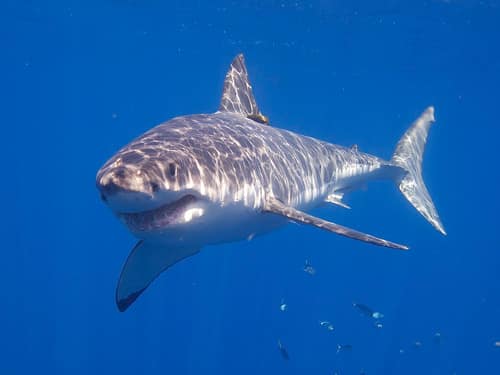
Predator "Great White Shark" by Elias Levy is licensed under CC BY 2.0. To view a copy of this license, visit https://creativecommons.org/licenses/by/2.0/. · cc-by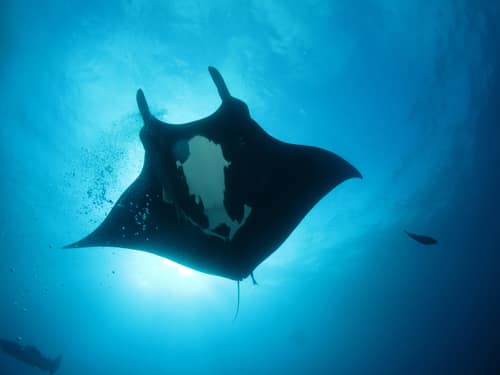
Close Relative (c) Stevelaycock21, some rights reserved (CC BY-SA) · cc-by-sa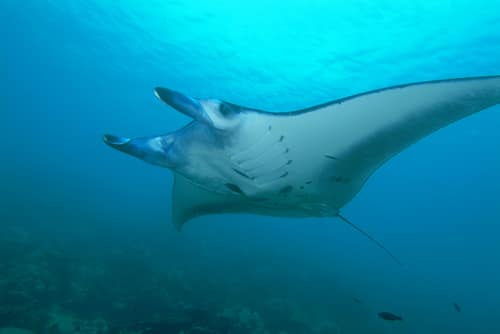
Close Relative Original uploader was Bartek.cieslak at pl.wikipedia / CC BY-SA 3.0 · cc-by-sa
Help improve the field guideSomething wrong?
Checking your Fauna account…Report a name, category, or profile issue for review.