
Fish
Blue Shark
Prionace glaucaAlso known as Great Blue Shark
Blue sharks cut through pelagic waters with an exceptionally slender, hydrofoil-like silhouette, cruising ocean gyres on massive migrations spanning thousands of kilometers. Females give birth to litters of up to one hundred live pups after a year-long gestation, relying on deeply serrated teeth to grip slippery squid and schooling fish during deep night dives. Intense longline fishing pressure across open-ocean shipping corridors continues to diminish their numbers worldwide.
PelagicMigratoryCarnivorous
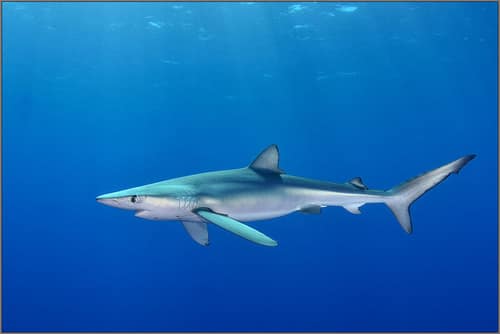
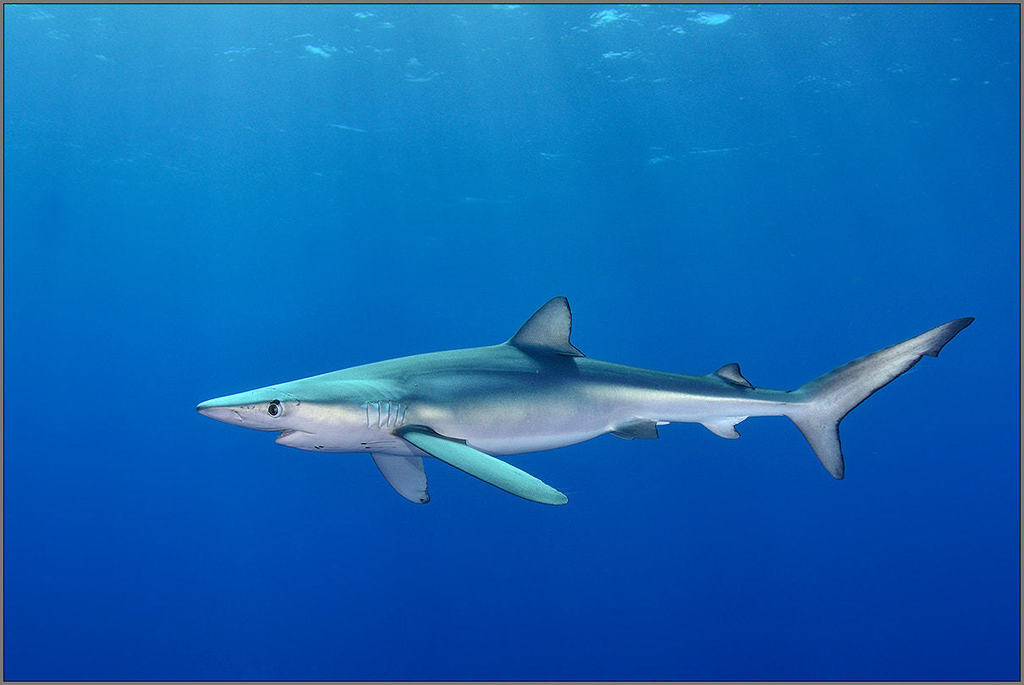
—observations
—countries
—peak records
Near ThreatenedConservation statusIUCN Red List categoriesLCNTVUENCREWEXNear ThreatenedRed List categories, explained →
Diet & preyPelagic Squid, Atlantic Mackerel, Pacific Herring
Predators
- Killer Whale
- Great White Shark
- Shortfin Mako
ThreatsCommercial longline bycatch, shark finning, marine debris
HabitatsOpen ocean, pelagic zones from surface to 350 meters depth
Life span15–20 years
Classification
- FamilyCarcharhinidae
- SpeciesPrionace glauca
Range data is not available yet.
Interaction riskHigh
- Low
- Moderate
- High
- Very high
- Why interaction risk is high
- Large pelagic predator capable of severe bites; maintain eye contact and keep distance while diving.
- Why it is dangerous
- Possesses razor-sharp, serrated teeth and curious exploratory behavior that can result in exploratory bites and severe lacerations.
- How to recognize a risky encounter
- Look for a brilliant indigo-blue dorsal surface, white underside, long pointed snout, and slender, swept-back pectoral fins.
- What to do
- Keep full visual contact, place a solid barrier like a camera rig between you and approaching individuals, and retreat calmly.
- What to notice
- Recognizable in deep offshore waters by its slender profile and vivid cobalt coloration, lacking dark fin margins.
- Support conservation
- If accidentally hooked on fishing gear, cut the line as close to the hook as safely possible to maximize post-release survival.
Responsible observation
- Diving Etiquette: Maintain calm body posture and continuous 360-degree awareness without erratic thrashing.
- Baiting Precautions: Avoid remaining in the water during chumming activities, as scent stimulates investigative bumps.
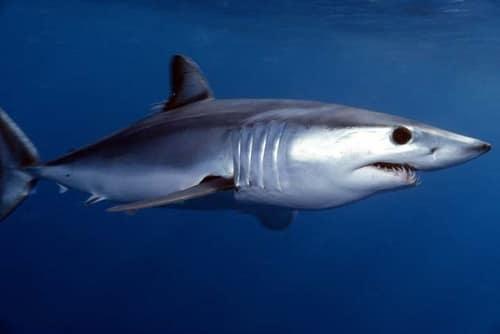
Competitor (c) jidanchaomian, some rights reserved (CC BY-SA) · cc-by-sa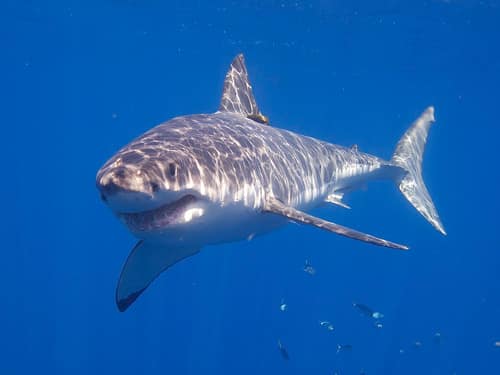
Predator "Great White Shark" by Elias Levy is licensed under CC BY 2.0. To view a copy of this license, visit https://creativecommons.org/licenses/by/2.0/. · cc-by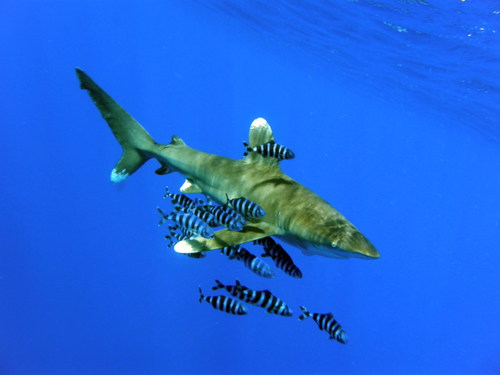
Same Family (c) Cvf-ps, some rights reserved (CC BY-SA) · cc-by-sa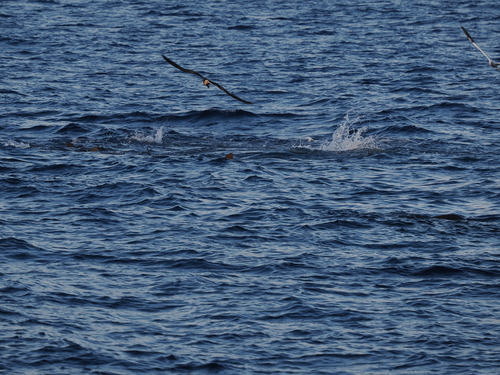
Same Family no rights reserved · cc0
Help improve the field guideSomething wrong?
Checking your Fauna account…Report a name, category, or profile issue for review.