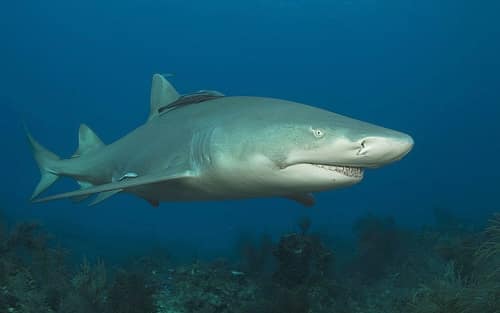
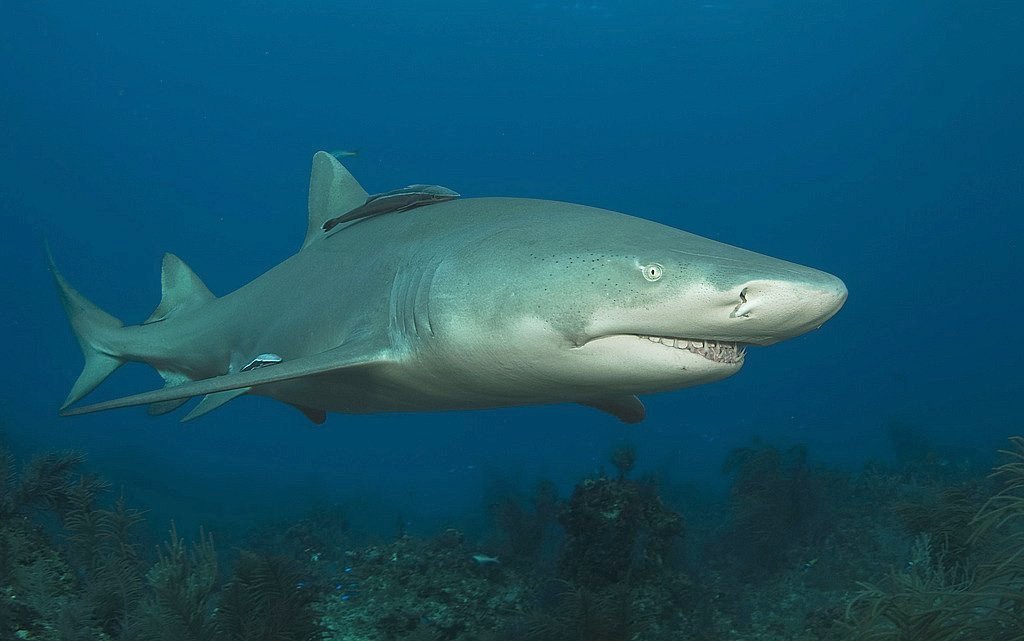
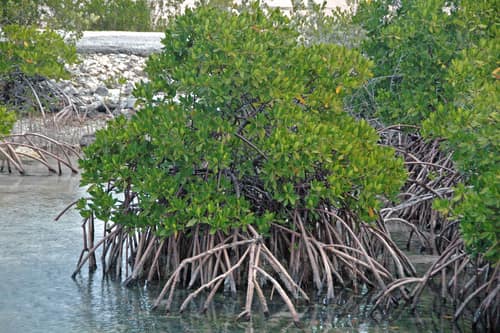
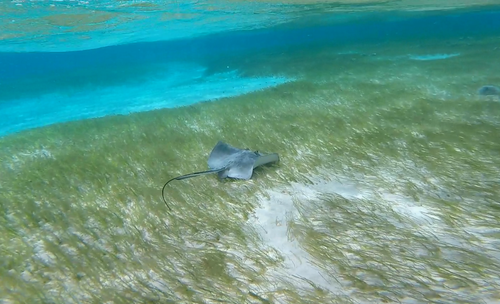
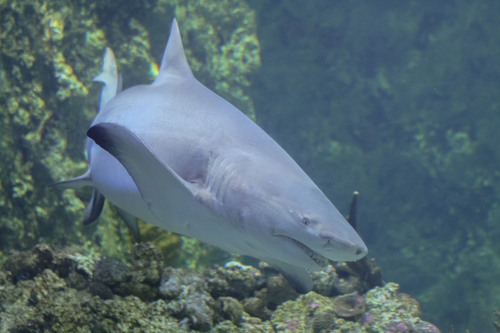
Lemon sharks are social predators that spend their youth sheltering in mangrove nurseries, often forming enduring bonds and hunting in cooperative groups. Their yellowish-brown coloration provides exceptional camouflage against shallow sandy seafloors where they patrol for bottom-dwelling prey. Adults navigate open coastal waters and coral reefs, relying on electroreceptors in their snouts to detect the faint electrical pulses of buried fish.
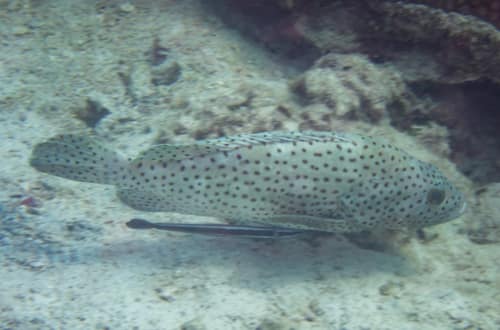
Diet & preyYellowfin Mojarra, Southern Stingray, Blue Crab
Predators
Tiger Shark
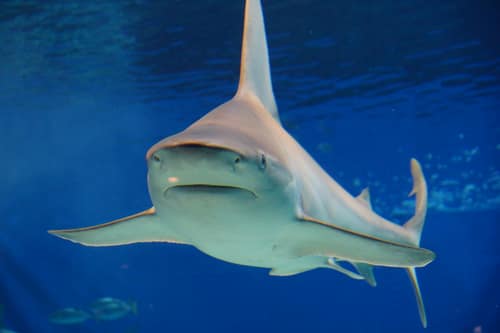
Bull Shark
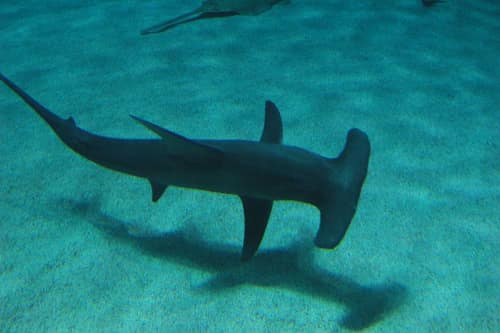
Great Hammerhead
ThreatsMangrove deforestation, targeted commercial fishing, and bycatch
HabitatsMangrove estuaries, shallow bays, coral reefs, and coastal waters
Life span25–30 years
Classification
OrderCarcharhiniformes
FamilyCarcharhinidae
GenusNegaprion
SpeciesNegaprion brevirostris
Range & activity
Range data is not available yet.
Safe observation
Interaction riskHigh
Low
Moderate
High
Very high
Why interaction risk is high
Large marine predator capable of severe bites; maintain a respectful distance and avoid harassing or cornering them.
Why it is dangerous
Possesses sharp serrated teeth and powerful jaws capable of inflicting severe or life-threatening puncture wounds and lacerations if cornered or provoked.
How to recognize a risky encounter
Recognizable by its yellowish to olive-brown dorsal tint, blunt rounded snout, and two nearly equal-sized dorsal fins.
What to do
Give the animal ample swimming room, never attempt to touch or feed it in the water, and exit quietly if it displays agitated posturing.
What to notice
Look for stocky yellowish requiem sharks cruising in very shallow mangrove edges, tidal flats, or surrounding reef margins.
Support conservation
Protect sensitive nursery shallows by avoiding motorized propeller churn and never handling wild pups.
Responsible observation
Diving Etiquette: Maintain slow, predictable movements and avoid blocking the shark's path in shallows.
Mangrove Observation: Watch quietly from kayaks or docks to see juveniles schooling without startling them.
Baiting Precautions: Avoid swimming near chum slicks or spearfishers where predatory instincts are heightened.