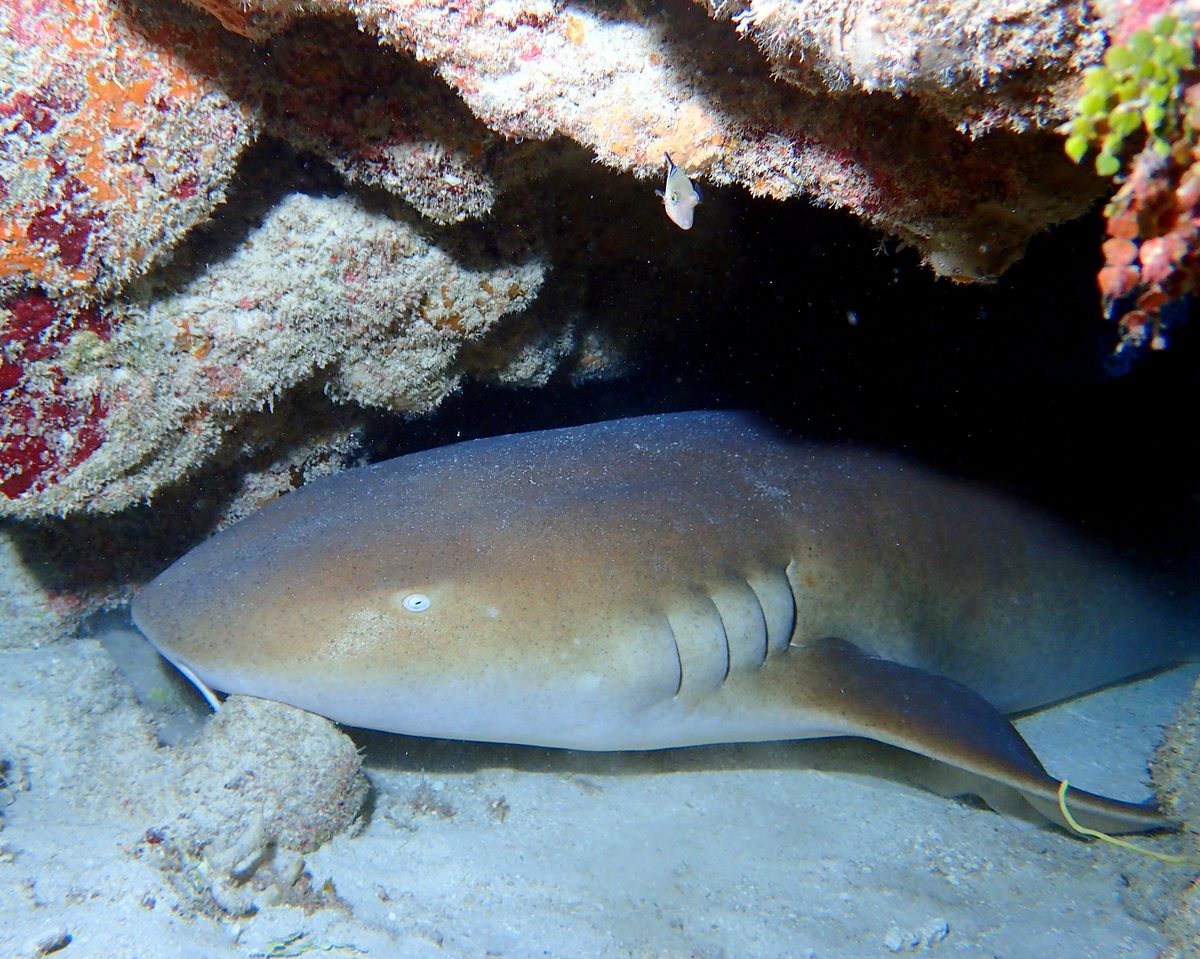
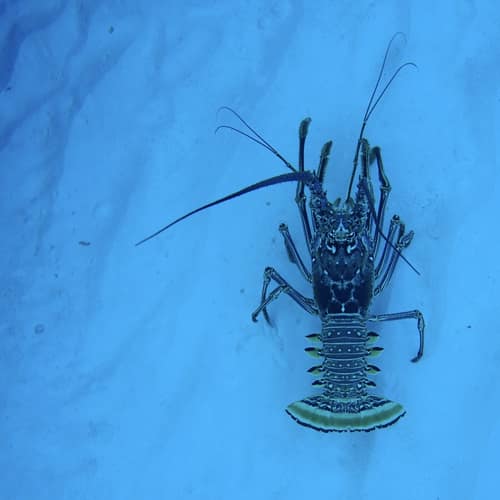
Nurse sharks spend daylight hours resting in tranquil piles beneath coral ledges and mangrove roots, pumping water across their gills without needing to swim continuously. At dusk, they patrol the seafloor using sensory barbels to detect hidden prey, deploying a specialized pharyngeal suction mechanism that slurps snails, lobsters, and sleeping fish from tight crevices. Mating involves elaborate courtship where males grip a female's pectoral fin in their jaws, leading to litters of dozens of pups nourished via ovoviviparity.
ThreatsTargeted coastal fisheries, commercial bycatch, and reef habitat loss
HabitatsCoral reefs, seagrass beds, mangrove channels, and sandy shelves
Life span20–25 years
Classification
FamilyGinglymostomatidae
SpeciesGinglymostoma cirratum
Range & activity
Range data is not available yet.
Safe observation
Interaction riskHigh
Low
Moderate
High
Very high
Why interaction risk is high
Docile but can deliver a crushing, lockjaw bite if harassed; observe from a respectful distance.
Why it is dangerous
Possesses incredibly muscular jaws lined with rows of serrated grinding teeth, creating powerful suction and a vice-like grip that is notoriously difficult to release.
How to recognize a risky encounter
Recognizable by a broad, flattened head, two fleshy sensory barbels hanging from the snout, and rounded dorsal fins set far back on a tawny-brown body.
What to do
Keep at least several meters of clearance while diving or snorkeling, and never harass resting individuals in caves or shallows.
What to notice
Large, slow-moving bottom dweller found motionless under reef ledges or resting along shallow mangrove flats.
Support conservation
Observe silently without touching or corralling individuals, and support marine protected areas that safeguard shallow nursery grounds.
Responsible observation
Give Resting Groups Space: Avoid crowding or blocking coral overhangs where groups pile together during the day.
Do Not Touch or Corner: Never grab fins or attempt to pet them, as their defensive bites are powerful and tenacious.
Maintain Buoyancy: Stay clear of the sandy bottom to prevent kicking up silt that disrupts their sensory barbels.