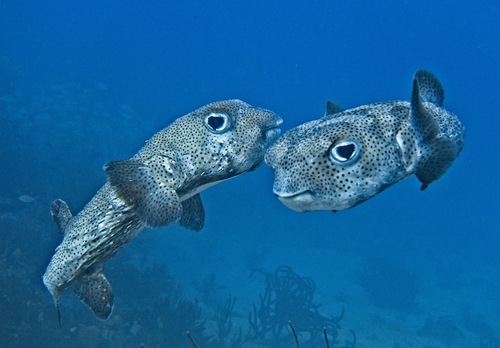
Also known as Japanese Puffer, Japanese Pufferfish, Torafugu
Tiger puffers are demersal marine fish famous for inflating their elastic bellies with water when threatened, deterring predators with an abruptly enlarged, spiny silhouette. Strong, beak-like fused dental plates allow them to crush hard-shelled invertebrates like crabs and sea urchins along rocky reefs and sandy bottoms. Beyond their culinary notoriety in Japan, their remarkably compact genome contains minimal non-coding DNA, making them a cornerstone model organism in vertebrate genetics.
ThreatsCommercial overfishing, habitat degradation, and climate-driven water temperature shifts
HabitatsTemperate coastal waters, rocky reefs, sandy seabeds, and brackish estuaries
Life span10–12 years
Classification
FamilyTetraodontidae
SpeciesTakifugu rubripes
Range & activity
Range data is not available yet.
Safe observation
Interaction riskHigh
Low
Moderate
High
Very high
Why interaction risk is high
Tissues harbor lethal tetrodotoxin; never consume wild specimens unless prepared by certified experts.
Why it is dangerous
Internal organs such as the liver, ovaries, and intestines contain concentrated tetrodotoxin, a potent neurotoxin that causes paralysis and fatal respiratory failure when ingested.
How to recognize a risky encounter
Look for a dark brown to blackish upper body marked with irregular dark blotches, a distinctive white-ringed black spot behind the pectoral fin, and a white underside.
What to do
Never handle or harvest for food without specialized professional certification, and discard fish parts strictly away from domestic animals.
What to notice
Large, stocky pufferfish up to 80 cm long with small prickles across the skin and a broad, rounded snout.
Support conservation
Adhere strictly to local marine fishery regulations and avoid disturbing spawning congregations in shallow bays.
Responsible observation
Observation: Look for solitary adults swimming slowly above sandy bottoms near coastal reefs.
Handling: Do not provoke or attempt to handle wild fish, as their sharp beaks deliver painful bites.

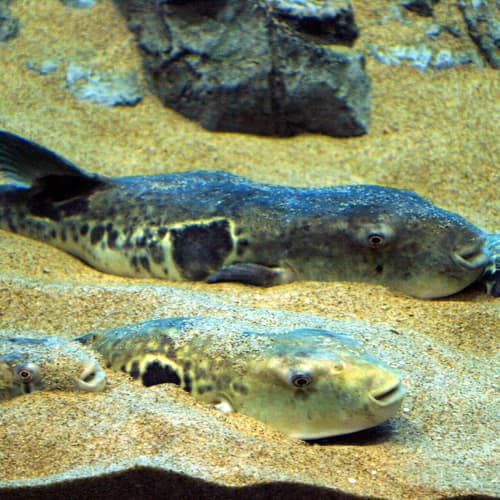
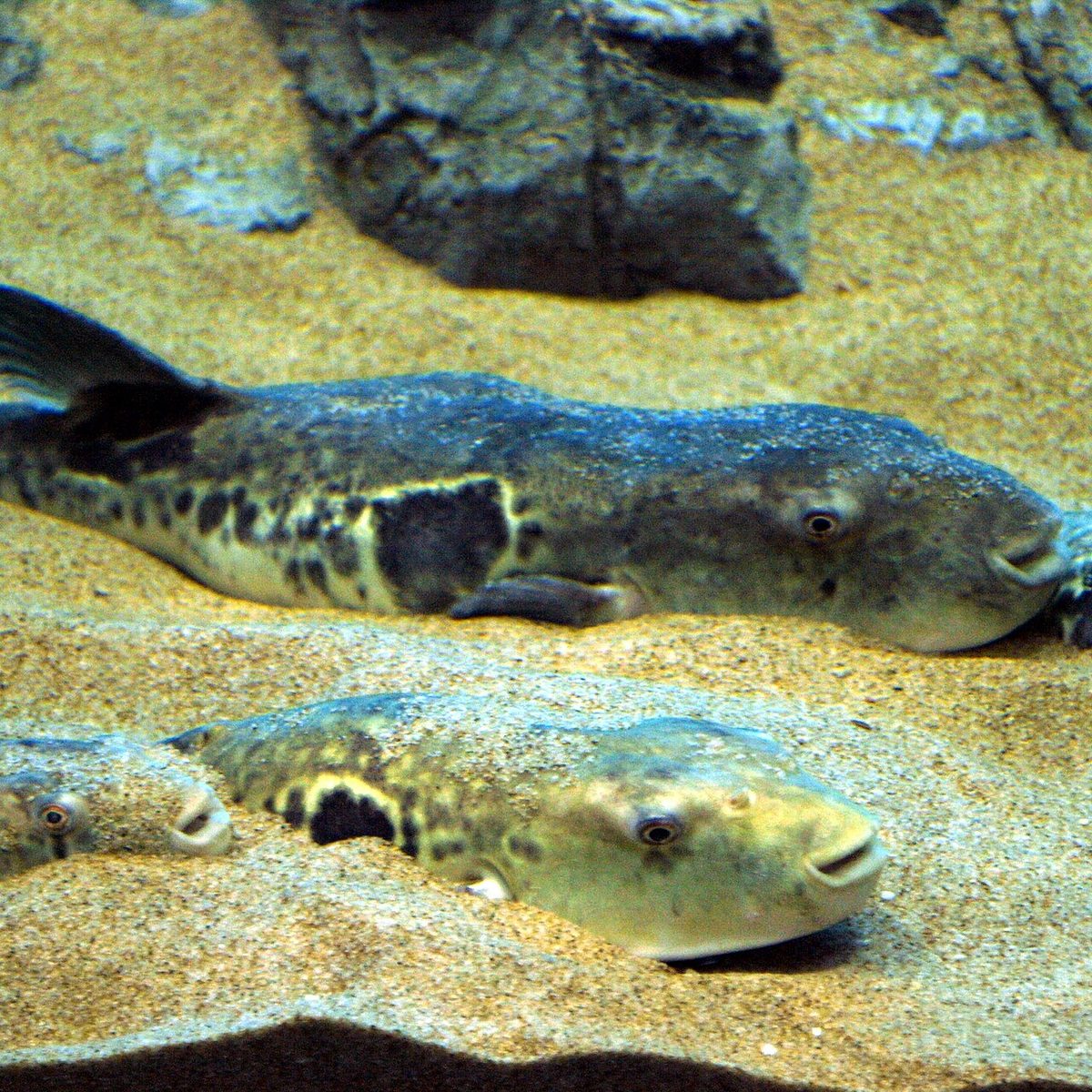
 Image unavailable