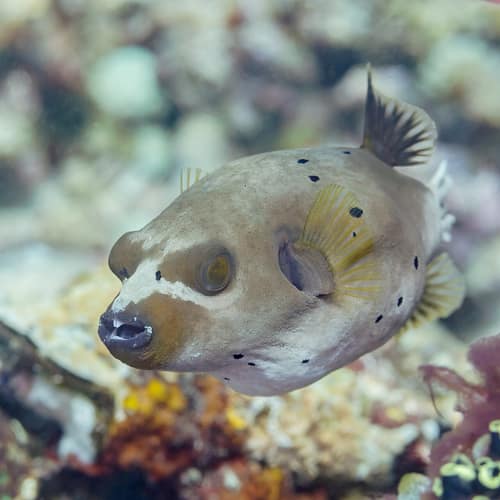
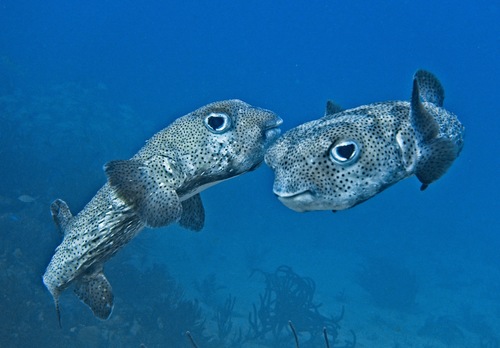
Also known as Stars and Stripes Puffer, Bristly Puffer, White-spotted Blowfish
White-spotted puffers cruise solitary over tropical coral reefs and sandy lagoons, using their fan-like fins for precise, hovering maneuvers. When threatened, they rapidly gulp water into an elastic stomach to swell into an intimidating, spiny sphere that deters predators. Their powerful beak-like dental plates easily crunch through hard-shelled invertebrates like crabs, sea urchins, and branching corals.
ThreatsCoral reef degradation, destructive fishing practices, and collection for the marine aquarium trade
HabitatsCoral reefs, lagoons, seagrass beds, and sheltered coastal bays
Life span10–15 years
Classification
FamilyTetraodontidae
SpeciesArothron hispidus
Range & activity
Range data is not available yet.
Safe observation
Interaction riskHigh
Low
Moderate
High
Very high
Why interaction risk is high
Tissues contain lethal tetrodotoxin if ingested, and fused teeth can deliver a severe bite if handled.
Why it is dangerous
Internal organs and skin contain tetrodotoxin, a potent neurotoxin that blocks sodium channels, causing paralysis and fatal respiratory failure when ingested.
How to recognize a risky encounter
Look for a grey or yellow body dotted with white specks and encircled by concentric white rings around the eyes and pectoral fins.
What to do
Never consume this fish and avoid cornering or touching it during dives to prevent a painful, crushing bite.
Responsible observation
Diving Etiquette: Maintain respectful distance and never chase or provoke a puffer into inflating, as the stress depletes its vital energy.
Handling: Do not attempt to touch or catch puffers by hand, as their beak-like jaws can sever fingers and inflict painful wounds.

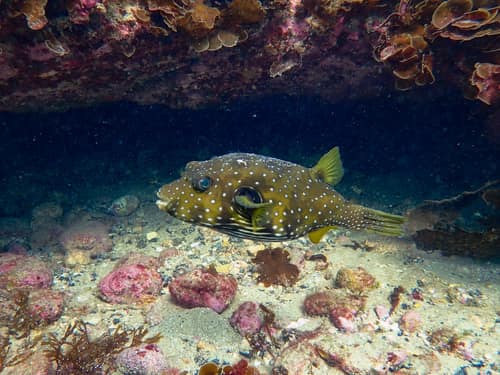
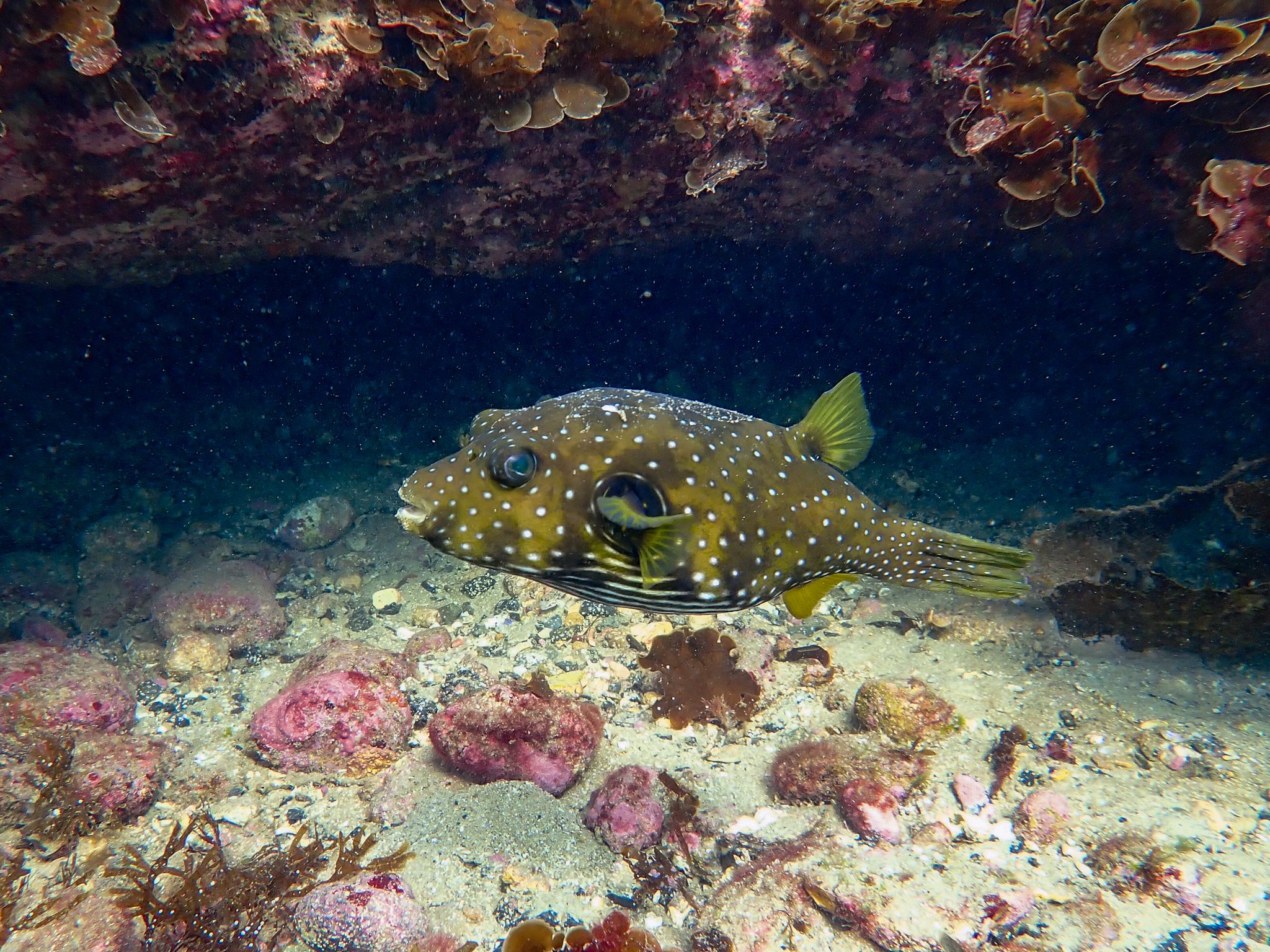
 Image unavailable