Giant morays are formidable reef predators known to engage in cooperative hunting with roving coralgroupers, responding to head-shake signals to flush prey out of narrow crevices. Adults typically maintain specific hideaways within coral heads, rhythmically opening and closing their mouths to pump oxygenated water across their gills rather than as an aggressive display. Equipped with a second set of tooth-bearing pharyngeal jaws that shoot forward from the throat, they easily grasp and pull struggling prey into the esophagus.
ThreatsCoral reef degradation, targeted fishing, and incidental bycatch
HabitatsCoral reefs, lagoons, and outer reef slopes across the Indo-Pacific
Life span15–30 years
Classification
FamilyMuraenidae
SpeciesGymnothorax javanicus
Range & activity
Range data is not available yet.
Safe observation
Interaction riskHigh
Low
Moderate
High
Very high
Why interaction risk is high
Bites cause deep lacerations prone to infection, and its meat carries high ciguatoxin levels; never handle or consume.
Why it is dangerous
Recurved teeth and muscular jaws cause extensive tissue damage prone to bacterial infection, while bioaccumulated ciguatoxins can cause severe neurotoxicity if eaten.
How to recognize a risky encounter
Look for a massive brownish body covered in small dark spots that cluster into larger patches, with a distinct black smudge encircling the gill opening.
What to do
Keep hands clear of reef crevices, give free-swimming individuals plenty of space to pass, and never attempt to touch or hand-feed.
Responsible observation
Diving Etiquette: Maintain several feet of distance and never corner an eel inside its rocky recess.
Crevice Safety: Avoid reaching hands or camera rigs blindly into dark coral cavities.
Avoid Feeding: Do not offer food, as hand-feeding causes dangerous behavioral habituation.

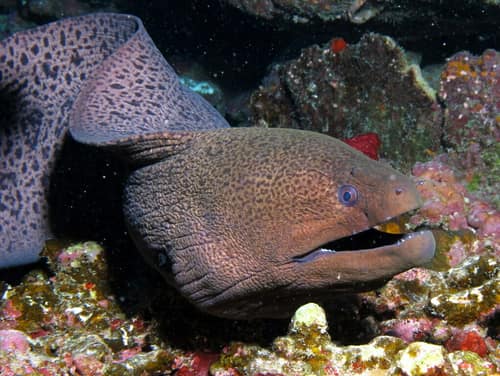
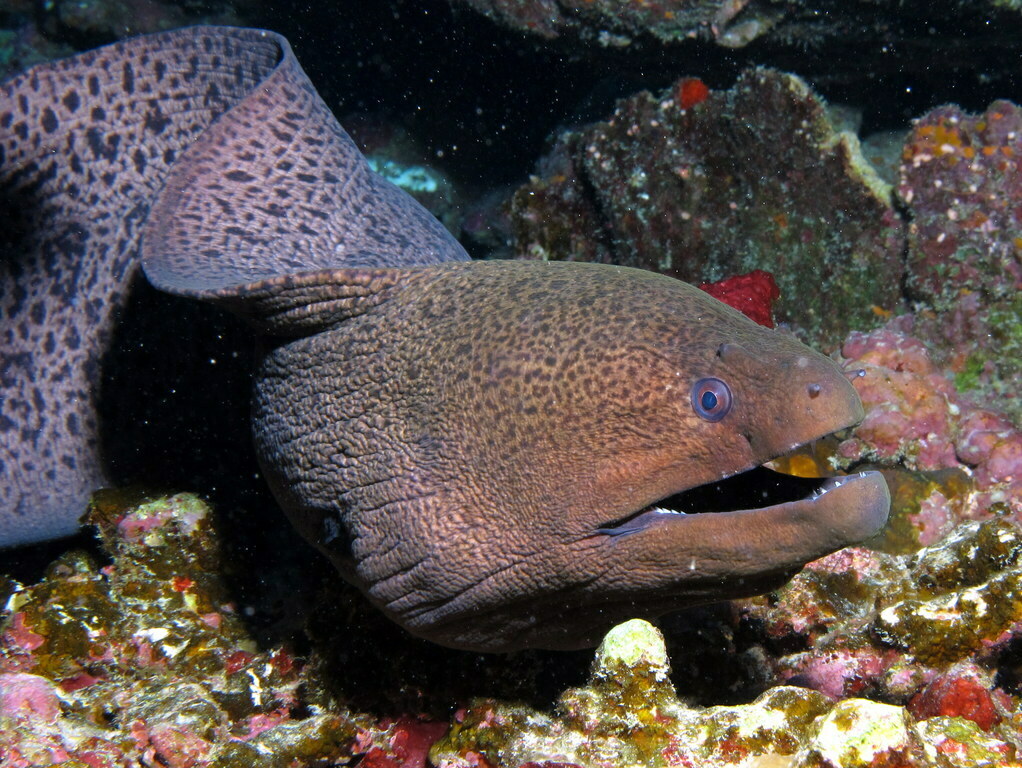
 Image unavailable