
Species
Maroon Clownfish
Premnas biaculeatusAlso known as Spine-cheeked Anemonefish, Maroon Anemonefish
Maroon clownfish are fiercely territorial damselfish famous for the sharp spine jutting from each cheek beneath the eye. They live in strict monogamous pairs within sea anemones, where the dominant female grows significantly larger and darker than her diminutive, bright red mate. If the breeding female dies, the male undergoes a hormonal shift, transitioning into a fully functional reproductive female to lead the anemone.
Reef DwellerSymbioticProtandrous
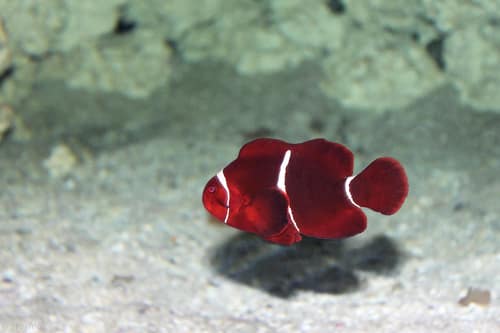
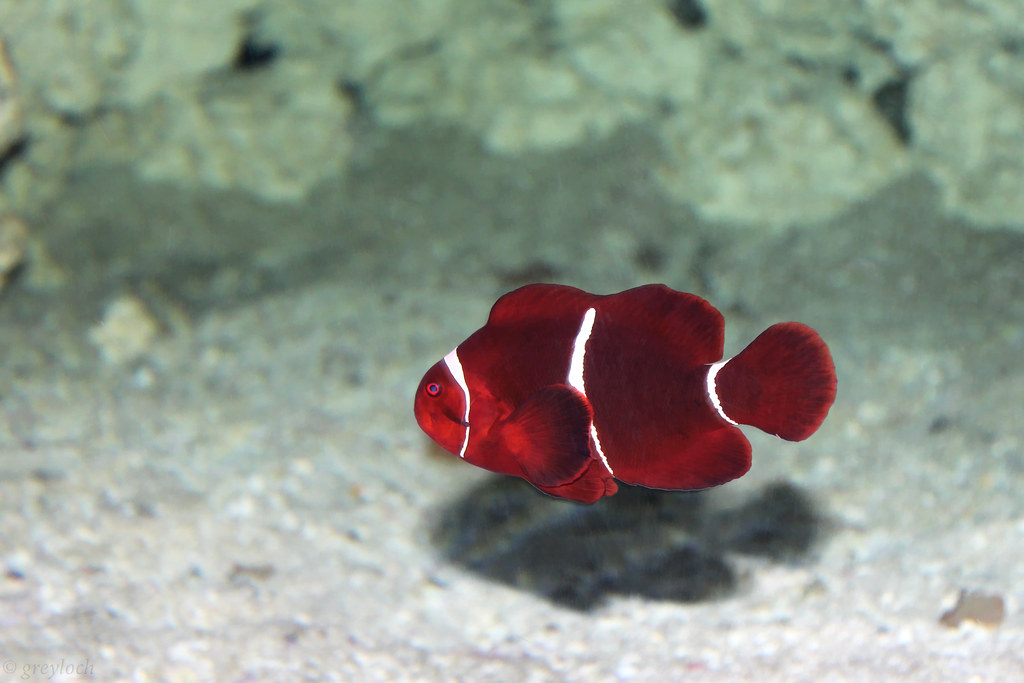
—observations
—countries
—peak records
Least ConcernConservation statusIUCN Red List categoriesLCNTVUENCREWEXLeast ConcernRed List categories, explained →
Diet & preyCopepods, Tunicates, Filamentous Algae
Predators
- Groupers
- Snappers
- Moray Eels
ThreatsCoral bleaching, aquarium trade overcollection, and habitat degradation
HabitatsCoral reefs, sheltered lagoons, and outer reef slopes
Life span10–15 years
Classification
- FamilyPomacentridae
- SpeciesPremnas biaculeatus
Range data is not available yet.
Interaction riskLow
- Low
- Moderate
- High
- Very high
- Why interaction risk is low
- Safe to observe at a normal distance; will dart out to nip hands approaching its anemone.
Responsible observation
- Maintain reef clearance: Keep hands and fins well clear of host anemones to avoid damaging delicate tentacles.
- Watch female defense: Observe how the larger female aggressively charges divers who linger too close to her host.
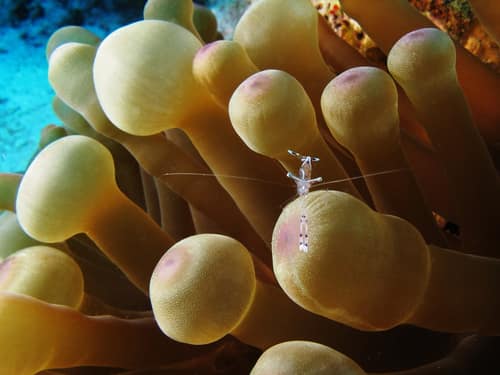
Host Anemone (c) Alexander Vasenin, some rights reserved (CC BY-SA) · cc-by-sa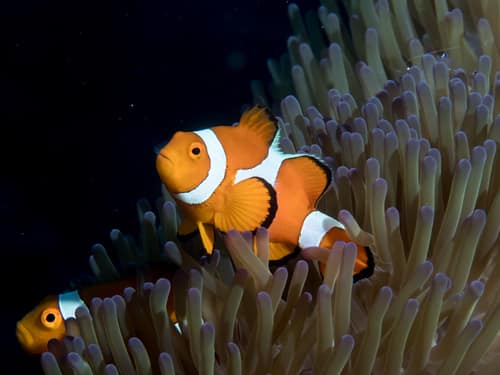
Close Relative "Ocellaris clownfish (Amphiprion ocellaris)" by krokodiver is licensed under CC BY 2.0. To view a copy of this license, visit https://creativecommons.org/licenses/by/2.0/. · cc-by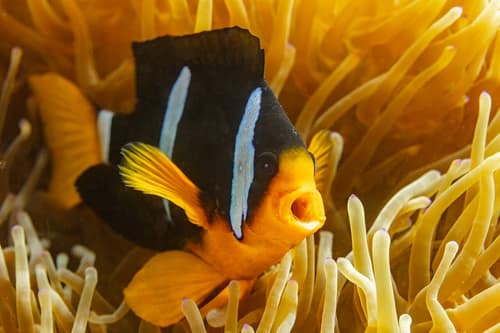
Close Relative Diego Delso / CC BY-SA 4.0 · cc-by-sa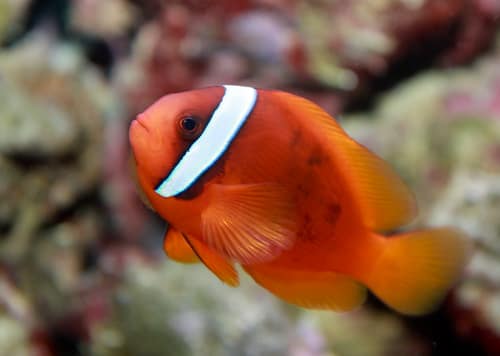
Close Relative "tomato clownfish, Amphiprion frenatus" by brian.gratwicke is licensed under CC BY 2.0. To view a copy of this license, visit https://creativecommons.org/licenses/by/2.0/. · cc-by
Help improve the field guideSomething wrong?
Checking your Fauna account…Report a name, category, or profile issue for review.