
Species
Leafy Seadragon
Phycodurus equesAlso known as Glauert's Seadragon, Leafy Sea Dragon
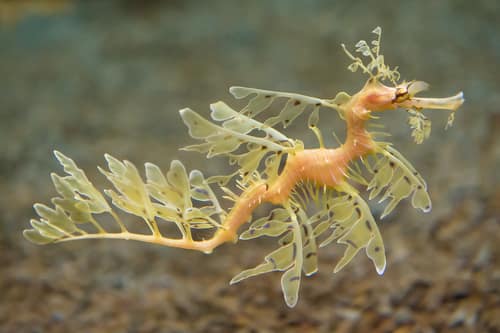
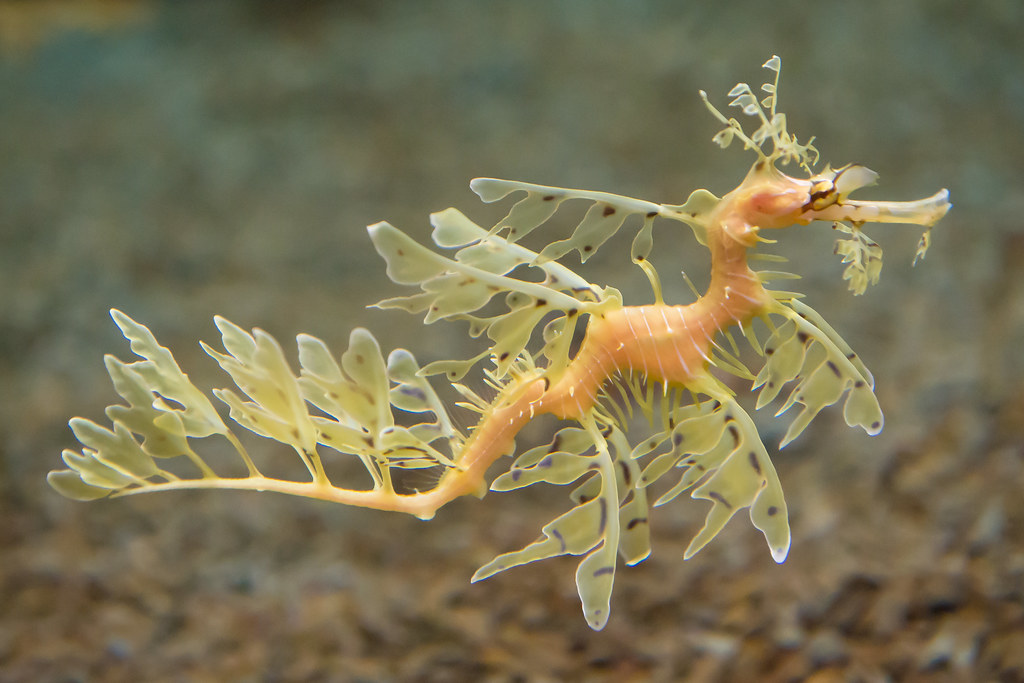
Leafy seadragons drift seamlessly through temperate southern Australian shallows, using intricate, leaf-shaped lobes of skin to mimic undulating kelp fronds and evade detection. Propulsion comes entirely from tiny, nearly transparent fins that flutter rapidly while leaving the body virtually motionless to casual observers and predators alike. Males take on sole parental duty, incubating up to 250 bright pink eggs glued to a specialized brood patch beneath their tails until independent young emerge.
MarineCamouflagedEndemic
—observations
—countries
—peak records
Least ConcernConservation statusIUCN Red List categoriesLCNTVUENCREWEXLeast ConcernRed List categories, explained →
Diet & preyMysid shrimp, Sea lice, Planktonic crustaceans
Predators
- Predatory fish
- Crabs
ThreatsHabitat degradation, coastal runoff, illegal poaching for the aquarium trade
HabitatsTemperate rocky reefs, kelp forests, and seagrass meadows
Life span5–10 years
Classification
- FamilySyngnathidae
- SpeciesPhycodurus eques
Range data is not available yet.
Interaction riskLow
- Low
- Moderate
- High
- Very high
- Why interaction risk is low
- Safe to observe at a normal distance.
- What to notice
- Recognize by the large, ornate leaf-like lobes across the entire body, yellowish-brown coloring, and tubular snout.
- Support conservation
- Never chase, corner, touch, or attempt to handle them, and report any illegal poaching activity to fisheries authorities.
Responsible observation
- Diving Etiquette: Maintain neutral buoyancy and keep at least a meter of distance to avoid stressing them or damaging sensitive kelp beds.
- Photography: Refrain from using high-intensity strobes or persistent video lights, which can disorient these slow-moving fish.
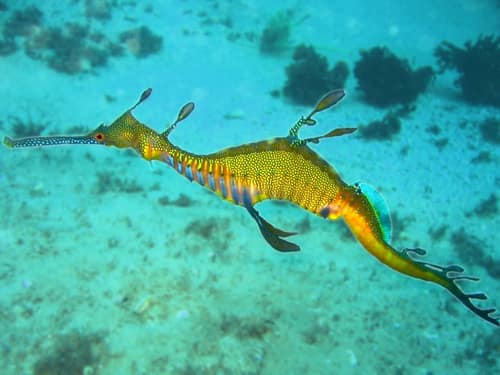
Close Relative Richard Ling <wikipedia@rling.com> -->Rling / CC BY-SA 3.0 · cc-by-sa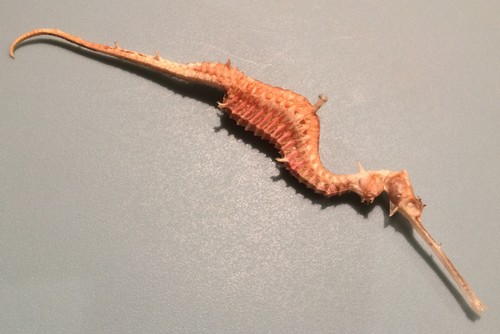
Close Relative (c) leonie_rennie, some rights reserved (CC BY) · cc-by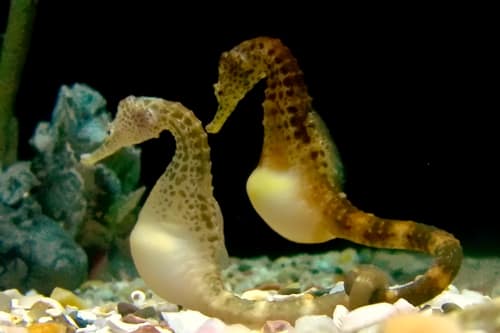
Same Family Joanne Merriam / CC BY-SA 3.0 · cc-by-sa
Help improve the field guideSomething wrong?
Checking your Fauna account…Report a name, category, or profile issue for review.