
Invertebrate
Lesser Two-spot Octopus
Octopus bimaculoidesAlso known as California Two-spot Octopus, Bimac Octopus, Two-spot Octopus
Lesser two-spot octopuses spend daylight hours tucked inside rocky dens, using specialized chromatophores and skin textures to blend seamlessly with surrounding algae and reef substrate. At dusk, they emerge to hunt crabs and mollusks, tasting the seafloor with sensitive arm suckers before cracking shells open with a sharp chitinous beak. Females guard a single clutch of large, pear-shaped eggs for several months without eating, perishing shortly after the hatchlings emerge as fully formed miniature benthic crawlers.
CephalopodMarineCamouflage
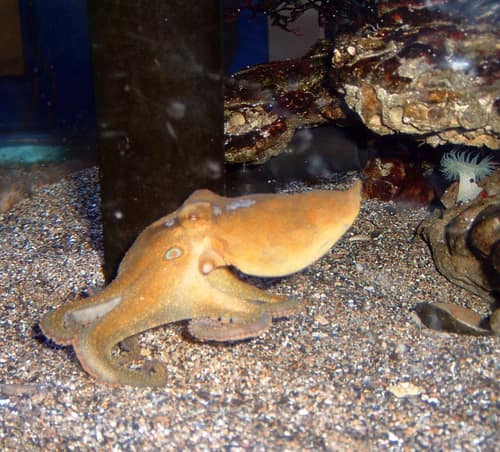
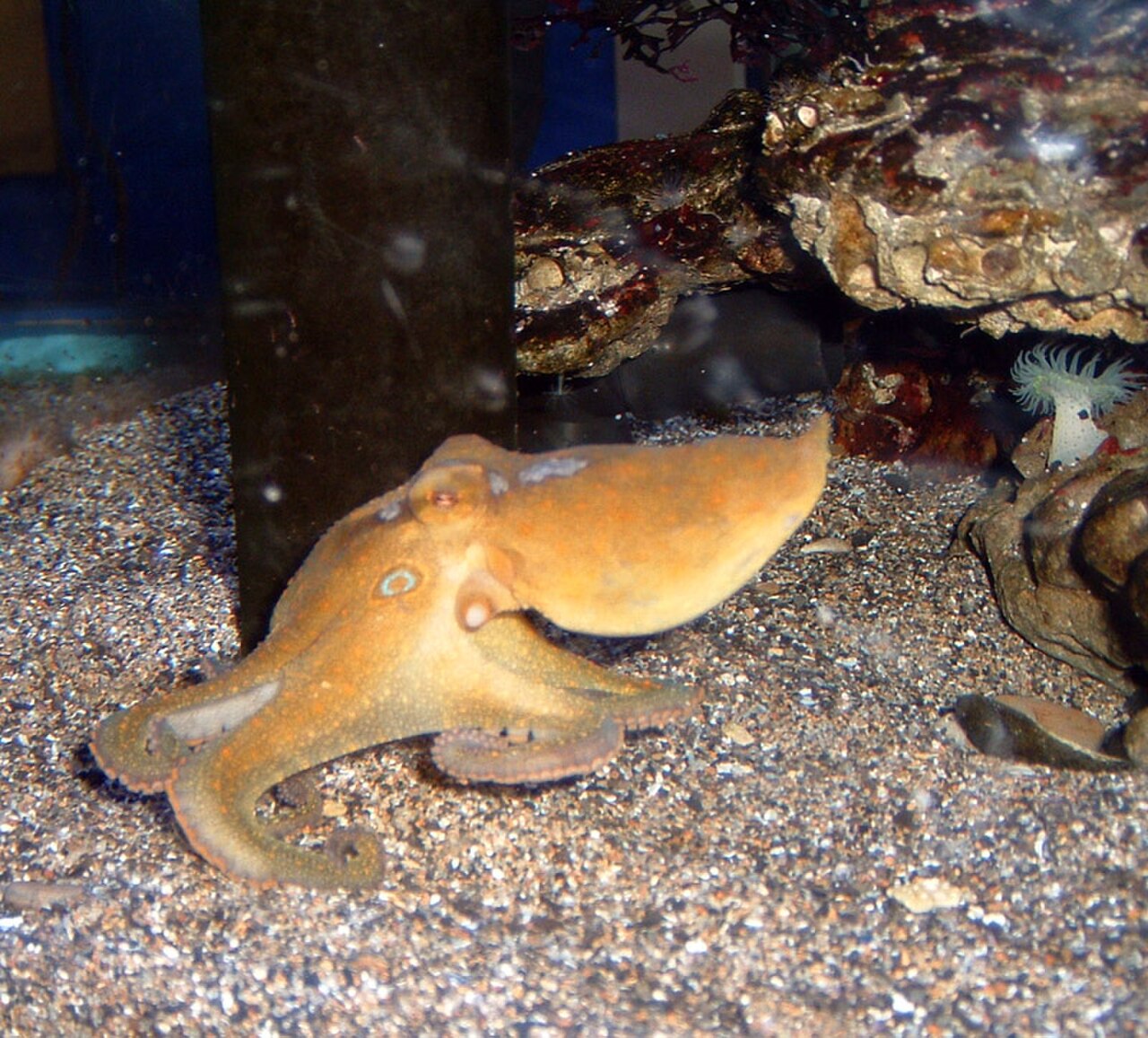
—observations
—countries
—peak records
Least ConcernConservation statusIUCN Red List categoriesLCNTVUENCREWEXLeast ConcernRed List categories, explained →
Diet & preyStriped Shore Crab, Black Turban Snail, Blue Mussel
Predators
- Harbor Seal
- California Moray
- Giant Kelpfish
ThreatsCoastal runoff, habitat disturbance, and rising ocean temperatures
HabitatsRocky reefs, kelp forests, and low intertidal tide pools
Life span1–2 years
Classification
- FamilyOctopodidae
- SpeciesOctopus bimaculoides
Range data is not available yet.
Interaction riskLow
- Low
- Moderate
- High
- Very high
- Why interaction risk is low
- Safe to observe at a normal distance.
Responsible observation
- Den Spotting: Look for middens of empty crab shells and debris clustered outside rock fissures.
- Respectful Viewing: Avoid reaching into dens or trying to pry an individual off the rock surface.
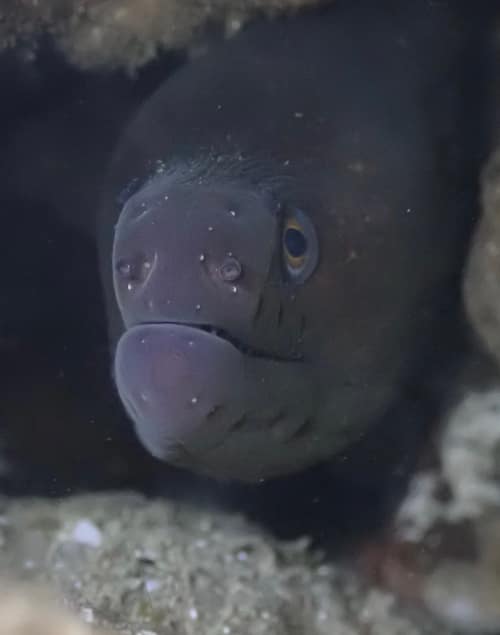
Predator (c) Cricket Raspet, some rights reserved (CC BY) · cc-by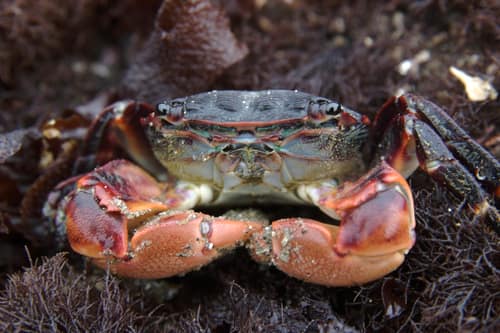
Prey (c) Jerry Kirkhart, some rights reserved (CC BY) · cc-by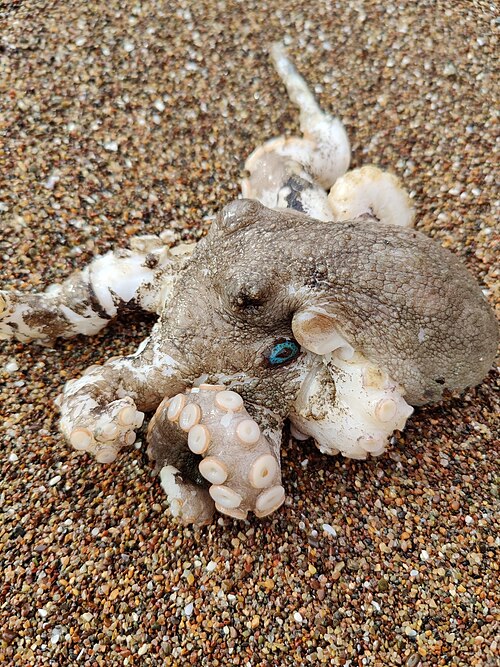
Close Relative no rights reserved / CC0 · cc0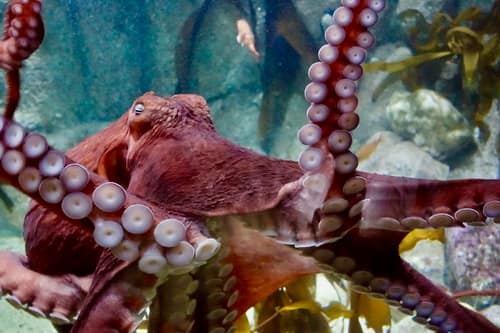
Same Family "Giant Pacific Octopus" by jurvetson is licensed under CC BY 2.0. To view a copy of this license, visit https://creativecommons.org/licenses/by/2.0/. · cc-by
Help improve the field guideSomething wrong?
Checking your Fauna account…Report a name, category, or profile issue for review.