
Invertebrate
Atlantic Pygmy Octopus
Octopus joubiniAlso known as Small-egg Caribbean Pygmy Octopus
Atlantic pygmy octopuses spend their daylight hours tucked safely inside empty gastropod shells, rocky crevices, or discarded bottles, frequently barricading the entrance with small pebbles. Under cover of darkness, they emerge to stalk small crustaceans across warm seagrass meadows, utilizing rapid shifts in skin pigmentation and texture to blend seamlessly with the substrate. Females meticulously brood and aerate their clutches within sheltered dens, foregoing food entirely until the miniature hatchlings disperse into the water column.
MarineNocturnalCamouflage
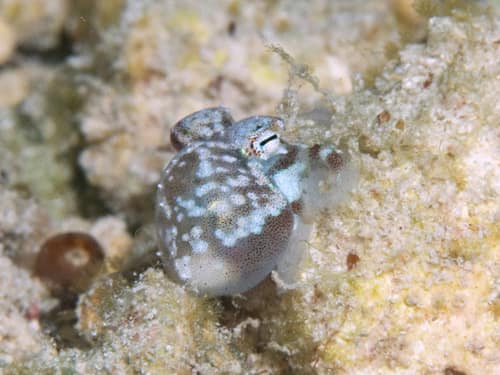
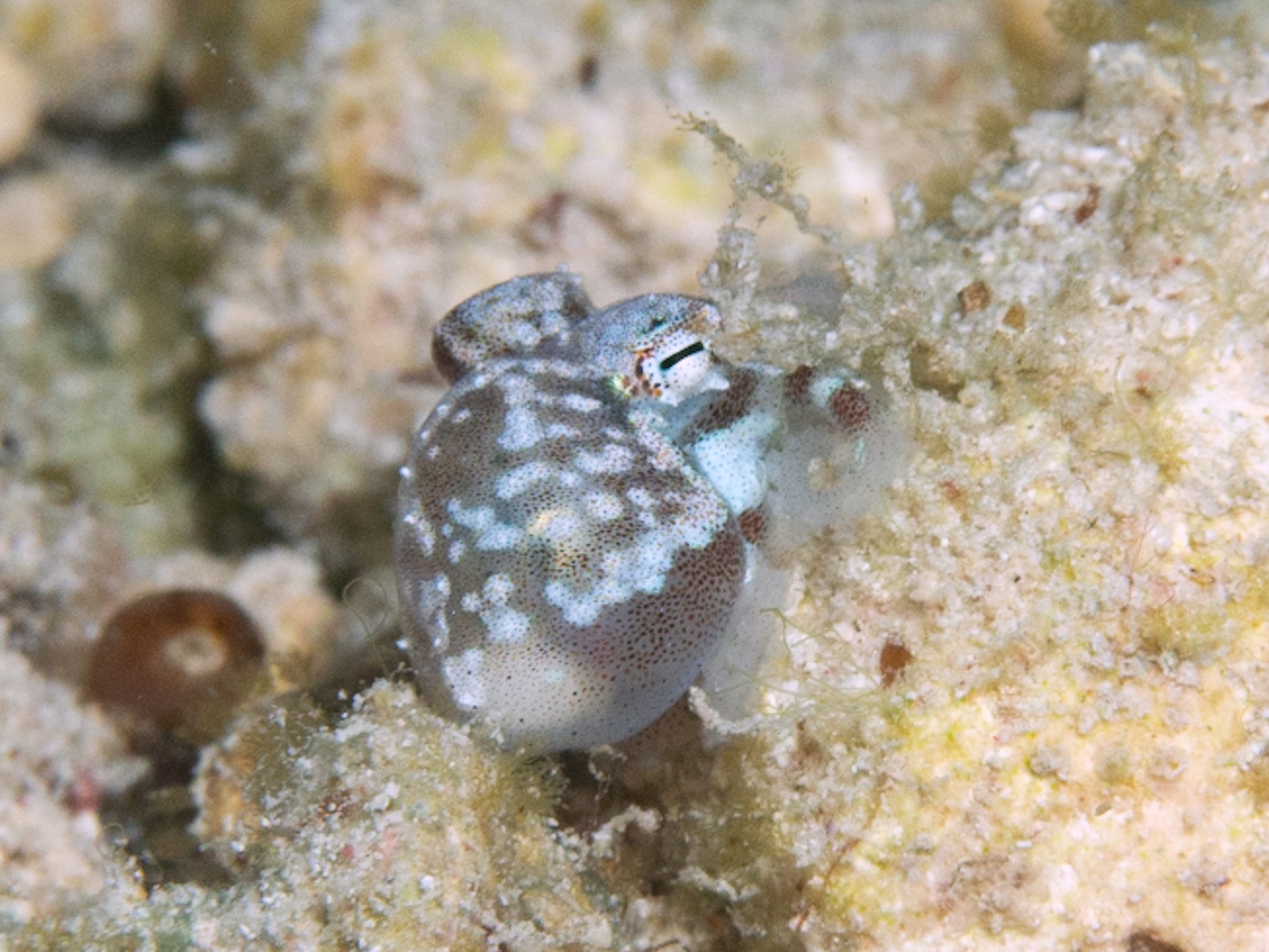
—observations
—countries
—peak records
Data DeficientConservation statusIUCN Red List categoriesLCNTVUENCREWEXData Deficient — not placed on the risk ladderRed List categories, explained →
Diet & preyCrabs, Shrimp, Amphipods
Predators
- Moray eels
- Groupers
- Flounders
ThreatsCoastal pollution, siltation, and loss of seagrass habitat
HabitatsShallow seagrass beds, coral rubble, and sandy coastal flats
Life span6–12 months
Classification
- FamilyOctopodidae
- SpeciesOctopus joubini
Range data is not available yet.
Interaction riskLow
- Low
- Moderate
- High
- Very high
- Why interaction risk is low
- Safe to observe at a normal distance.
Responsible observation
- Den Spotting: Inspect empty conch shells and discarded containers on sandy shallows for watchful eyes.
- Night Exploration: Use a red-filtered dive torch to observe natural hunting behavior without startling them.
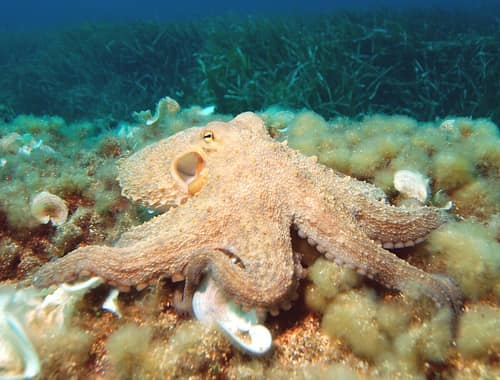
Same Genus albert kok / CC BY-SA 3.0 · cc-by-sa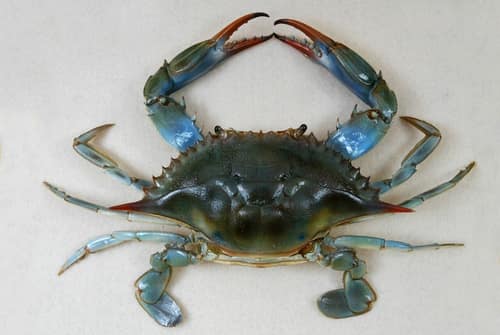
Prey Wikimedia Commons / CC BY-SA 3.0 · cc-by-sa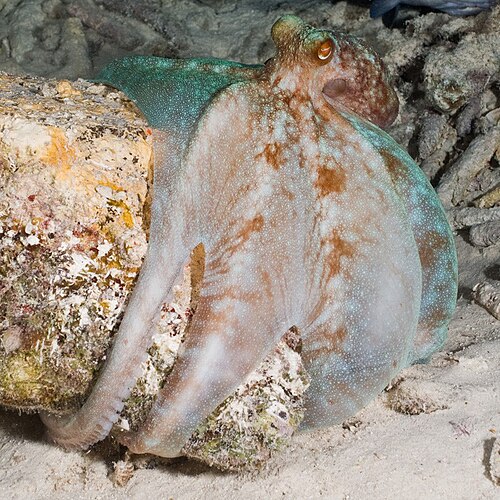
Same Family Alessandro Dona - I created this work entirely by myself. / CC BY-SA 3.0 · cc-by-sa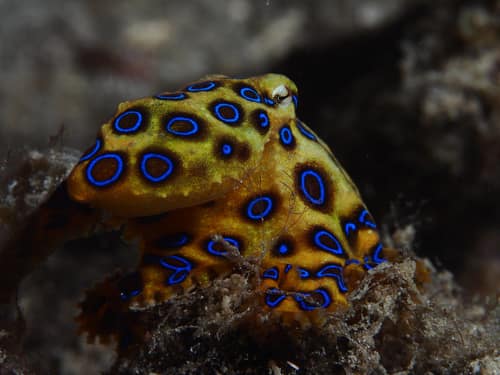
Same Family "Greater blue-ringed octopus (Hapalochlaena lunulata)" by krokodiver is licensed under CC BY-SA 2.0. To view a copy of this license, visit https://creativecommons.org/licenses/by-sa/2.0/. · cc-by-sa
Help improve the field guideSomething wrong?
Checking your Fauna account…Report a name, category, or profile issue for review.