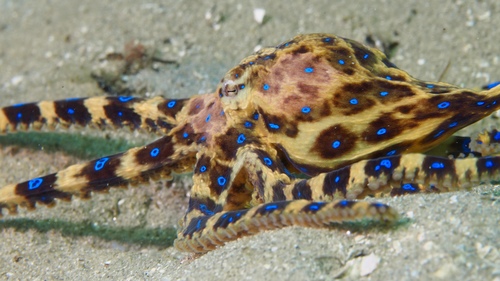
Greater blue-ringed octopuses spend their daylight hours hidden among coral rubble and discarded shells, emerging at dusk to stalk small crustaceans. When provoked or stressed, their mottled beige skin darkens dramatically to reveal up to sixty iridescent electric-blue rings, warning predators of the deadly tetrodotoxin produced by symbiotic bacteria in their salivary glands. Females lay a single clutch of eggs and carry them cupped under their arms for months without feeding, perishing shortly after the young hatch.
Data DeficientConservation statusIUCN Red List categoriesLCNTVUENCREWEXData Deficient — not placed on the risk ladderRed List categories, explained →
Key facts
Diet & preyHermit crabs, Snapping shrimp, Small reef gobies
Predators
Eels
Flatworms
Reef sharks
ThreatsHabitat loss from coral reef degradation, coastal pollution, and aquarium trade collection
HabitatsCoral reefs, tide pools, and sandy rubble in shallow tropical waters
Life span1–2 years
Classification
FamilyOctopodidae
SpeciesHapalochlaena lunulata
Range & activity
Range data is not available yet.
Safe observation
Interaction riskVery high
Low
Moderate
High
Very high
Why interaction risk is very high
Carries deadly tetrodotoxin venom; never handle, touch, or disturb, even through dive gloves.
Why it is dangerous
Salivary venom contains massive concentrations of tetrodotoxin, a neurotoxin that blocks sodium channels, causing swift neuromuscular paralysis, respiratory failure, and cardiac arrest without an available antivenom.
How to recognize a risky encounter
Recognizable by bright iridescent cyan rings encircled by dark outlines that flash across a yellowish, mottled body when alarmed.
What to do
Never pick up, trap, or corner an individual; maintain at least one meter of clearance while diving, and seek immediate mechanical ventilation if bitten.
Responsible observation
Tide Pool Awareness: Inspect crevices with a dive light from a distance rather than reaching blindly under rocks.
Flashing Rings: Treat glowing blue circular patterns as an urgent signal to back away immediately.

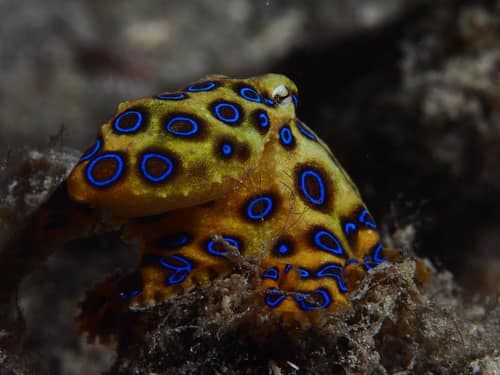
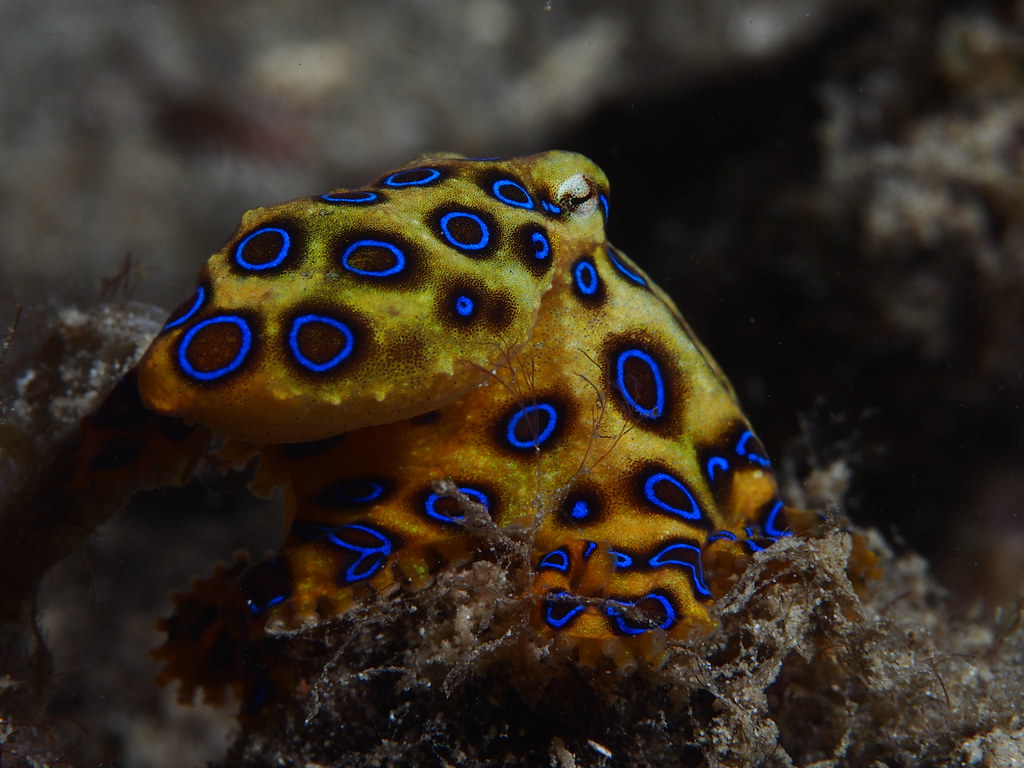
 Image unavailable