
Invertebrate
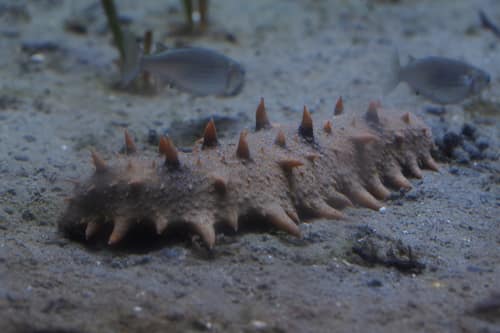
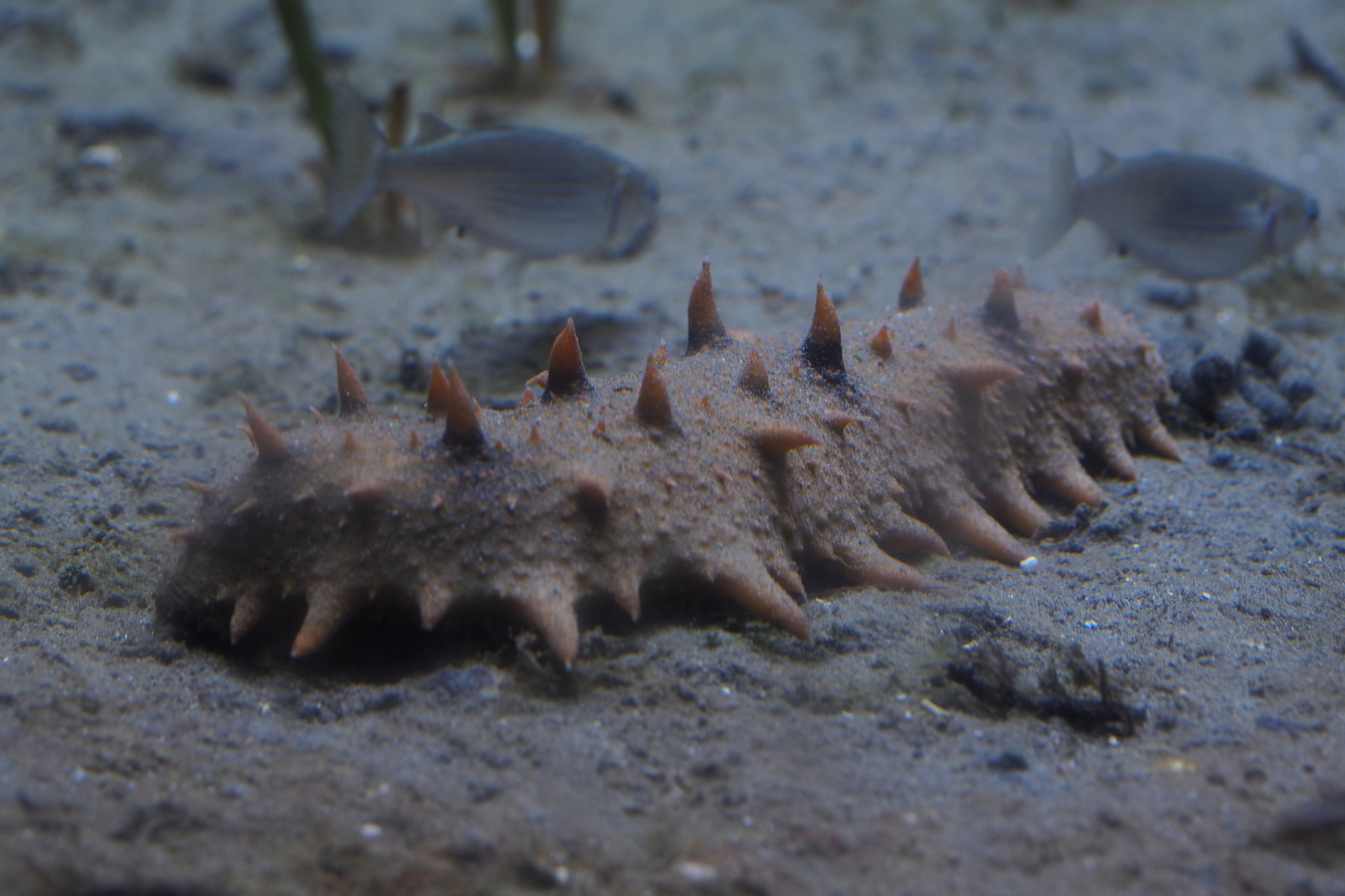
Japanese Spiky Sea Cucumber
Apostichopus japonicusAlso known as Japanese Sea Cucumber, Manchurian Sea Cucumber, Spiky Sea Cucumber
Japanese spiky sea cucumbers glide slowly across the seabed using specialized tube feet, shoveling organic-rich mud and sand into their mouths with peltate tentacles. During the warmest summer months, adults enter a dormant state known as aestivation, shrinking considerably in size and halting feeding until water temperatures drop. Prized for centuries as a culinary delicacy and medicinal tonic, intense market demand has driven severe wild population declines despite widespread coastal aquaculture.
MarineBenthicInvertebrate
—observations
—countries
—peak records
EndangeredConservation statusIUCN Red List categoriesLCNTVUENCREWEXEndangeredRed List categories, explained →
Diet & preyBenthic diatoms, Organic detritus, Marine sediment bacteria
Predators
- Sunflower sea star
- Rock crab
- Bottom-dwelling predatory fish
ThreatsCommercial overfishing, illegal harvesting, coastal habitat degradation, and climate change
HabitatsTemperate shallow bays, rocky reefs, gravel beds, and sandy coastlines
Life span5–10 years
Classification
- FamilyStichopodidae
- SpeciesApostichopus japonicus
Range data is not available yet.
Interaction riskLow
- Low
- Moderate
- High
- Very high
- Why interaction risk is low
- Safe to observe at a normal distance.
- What to notice
- Recognizable by thick, elongated bodies covered in conical, fleshy spikes ranging from green to red-brown.
- Support conservation
- Leave wild individuals entirely undisturbed in their seabed habitat and report suspected illegal harvesting.
Responsible observation
- Look Closely: Search among sheltered rocky crevices and eelgrass beds in shallow bays.
- Do Not Disturb: Never squeeze or handle them roughly, as severe stress triggers organ evisceration.
- Observe In Situ: Watch how their specialized mouth tentacles sort sediment grains underwater.
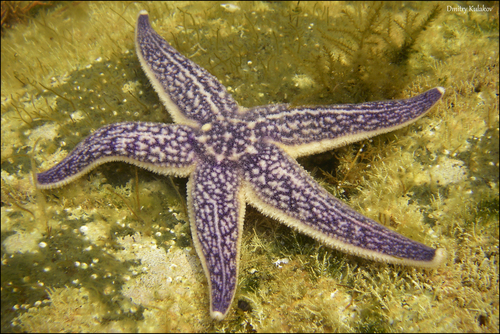
Predator (c) Dmitry Kulakov, some rights reserved (CC BY), uploaded by Dmitry Kulakov · cc-by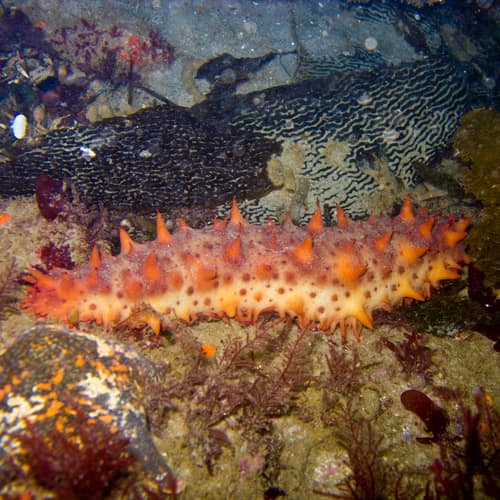
Close Relative (c) Ken-ichi Ueda, some rights reserved (CC BY) · cc-by Image unavailable
Close Relative
Help improve the field guideSomething wrong?
Checking your Fauna account…Report a name, category, or profile issue for review.