
Invertebrate
Black Sea Urchin
Arbacia lixulaAlso known as Mediterranean Black Sea Urchin, Black Urchin
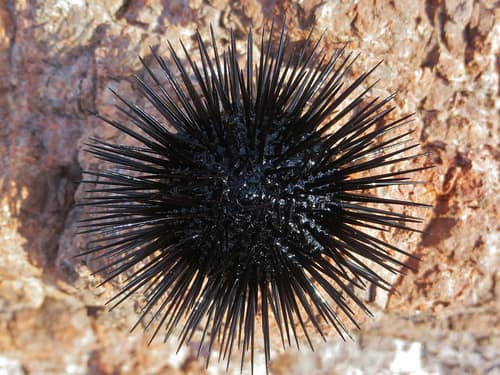
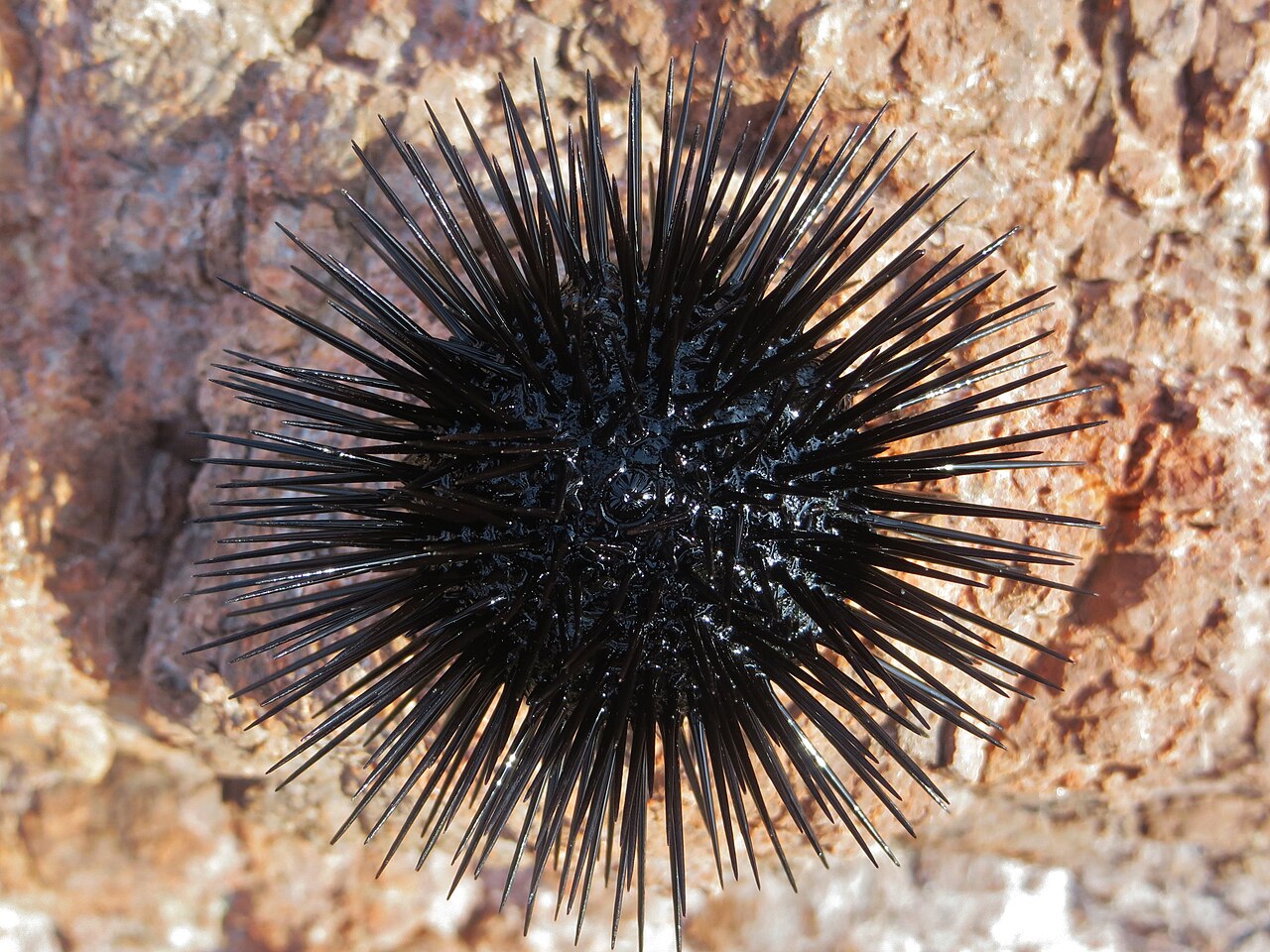
Black sea urchins cling tightly to sunlit shallow reefs and vertical rocky walls across the Mediterranean Sea and warm eastern Atlantic coasts. Unlike many co-occurring urchins that consume fleshy macroalgae, they graze intensively on tough crustose coralline algae, scraping bare rock with their calcified jaw apparatus known as Aristotle's lantern. Their feeding habits heavily shape shallow benthic ecosystems, often maintaining extensive barren zones where macroalgae struggle to establish.
MarineInvertebrateHerbivore
—observations
—countries
—peak records
Not EvaluatedConservation statusIUCN Red List categoriesLCNTVUENCREWEXNot Evaluated — not placed on the risk ladderRed List categories, explained →
Diet & preyCrustose coralline algae, Rock biofilms, Encrusting bryozoans
Predators
- Spiny starfish
- White seabream
- Mediterranean moray
ThreatsOcean acidification, severe storm wave action, and habitat pollution
HabitatsShallow rocky reefs, vertical rock faces, and boulder fields from the surge zone down to 10 meters depth
Life span10–20 years
Classification
- FamilyArbaciidae
- SpeciesArbacia lixula
Range data is not available yet.
Interaction riskLow
- Low
- Moderate
- High
- Very high
- Why interaction risk is low
- Sharp spines can puncture bare skin; wear water shoes and avoid stepping on rocky surfaces in shallows.
Responsible observation
- Footwear: Wear thick-soled water shoes or booties when wading in rocky Mediterranean shallows.
- Snorkeling: Look along sun-exposed vertical rock faces where individuals cluster in crevices.
- Handling: Avoid touching or gripping the test, as brittle spine tips readily snap off under the skin.
 Image unavailable
Competitor Predator Predator Close Relative
Help improve the field guideSomething wrong?
Checking your Fauna account…Report a name, category, or profile issue for review.