
Invertebrate
Giant Sea Star
Pisaster giganteusAlso known as Giant Spined Star, Knobby Sea Star
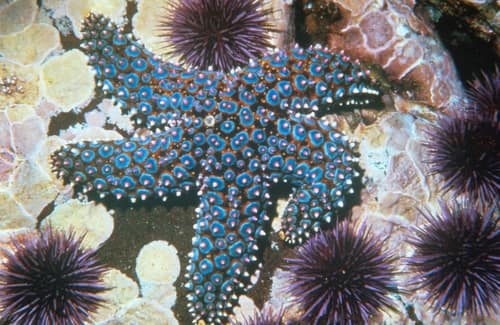
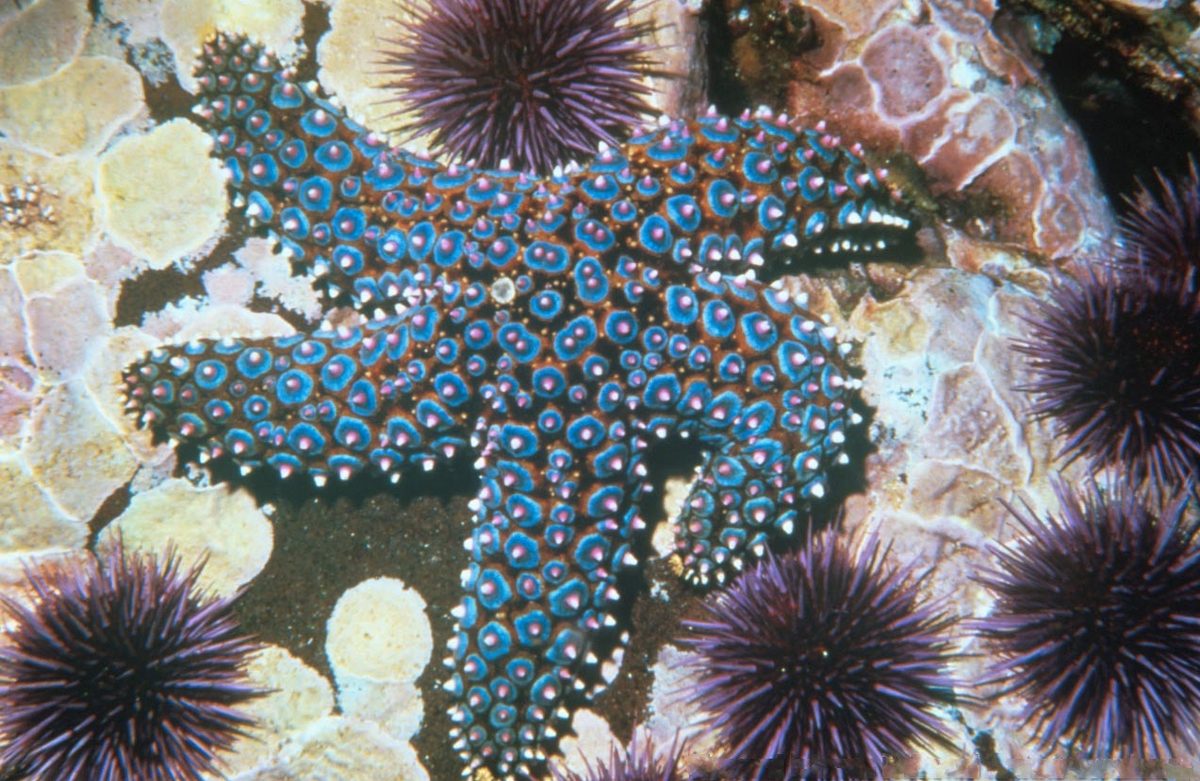
Giant sea stars are striking Pacific invertebrates recognized by their heavy arms adorned with prominent, blunt spines encircled by bright blue rings of defensive pedicellariae. They use hundreds of hydraulic tube feet to pry open stubborn bivalve shells before everting their stomachs to digest prey externally. Wandering across rocky subtidal reefs and kelp forests, they serve as vital mesopredators that help shape the composition of benthic marine communities.
MarinePredatorInvertebrate
—observations
—countries
—peak records
Not EvaluatedConservation statusIUCN Red List categoriesLCNTVUENCREWEXNot Evaluated — not placed on the risk ladderRed List categories, explained →
Diet & preyCalifornia Mussel, Acorn Barnacle, Turban Snail
Predators
- Sea Otter
- Glaucous-winged Gull
- Sunflower Sea Star
ThreatsSea star wasting disease, ocean warming, and coastal runoff
HabitatsRocky intertidal zones, subtidal reefs, and kelp forests
Life span10–20 years
Classification
- FamilyAsteriidae
- SpeciesPisaster giganteus
Range data is not available yet.
Interaction riskLow
- Low
- Moderate
- High
- Very high
- Why interaction risk is low
- Safe to observe at a normal distance.
Responsible observation
- Tidepool Etiquette: Never pry sea stars off rocks, as their tube feet can tear and cause fatal injuries.
- Low Tide Timing: Search deep surge channels and overhangs exposed during extreme minus tides.
- Underwater Viewing: Look closely around kelp holdfasts and jetty rocks when snorkeling or diving.
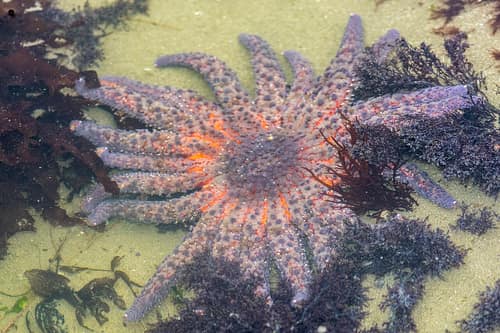
Competitor Jerry Kirkhart from Los Osos, Calif. / CC BY 2.0 · cc-by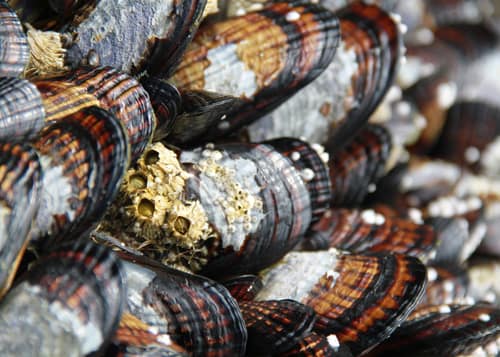
Prey (c) Oregon Department of Fish & Wildlife, some rights reserved (CC BY-SA) · cc-by-sa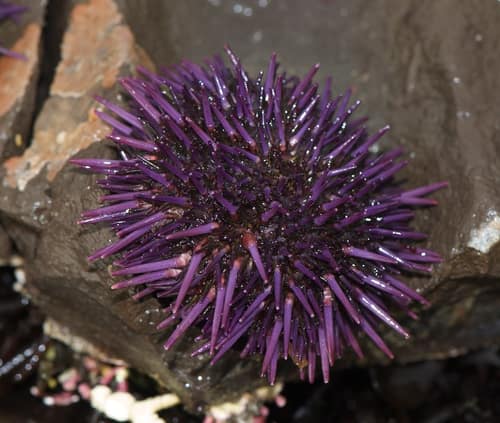
Neighbor (c) Jerry Kirkhart, some rights reserved (CC BY) · cc-by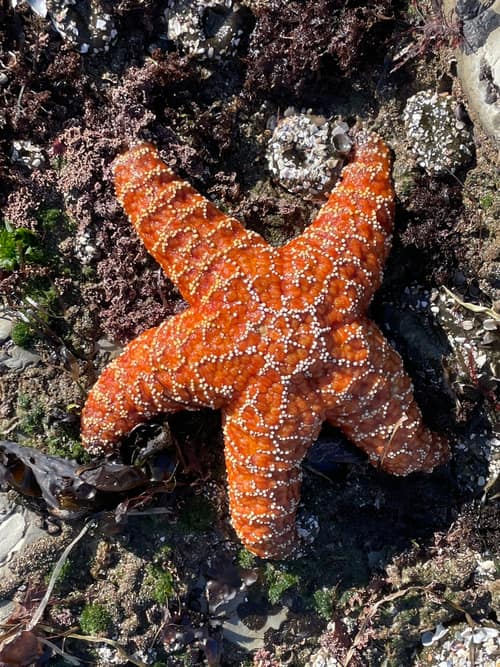
Close Relative no rights reserved · cc0
Help improve the field guideSomething wrong?
Checking your Fauna account…Report a name, category, or profile issue for review.