
Invertebrate
Lion's Mane Jelly
Cyanea capillataAlso known as Giant Jellyfish, Arctic Red Jellyfish, Hair Jelly
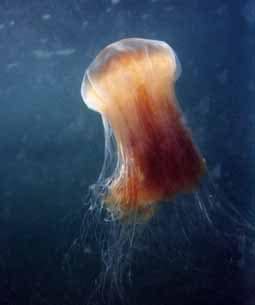
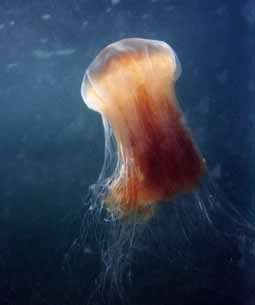
Lion's mane jellies drift through cold subarctic ocean currents, trailing massive, hair-like tentacles that can stretch dozens of meters into the open water. These translucent predators use millions of specialized stingers to capture small fish and crustacean plankton in their sticky web. During late summer and autumn, giant individuals wash ashore or gather in coastal bays before completing their annual life cycle.
MarineVenomousPlanktonic
—observations
—countries
—peak records
Not EvaluatedConservation statusIUCN Red List categoriesLCNTVUENCREWEXNot Evaluated — not placed on the risk ladderRed List categories, explained →
Diet & preySmall fish, Comb jellies, Crustaceans
Predators
- Leatherback Sea Turtle
- Ocean Sunfish
- Seabirds
ThreatsOcean warming, plastic pollution, marine traffic
HabitatsPelagic open ocean, cold coastal waters, subarctic seas
Life span1 year
Classification
- OrderSemaeostomeae
- FamilyCyaneidae
- GenusCyanea
- SpeciesCyanea capillata
N. Atlantic N. Pacific Arctic Ocean
Marine distribution — the ocean basins and seas where the species occurs.
Interaction riskVery high
- Low
- Moderate
- High
- Very high
- Why interaction risk is very high
- Tentacles possess stinging nematocysts that cause painful welts; maintain a safe distance in the water and avoid stranded specimens.
- Why it is dangerous
- Nematocysts on the trailing tentacles inject toxins that cause severe burning pain, skin redness, and occasional systemic reactions.
- How to recognize a risky encounter
- Look for a broad, saucer-shaped bell divided into eight lobes with a dense mass of reddish, fibrous tentacles underneath.
- What to do
- Never touch washed-up specimens or swim directly downstream from floating individuals; flush stings with seawater if exposed.
Responsible observation
- Watch from Above: Observe drifting jellies safely from docks, piers, or boat decks rather than swimming nearby.
- Avoid Stranded Individuals: Do not touch tentacles even on washed-up bell fragments, as stinging cells remain active.
- Use Protection: Wear full exposure gear or protective rash guards when swimming in cold coastal waters during seasonal blooms.
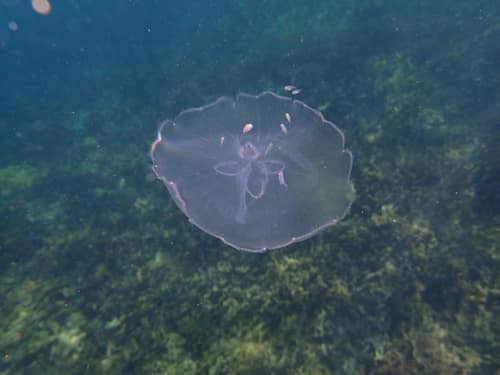
Common Co-occupant (c) A H, some rights reserved (CC BY), uploaded by A H · cc-by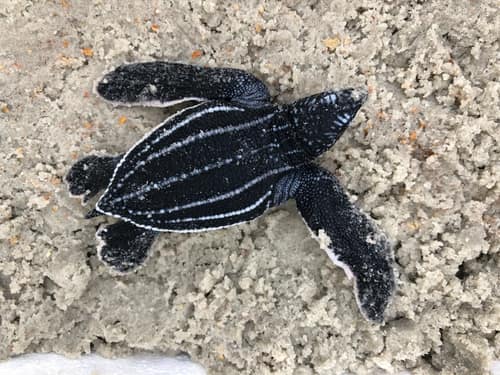
Predator (c) Pam Kleinsasser, some rights reserved (CC BY), uploaded by Pam Kleinsasser · cc-by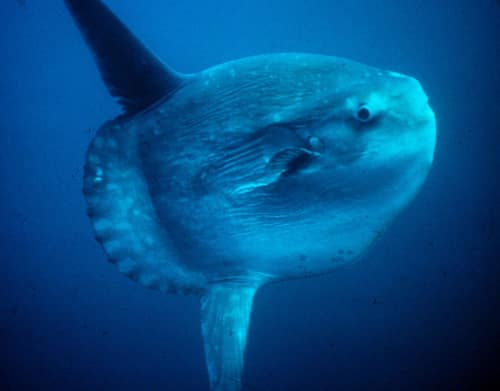
Predator U.S. National Oceanic and Atmospheric Administration / Public domain · cc0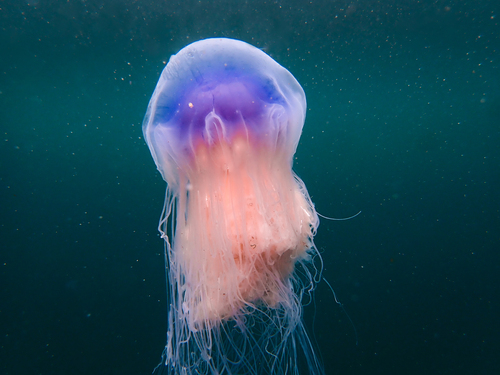
Close Relative (c) Vsevolod Rudyi, some rights reserved (CC BY), uploaded by Vsevolod Rudyi · cc-by
Keep collecting in Fauna
Found in Collections
Species set Pro
Ocean Creatures
Lion's Mane Jelly is found in this collection. Identify it in Fauna to fill this slot and continue your progress.
Unlock to track progress
Help improve the field guideSomething wrong?
Checking your Fauna account…Report a name, category, or profile issue for review.