
Invertebrate
Mauve Stinger
Pelagia noctilucaAlso known as Purple Stinger, Luminous Jellyfish, Night-Light Jellyfish, Purple Jellyfish
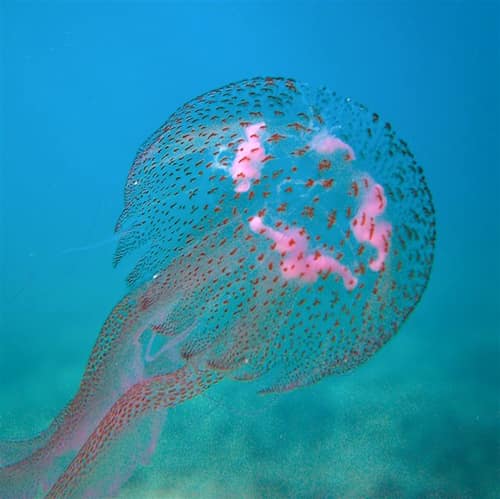
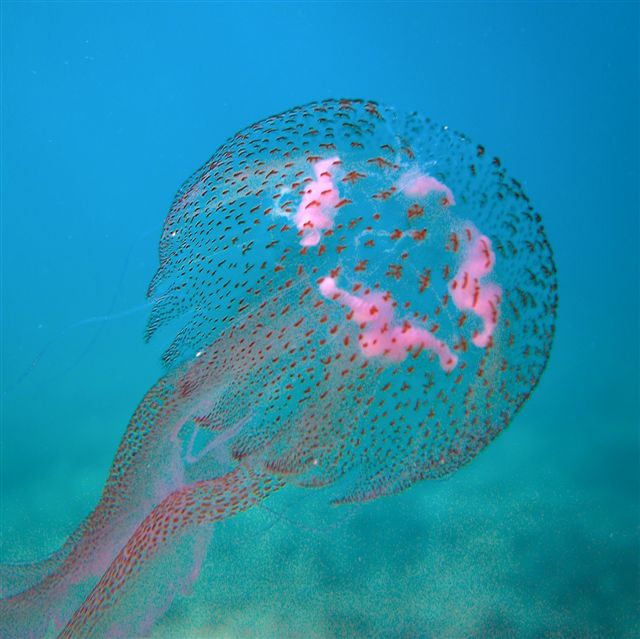
Mauve stingers drift through open ocean currents in massive bioluminescent blooms that glow greenish-blue when disturbed at night. Unlike many jellyfish, they complete their entire life cycle in open water without a benthic polyp stage, developing directly from free-swimming larvae. Their tentacles and bell surface are densely coated in nematocysts, making them a significant cause of painful stings for swimmers in warm seas.
BioluminescentStingingPelagic
—observations
—countries
—peak records
Not EvaluatedConservation statusIUCN Red List categoriesLCNTVUENCREWEXNot Evaluated — not placed on the risk ladderRed List categories, explained →
Diet & preyZooplankton, Fish Larvae, Small Crustaceans
Predators
- Ocean Sunfish
- Leatherback Sea Turtle
- Loggerhead Sea Turtle
ThreatsMarine pollution, coastal development, climate shifts
HabitatsPelagic open ocean, coastal marine waters
Life span2–9 months
Classification
- OrderSemaeostomeae
- FamilyPelagiidae
- GenusPelagia
- SpeciesPelagia noctiluca
Range data is not available yet.
Interaction riskVery high
- Low
- Moderate
- High
- Very high
- Why interaction risk is very high
- Delivers painful stings using potent nematocysts; maintain a safe distance when swimming or diving.
- Why it is dangerous
- Nematocysts across the bell and tentacles inject venom causing burning pain, skin welts, and nausea in sensitive individuals.
- How to recognize a risky encounter
- Recognize the hemispherical pinkish-purple bell speckled with reddish warts and trailing eight long, thin tentacles.
- What to do
- Give swimming blooms a wide berth and never touch stranded jellies on the beach because nematocysts remain active after death.
Responsible observation
- Night Observations: Look for flashes of greenish-blue bioluminescence in disturbed surface water after dusk.
- Swimmer Awareness: Wear full skin coverage or a rash guard during massive summer blooms in warm coastal waters.
- Beach Warnings: Check local coastal alerts when wind patterns push pelagic blooms toward popular swimming beaches.
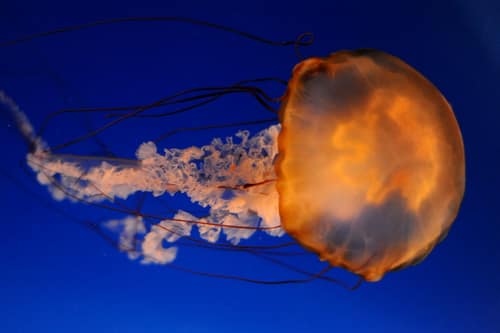
Ecological Counterpart "Pacific sea nettle jellyfish" by Guillaume Paumier is licensed under CC BY 2.0. To view a copy of this license, visit https://creativecommons.org/licenses/by/2.0/. · cc-by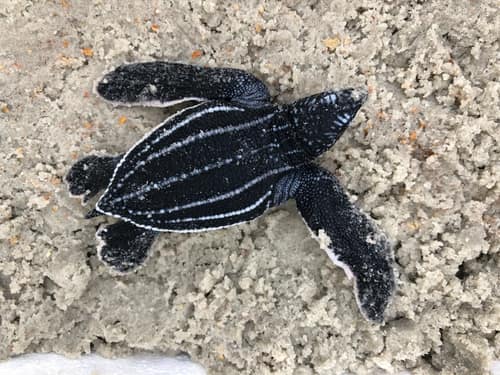
Predator (c) Pam Kleinsasser, some rights reserved (CC BY), uploaded by Pam Kleinsasser · cc-by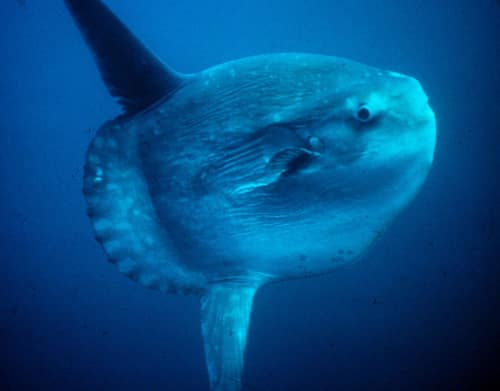
Predator U.S. National Oceanic and Atmospheric Administration / Public domain · cc0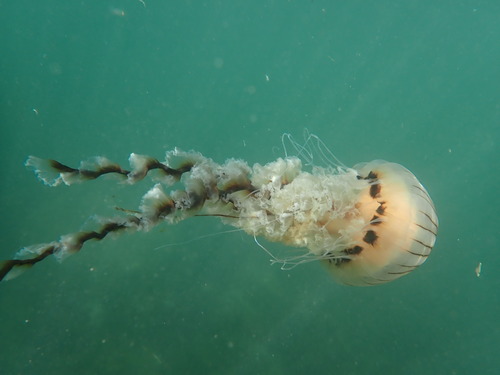
Family Relative (c) John Hepburn, some rights reserved (CC BY), uploaded by John Hepburn · cc-by
Keep collecting in Fauna
Found in Collections
Species set Pro
Ocean Creatures
Mauve Stinger is found in this collection. Identify it in Fauna to fill this slot and continue your progress.
Unlock to track progress
Help improve the field guideSomething wrong?
Checking your Fauna account…Report a name, category, or profile issue for review.