
Invertebrate
Grooved Brain Coral
Diploria labyrinthiformisAlso known as Brain Coral, Grooved Fungus Coral
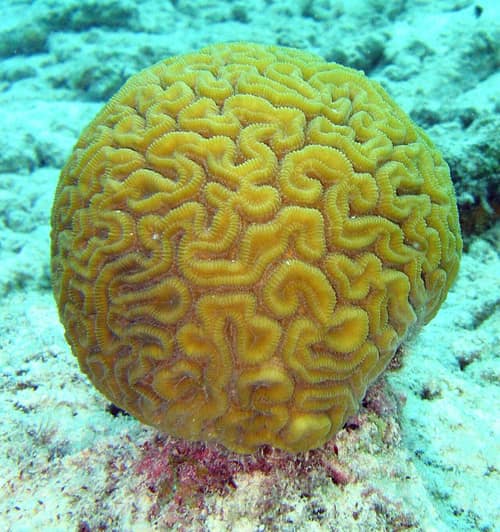
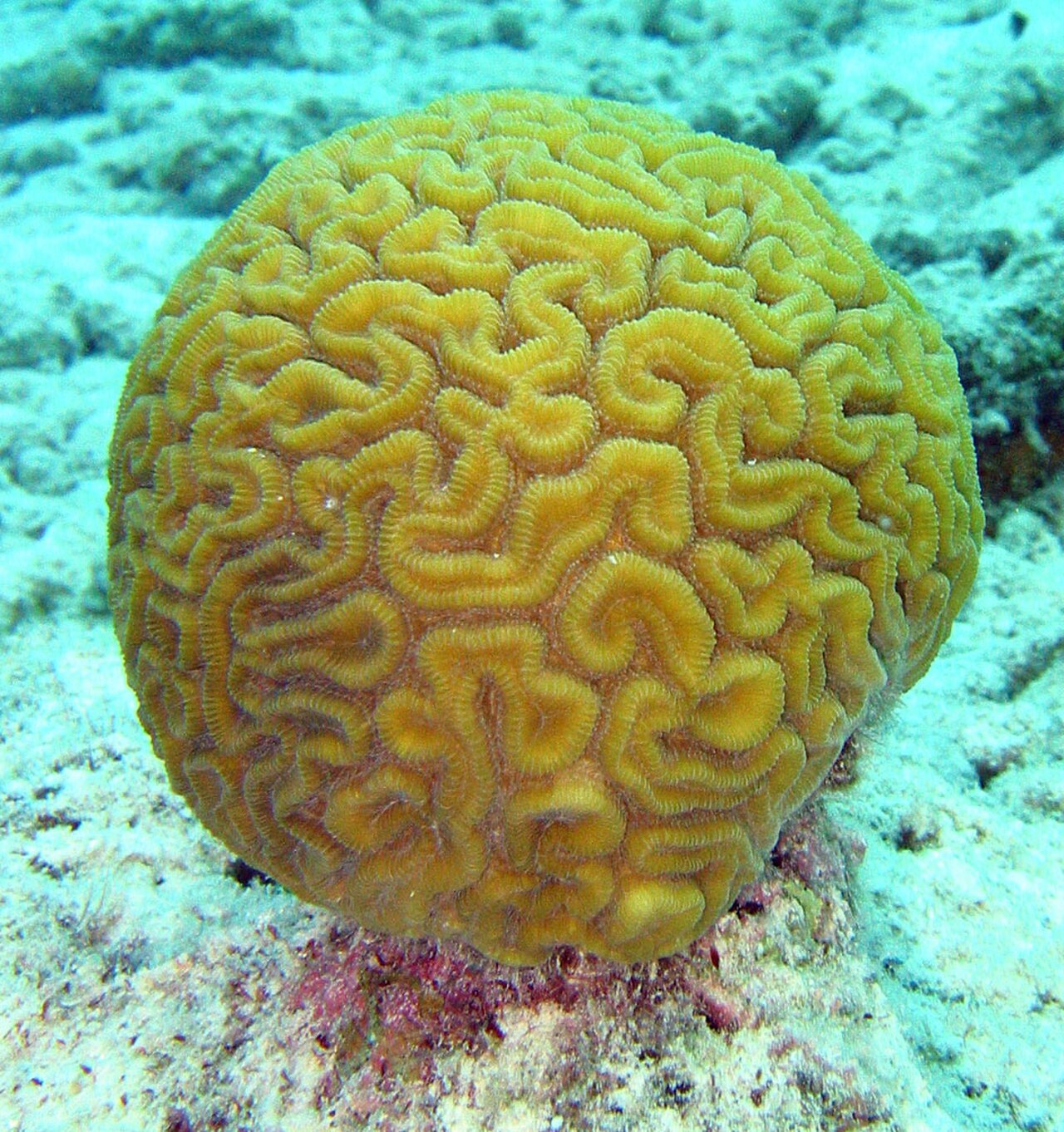
Grooved brain corals form massive, hemispherical structures characterized by deep, winding valleys bordered by ridges with an unmistakable central trench. These slow-growing stony corals harbor symbiotic dinoflagellates that provide most of their metabolic energy via photosynthesis, though polyps extend tentacles at night to capture drifting zooplankton. Over recent decades, extensive bleaching events and severe outbreaks of stony coral tissue loss disease have drastically thinned populations across the western Atlantic and Caribbean.
Reef-BuildingMarineColonial
—observations
—countries
—peak records
Critically EndangeredConservation statusIUCN Red List categoriesLCNTVUENCREWEXCritically EndangeredRed List categories, explained →
Diet & preyCopepods, Invertebrate larvae, Organic detritus
Predators
- Stoplight Parrotfish
- Foureye Butterflyfish
- Bearded Fireworm
ThreatsStony coral tissue loss disease, ocean warming and acidification, pollution, and sedimentation
HabitatsShallow coral reefs, fore-reef slopes, and rocky subtidal zones
Life span100–400+ years
Classification
- FamilyFaviidae
- SpeciesDiploria labyrinthiformis
Range data is not available yet.
Interaction riskLow
- Low
- Moderate
- High
- Very high
- Why interaction risk is low
- Safe to observe at a normal distance.
- What to notice
- Recognize it by massive, rounded boulder forms displaying convoluted valleys separated by ridges with deep, distinct central grooves.
- Support conservation
- Never touch, kick, or stand on colonies, and secure all diving gear to prevent dragging across the reef substrate.
Responsible observation
- Buoyancy control: Maintain neutral buoyancy while diving or snorkeling to avoid accidental contact with fragile living tissue.
- Sunscreen choice: Use mineral-based sunscreens free of oxybenzone and octinoxate, which disrupt coral larvae development.
- Viewing distance: Keep hands and dive fins at least one meter away from colony surfaces to prevent physical abrasion.
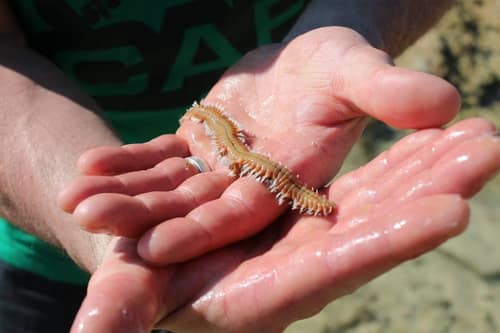
Predator no rights reserved · cc0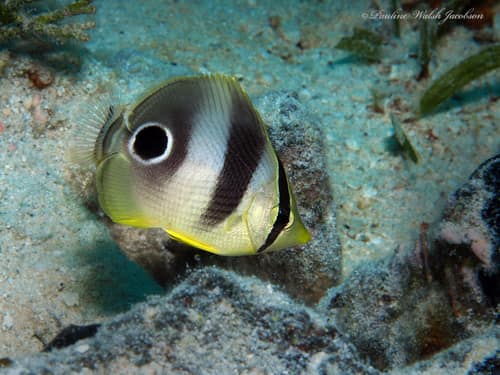
Predator (c) Pauline Walsh Jacobson, some rights reserved (CC BY), uploaded by Pauline Walsh Jacobson · cc-by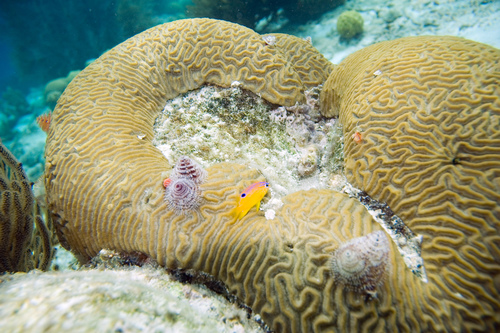
Close Relative (c) Paul Asman and Jill Lenoble, some rights reserved (CC BY), uploaded by Paul Asman and Jill Lenoble · cc-by Image unavailable
Close Relative 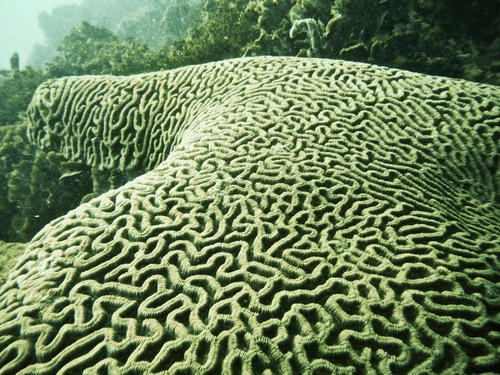
Same Family (c) mtracewell, some rights reserved (CC BY), uploaded by mtracewell · cc-by
Help improve the field guideSomething wrong?
Checking your Fauna account…Report a name, category, or profile issue for review.