
Invertebrate
Bubble Coral
Plerogyra sinuosaAlso known as Grape Coral, Bladder Coral, Pearl Coral
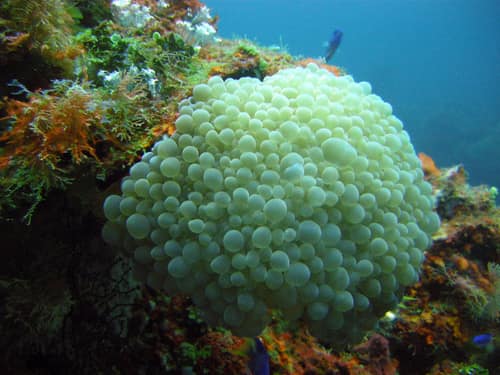
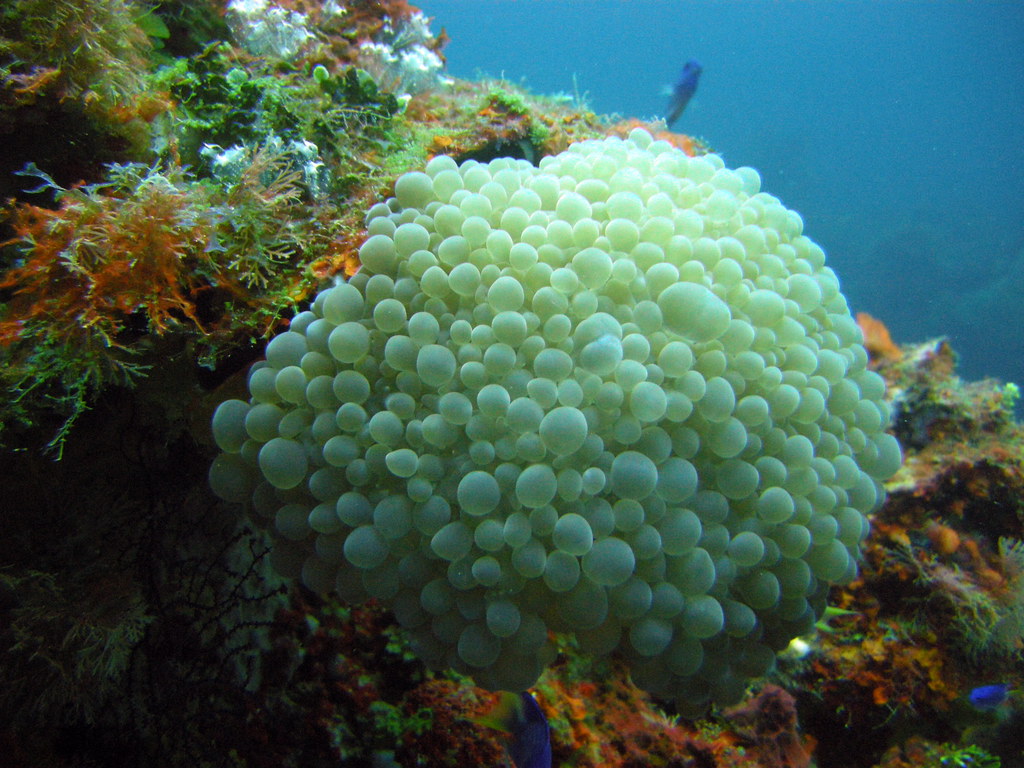
Bubble corals form striking domed colonies composed of grape-like, water-inflated vesicles that maximize surface area for photosynthetic symbionts during the daylight hours. Under darkness, these pale globes deflate to reveal tapering, potent tentacles that reach into gentle currents to snag passing zooplankton. Colonies often tuck beneath overhangs, inside crevices, or along turbid lower reef slopes where ambient light is subdued and heavy wave action cannot rupture their delicate tissues.
Reef-BuildingNocturnal HunterMarine Invertebrate
—observations
—countries
—peak records
Near ThreatenedConservation statusIUCN Red List categoriesLCNTVUENCREWEXNear ThreatenedRed List categories, explained →
Diet & preyZooplankton, Copepods, Amphipods
Predators
- Crown-of-thorns starfish
- Butterflyfish
- Parrotfish
ThreatsOcean warming, coral bleaching, destructive fishing, and aquarium collection
HabitatsProtected reef slopes, overhangs, caves, and turbid lagoons
Life spanDecades to centuries
Classification
- FamilyPlerogyridae
- SpeciesPlerogyra sinuosa
Range data is not available yet.
Interaction riskVery high
- Low
- Moderate
- High
- Very high
- Why interaction risk is very high
- Safe to observe at a normal distance; avoid touching delicate tissues.
- What to notice
- Look for pale green or ivory grape-sized fluid vesicles clustered in shaded reef alcoves.
- Support conservation
- Never touch, stand on, or manipulate wild colonies, as bruised vesicles rapidly succumb to fatal infections.
Responsible observation
- Buoyancy Control: Maintain neutral buoyancy and keep fins well clear to avoid crushing delicate vesicles.
- Night Viewing: Use a red dive light after dark to spot extended feeding tentacles without prompting rapid retraction.
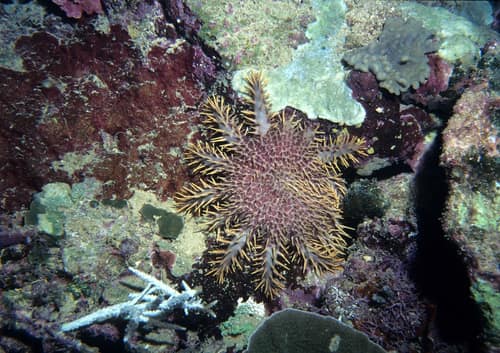
Predator "Crown of thorns starfish eating coral, Fiji" by Derek Keats is licensed under CC BY 2.0. To view a copy of this license, visit https://creativecommons.org/licenses/by/2.0/. · cc-by Image unavailable
Predator Neighbor Close Relative
Help improve the field guideSomething wrong?
Checking your Fauna account…Report a name, category, or profile issue for review.